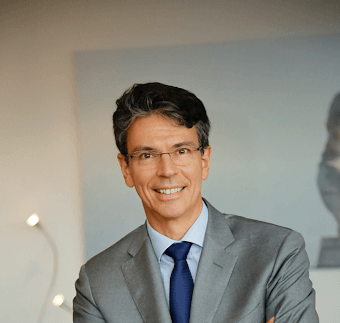
Author

Kathleen Pokrud

by Kathleen Pokrud

Photo by ALMA and The Food School

Foreword by H.E. Ambassador Lorenzo Galanti

The Embassy of Italy

Italian cuisine - on which the Mediterranean diet is widely based - is meant as part of a healthy lifestyle. Natural ingredients are transformed into exquisite dishes while preserving and exalting their unique taste, based on a solid tradition and on constant innovation and research. Italian culinary culture begins in fact at the farm, among the olive trees and the tomato plants. It is somewhat a consequence of its inputs -authentic Italian ingredients and products, combined and prepared for you by savant and caring hands wishing to convey their love for what they do. If food is a way to communicate, then Italian cuisine is the hallmark of conviviality, bringing people around the table to share a moment of sheer pleasure thanks to the passion and expertise the cook put into the preparation. For all these reasons, “la cucina italiana” enjoys wide popularity in a very food-conscious country like Thailand.

The opening in Bangkok of The Food School, with a section dedicated to Italian culinary arts, marks a dramatic change in the presence of Italian cuisine in Thailand. The project, which enjoys the active involvement of the School of Italian culinary arts ALMA, from the city of Parma, in Italy, will make it possible for all chefs interested in receiving first hand know-how from Italian instructors and chefs of authentic Italian cuisine. The Food School will also be open to food lovers for master classes from Italian chefs working in Italian restaurants in Thailand. Bangkok will thus become a regional hub for authentic Italian cuisine to be enjoyed everywhere: at the restaurant, and at home. Beware of imitations!
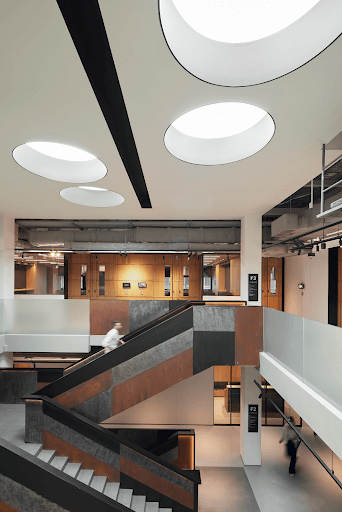
Staircase and skylight ceiling at The Food School Bangkok
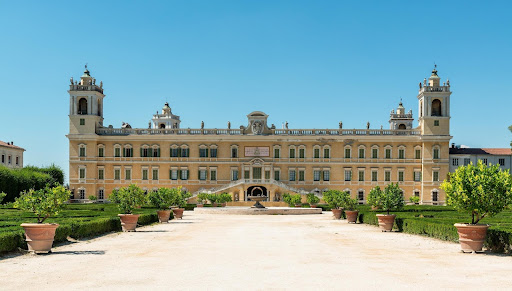
Alma- The School of Italian Culinary Arts, Ducale Palace of Colorno

Our first discussion was on the history and Mr. De Rosa described, “The roots of Italian cuisine take us back into the history of our country. We are the result of the uninterrupted heritage left by the peoples who have inhabited our peninsula. Italian cuisine is not only that of the ancient Romans, but also Etruscan, Greek, Arab, Norman, Lombard and so on. It is a historical mix of incredible complexity. Italian cuisine is rich if it comes from the noble palaces, from the great Renaissance courts.  It is also a rural cuisine, poor and simple. Italian cuisine is based on farmer’s, shepherd’s, and fishermen’s culture. It is built on the diversity of raw materials bequeathed by the pages from history. These products are the fruit of the incredible geographical diversity that characterises our country. We can say that Italian cuisine is the cuisine of encounter and comparison. Food is the object of debates, entertainment, relationships, and dialogue. Therefore, cooking is a powerful form of self-expression. We always pay the utmost attention to everyday food. Eating becomes an instrument of relationship with others. The table is our favourite meeting place.”
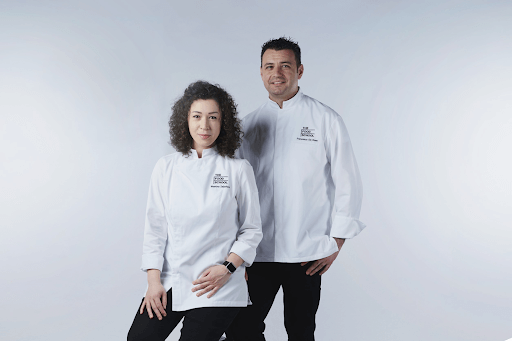
Chef Martina Sabbioni and Chef Francesco De Rosa

Regarding popularity in the world, Ms. Sabbioni revealed, “Cooking is a language that tells the country’s culture. Italian cuisine shows great strength in reaching the countries of the world. This strength goes hand in hand with the great success of Made in Italy. Italy has always been considered as an example in the field of art, craftsmanship, fashion, music, literature, and motors. Food could not be less important and well known. Today Italian food is a great expression of Made in Italy. The popularity of Italian cuisine starts from here, from the uniqueness of the raw materials to the wise way to respect them. Today Italy is in the top position in Europe for the number of products recognised by the EU as typical. The Italian biodiversity is perfectly described by the large number of local ingredients we use in our food culture.”

She further elaborated, “Italian cuisine does not transform the identity of the products. It rather accentuates the characteristics of the ingredients. For this reason, respect for the raw material is a key element of our way of considering cuisine. These assumptions formed the Italian cuisine, as we know it today. In the world there are still many stereotypes that simplify the meaning of Italian cuisine. We can confirm with certainty that Italian gastronomy is not only made of pasta and pizza. Today, more than ever, it is necessary to educate the quality of Italian products.”


When talking about regional differences, Mr. De Rosa clarified; “We are a set of territorial diversities shown by our 20 different regions which are united by a common sense of belonging. Food is the expression of a territory, of a  way of life, of  those diversities that characterise each small Italian village or, even more, each single family.

Italy is a long and narrow peninsula facing the Mediterranean Sea. However, Italian cuisine is not only a sea-based gastronomy. It is also designed by inhabitants  from the mountains and by  the habits they have. A very interesting aspect of Italian cuisine is that these geographical diversities often coexist in the same region. The cuisine of the different regions is therefore a first useful tool to divide and categorise Italian gastronomy. 
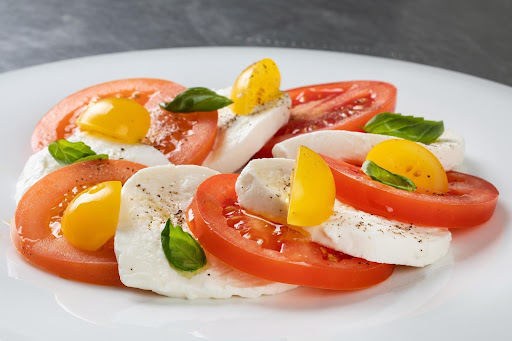
Caprese Salad

Sometimes, however, it is a vague point of view. For this reason, it would be better to investigate the cuisine of the different Italian cities. Italy bases its identity on this very thing: it is an extraordinary network of cities, which took shape since the Middle Ages. However, we can find a few broad categories of description. In the regions of Northern Italy, we find the culture of large, aged cow cheeses, where the local cuisine is designed on the scents of butter, tasty risotto, and stuffed pasta of different shapes and with local unique names. In Central and Southern Italy, on the contrary, butter is an almost unknown ingredient. Here, extra virgin olive oil wins. The table finds its best form of expression in bread and pasta. Much more important in these regions is the use of legumes, vegetables and fish. Sheep’s milk cheeses become protagonists. Finally, pork and cold cuts are an important element of union between North and South. Everywhere in Italy it is possible to find excellent preparations and excellent examples of this products interpreted by the local culture.” 
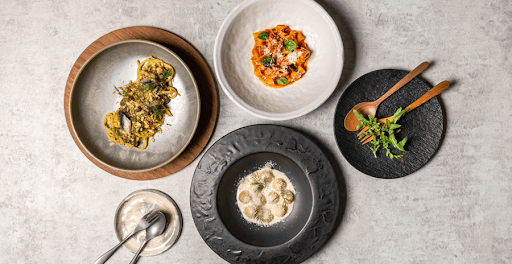
Italian Pasta Dishes 

Ms. Sabbioni echoed, “To put it simply, it can briefly say that even though the country has 20 regions, Italy actually has hundreds of different cuisines that create the chapter of the Italian regional gastronomy.”  

Key representative or authentic Italian dishes

Both instructors agreed that it is not easy to identify dishes that are representative of this wide perspective and history. “This is because any choice we will make will displease someone. In each city in Italy there are people who argue that their own specialty is a national icon.”
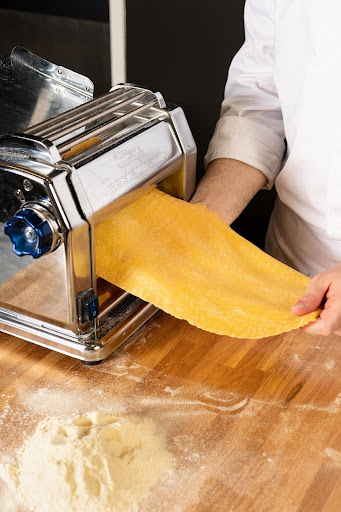
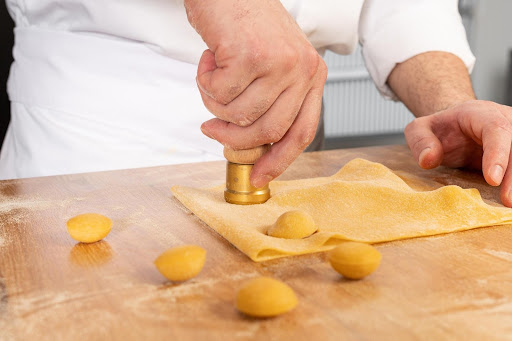
“A symbol that brings everyone together, from North to South, is pasta. The pasta that today represents Italian cuisine in the world. But even this can be considered the title of a long novel. Reason being under the name of pasta we find, once again, great diversity. In terms of shapes, sizes, textures, or cooking techniques. Pasta is cooked in boiling water. In Italy it becomes the main character of a meal and is never considered like as side dish. 

However, it can also be cooked in the oven. From North to South there be many recipes for pasta cooked in a baking pan, layered with different ingredients. Pasta al forno, as we say. This is the case of the famous Lasagna: representative dish from Bologna, in the Emilia Romagna region, in Northern Italy. Bologna is the capital of Emilia Romagna and lasagna is a must over there. It is the iconic preparation for the Sunday lunch, the symbol of the cucina della nonna (grandmother’s cuisine). Today, it is a main course that represents Italy all over the world.”

Given the long history of Italian culinary identity, I asked both instructors to give us their perspective on how they see Italian cuisine has changed over the years. Mr. De Rosa commented, “Traditional recipes are an inexhaustible source of inspiration  for contemporary cooks. Cooking is constantly changing. We cannot stop it in time or history. Traditional recipes can be a perfect springboard for new ideas and new proposals.”
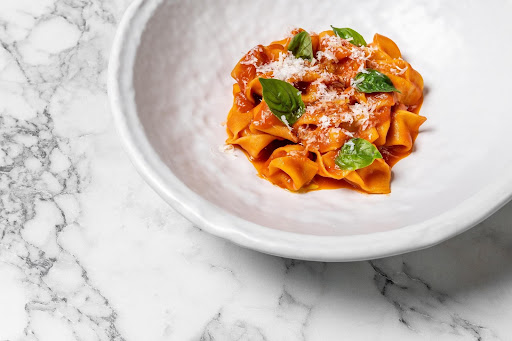
Tortellini bugiardi al pomodoro 

Ms. Sabbioni commented, “The cuisine is a mirror of the society in which we live. It represents trends and changes. For this reason, Italian cuisine is also undergoing profound changes. The time dedicated to cooking  in our homes has also changed. People buy products already cooked by the food industry. It is not always easy to buy foodstuffs directly from local farmers and people must appeal to big retailers. However, in Italy it is still possible to choose where to buy food, which food to consume and how much time to dedicate to the culture of the table. People eat out more often and order takeaway food. 

Today, Italians pay more attention to calories, to wellness and look for the right balance in food. There is an increased interest in organically grown products and a search for local and seasonal ingredients. The consumption of vegetables is higher, and the consumption of meat is decreasing. There is space for ethnic cuisines and new flavours from all over the world. In any case, the table continues to be a fundamental part of life in the Italian society.”
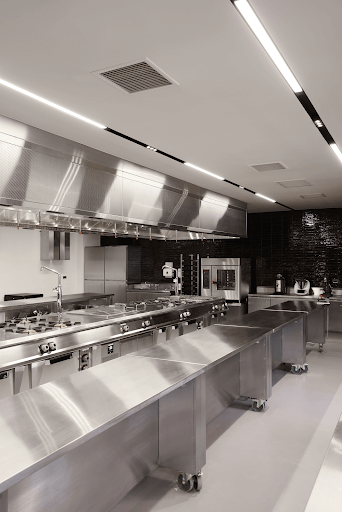
   Western Kitchen at The Food School Bangkok  

As our interview drew to a close, the instructors welcomed our readers to visit their Food School in Bangkok to learn about authentic Italian gastronomy. The Food School is Thailand’s first International multi-brand culinary school, occupying 3,200 sqm of thoughtfully designed space set over three floors at the new Creative & Start-up Village in the city’s Sam Yan district, just a five minute walk from Sam Yan MRT underground station. The school is a significant milestone for Italia culinary arts because it will see, for the first time in Thailand, a new joint venture project of ALMA of Parma. ALMA is the world’s leading educational and training centre for the Italian food, beverage, and hospitality industries.
0 comment
0 FacebookTwitterPinterestEmail

A brief introduction to the cultural background of Israeli food

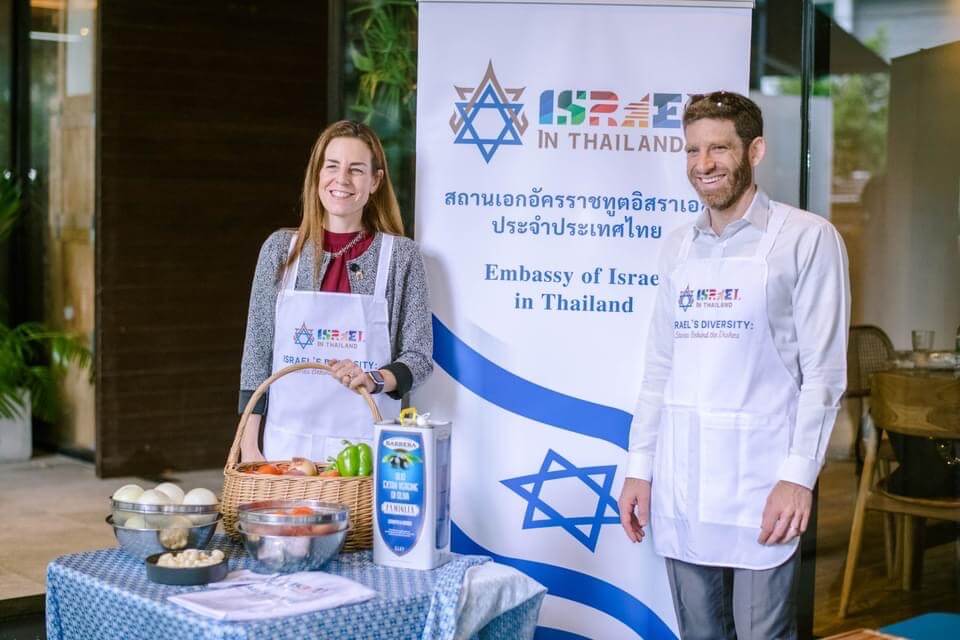
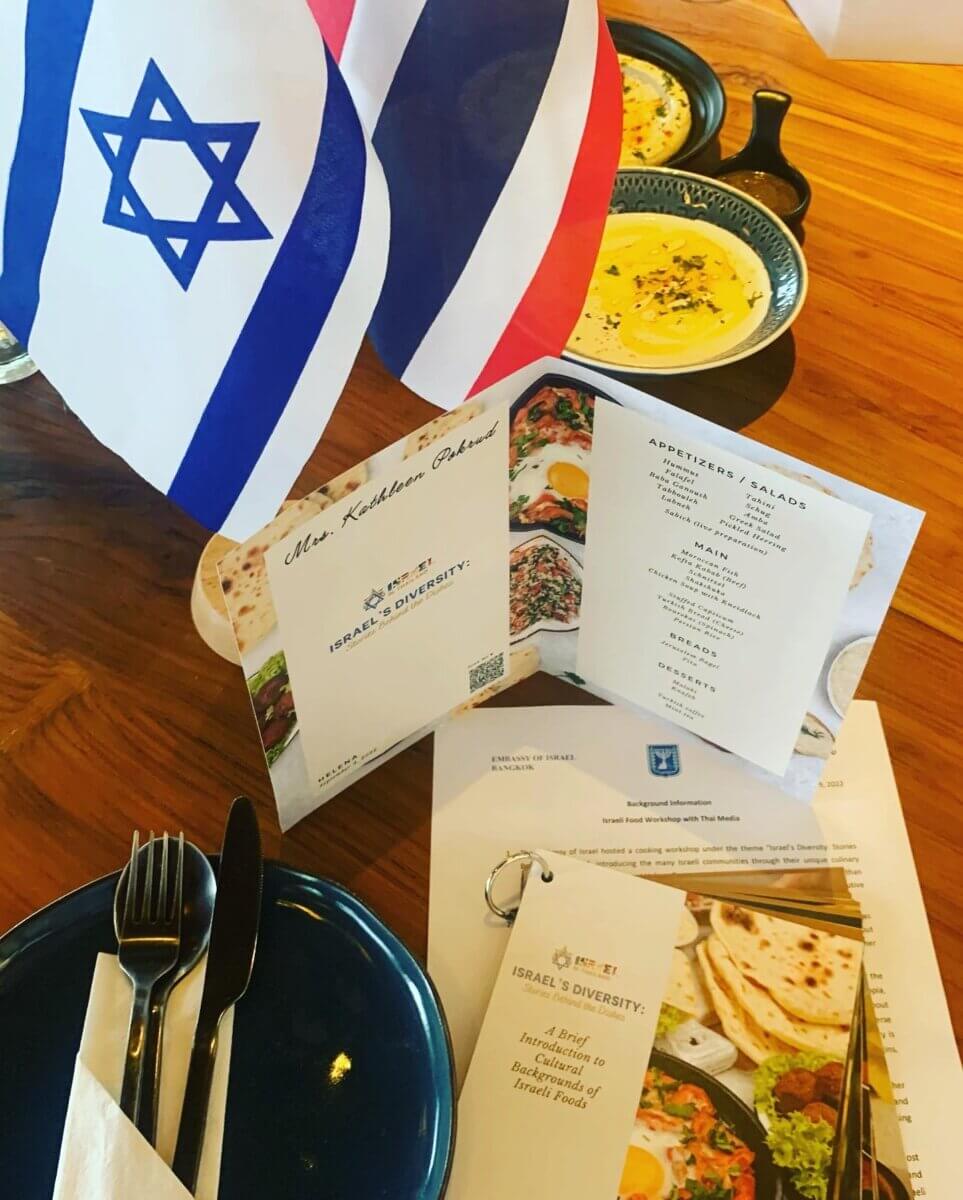
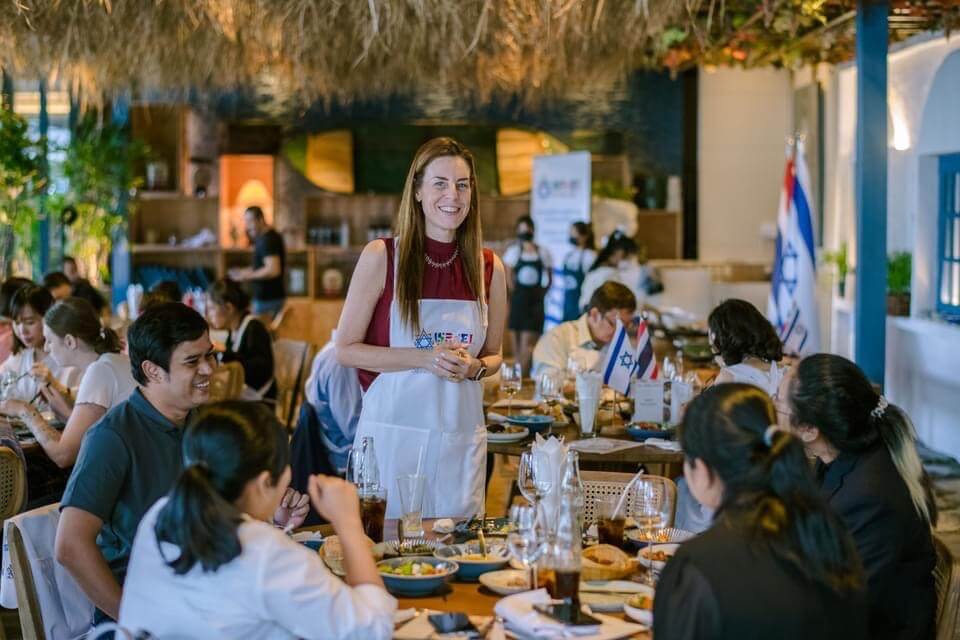
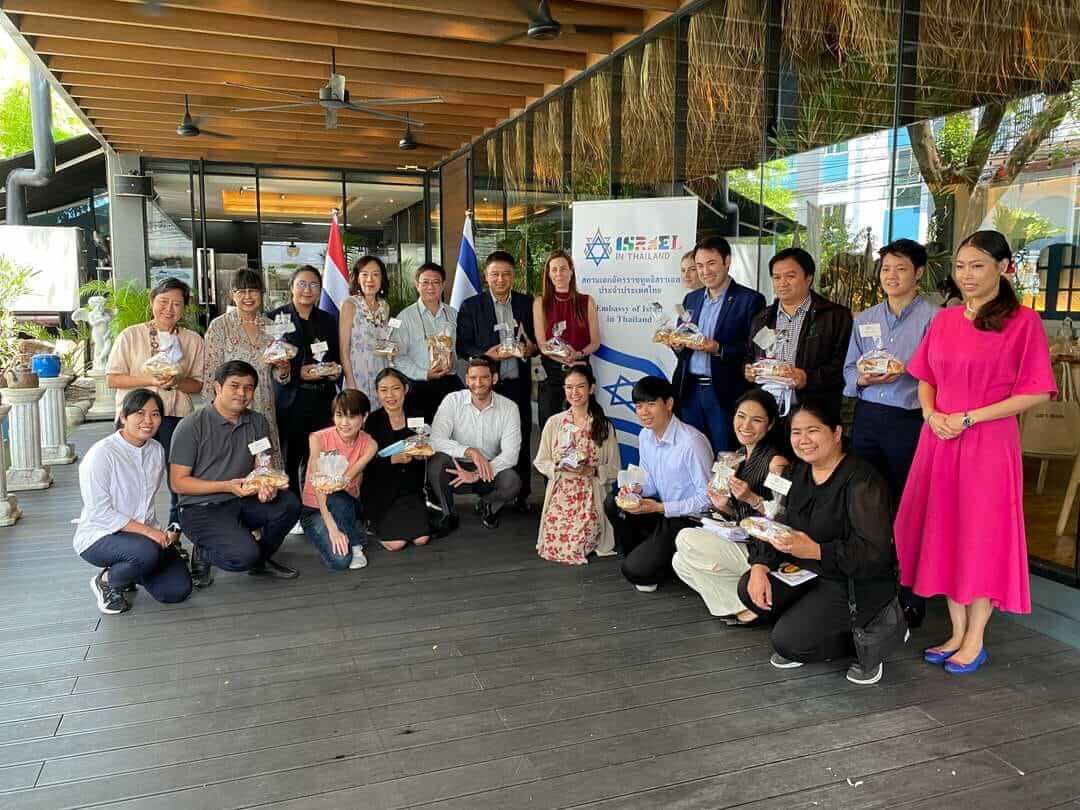
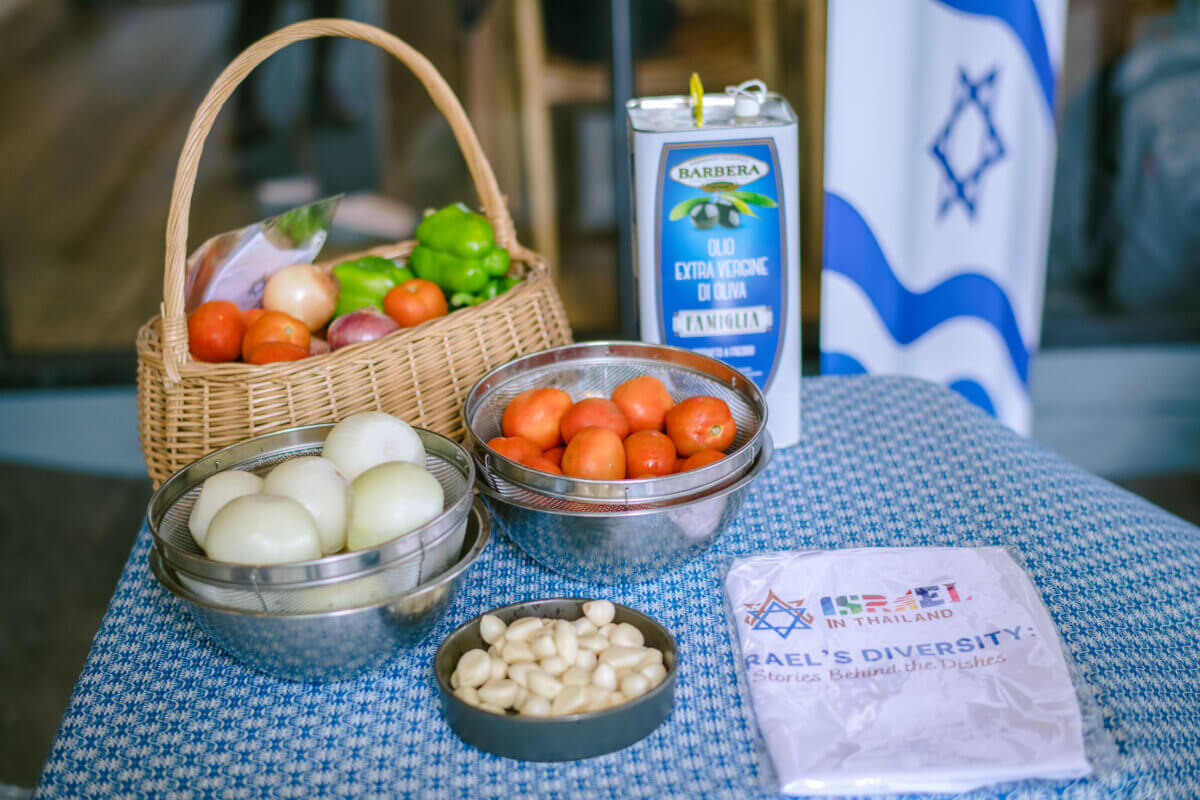
The Embassy of Israel recently hosted a cooking workshop under the theme “Israel’s diversity: Stories behind the dishes”, introducing the many Israeli communities through their unique culinary traditions. The event took place at the newly opened Helena Restaurant in Sukhumvit Soi 51. 
 
The Jewish nation has a long history of thousands of years, though the State of Israel was established only in 1948. At the establishment, the population of the young country was about 800,000 people, 650,000 of them were Jewish, and the rest were Muslims, Christians and other minorities.
 
Since the establishment of the State, waves of Jewish migrations have arrived from all over the world, the biggest waves being from Iran, Iraq, Yemen, the former USSR, Turkey, Syria, Ethiopia, Morocco, Tunisia and Europe. By 2022 the population of Israel reached 9.5 million people, about 74% of them are Jewish. The migration throughout the years has created, not only a very diverse population, but a blend of many of these cultures. That diversity is reflected very well in the Israeli cuisine, which is a mixture of various dishes from different origins, as well as new fusion dishes.

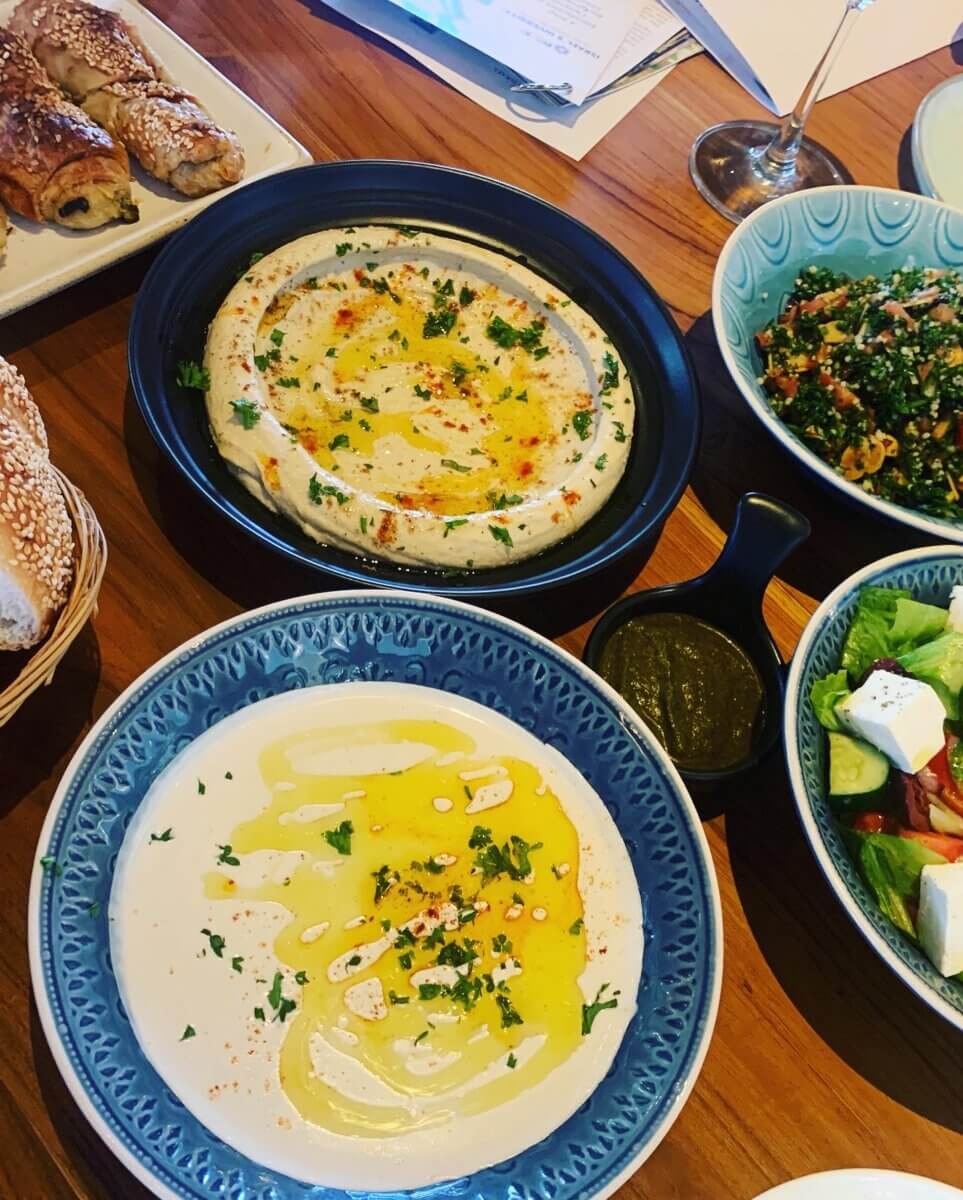
In the workshop, participants learned how to make several dishes which originated from other countries and are part of the Israeli cuisine, such as Challah, Shakshuka and Falafel. The workshop was followed by lunch comprising more than 25 Israeli dishes, showcasing the various flavours and colours of Israeli cuisine.

Ambassador Orna Sagiv explained to the audience, “The diversity of Israel’s population is quite unique, compared to most countries which tends to be more homogeneous. This diversity presents many opportunities and plays a major role in the development of the young country. The various flavours of the Israeli cuisine, as well as the new fusion food, combining the different ingredients, is a manifest of the “melting pot” Israel became for these various cultural groups. In today’s workshop we tried to share this aspect of our culture with the Thai media, in a fun and delicious way.

Hopefully, through a better understanding of the Israeli culture this will be another bridge for stronger Thai-Israeli relations.”

0 comment
0 FacebookTwitterPinterestEmail

Story by Kathleen Pokrud

Photo by Jenny Chan and Teresa Biesty

Foreword by

H.E. Mr. Bernardo Cordova Tello

Ambassador

The Embassy of the United Mexican States

I was delighted when I heard that Kathleen intended to publish an article about Mexican cuisine. To quote the words of Tom Parker Bowles, who, like Anthony Bourdain and other international food critics, have expressed their passion for Mexican food. Tom pointed out years ago that “the most exciting, vibrant, captivating and seductive food that exists on earth” is Mexican food, which “has conquered the world, not only with its dishes, but with the passion, creativity, warmth and the love for life that their creators stamp on the dishes”.

This British food critic stated that he considers Mexico as “one of the most diverse, beautiful and kind countries in the world; for its people, its land, its love.” Regarding some negative news broadcasted by some international media, Parker pointed out that: “Mexico is a pure, generous and hospitable land; anyone who loves this country is able to see beyond the problems”

Story by Kathleen Pokrud

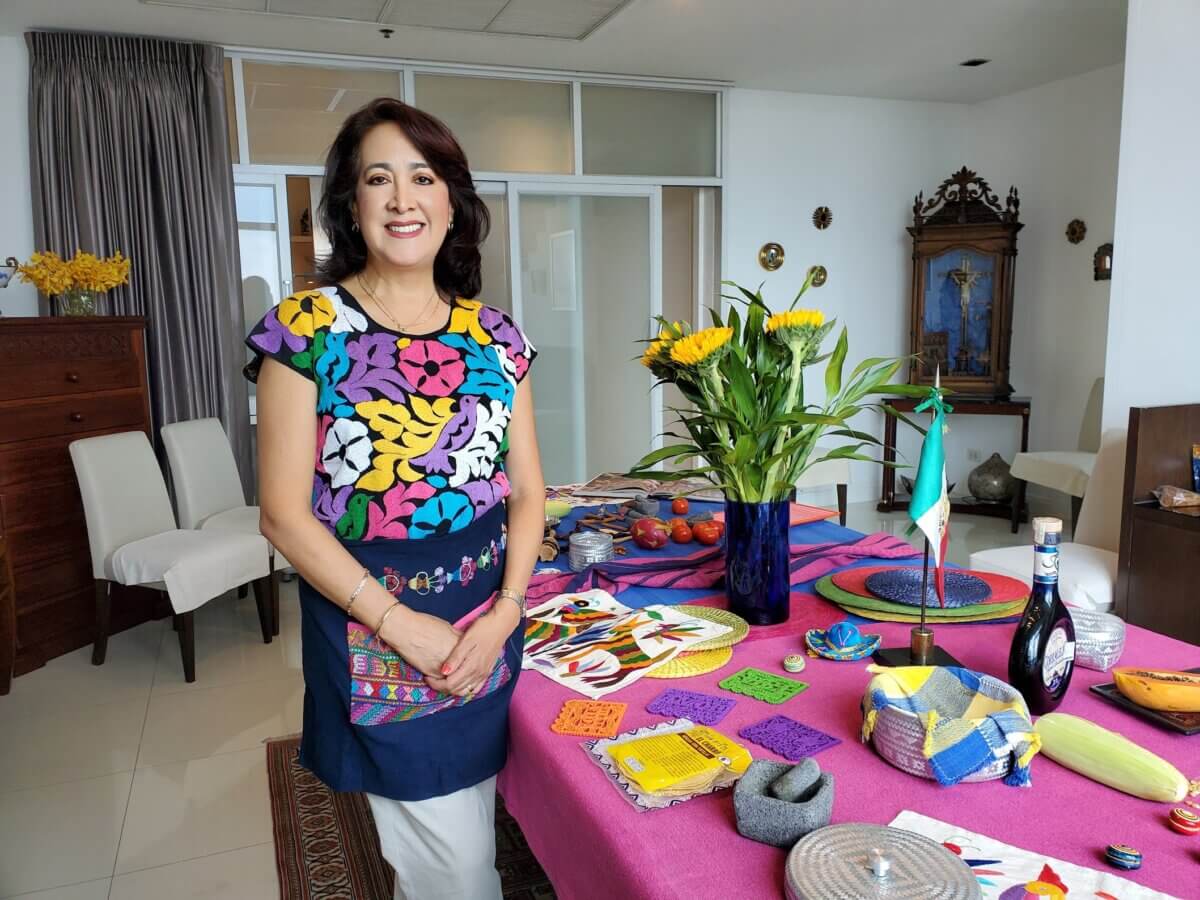
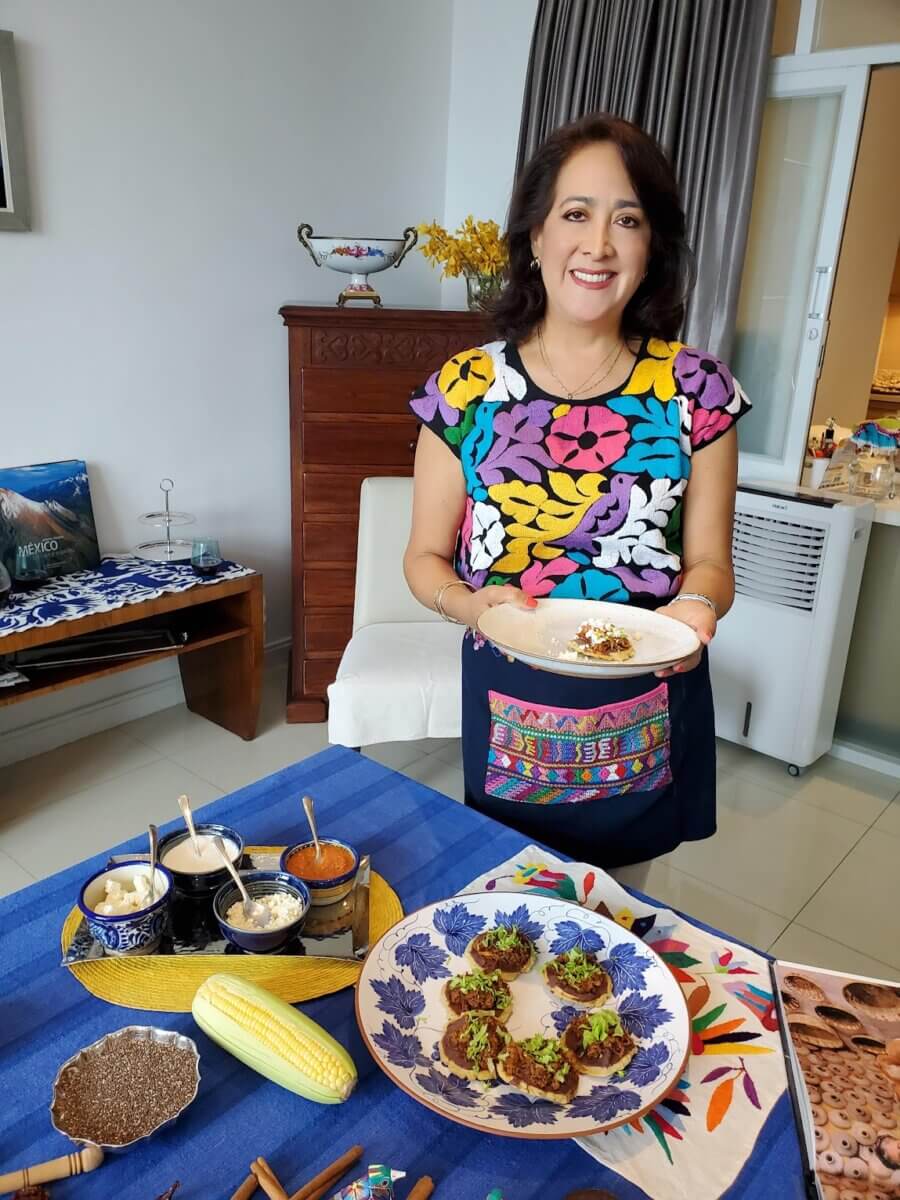
Do you know that Mexican food is officially considered a cultural heritage of humanity? In 2010, UNESCO (the United Nations Educational, Scientific and Cultural Organisation) inscribed Mexican cuisine on their Representative List of the Intangible Cultural Heritage of Humanity. I sat down with Madame Adriana Mendez Murguia from The Embassy of the United Mexican States to learn how Mexican gastronomy was enriched over the years.

To summarise Mexican gastronomy in two lines, many would agree that it was born in the entrails of the country over thousands of years and has become into something that is widely appreciated all over the world, and there are many proofs of that. From Diana Kennedy’s books to Anthony Bourdain’s letters and shows, to Netflix series featuring Mexican food. Experts estimate that about 15% of the food ingredients that are used in the world are originally from Mexico. Which is quite impressive! 

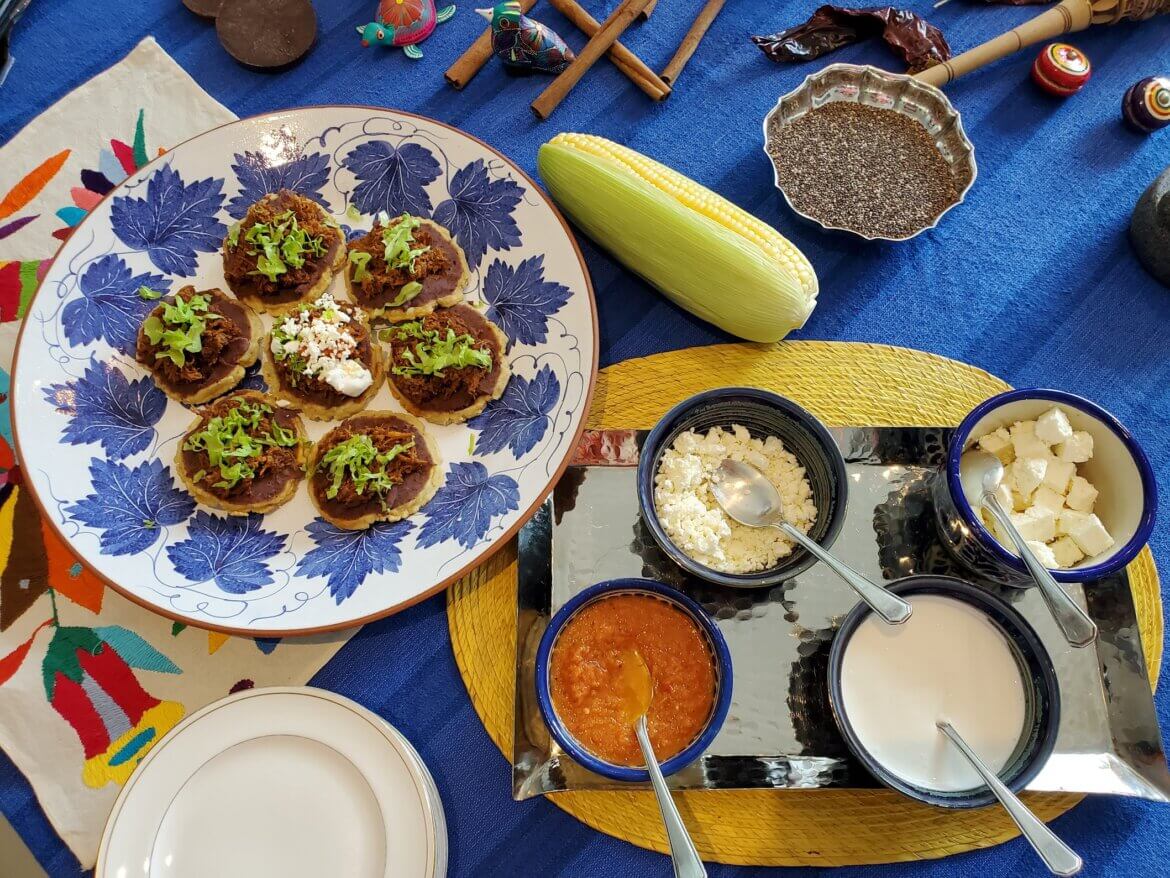
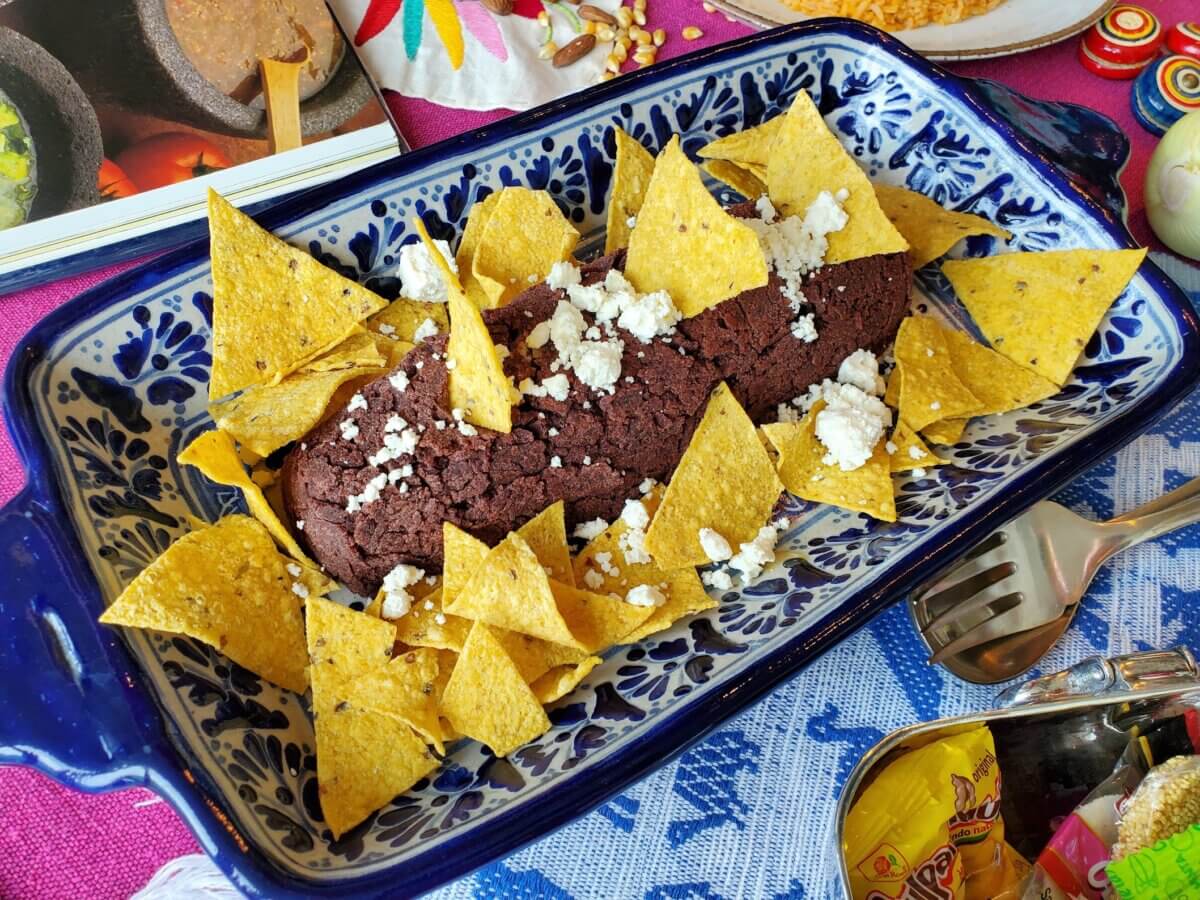
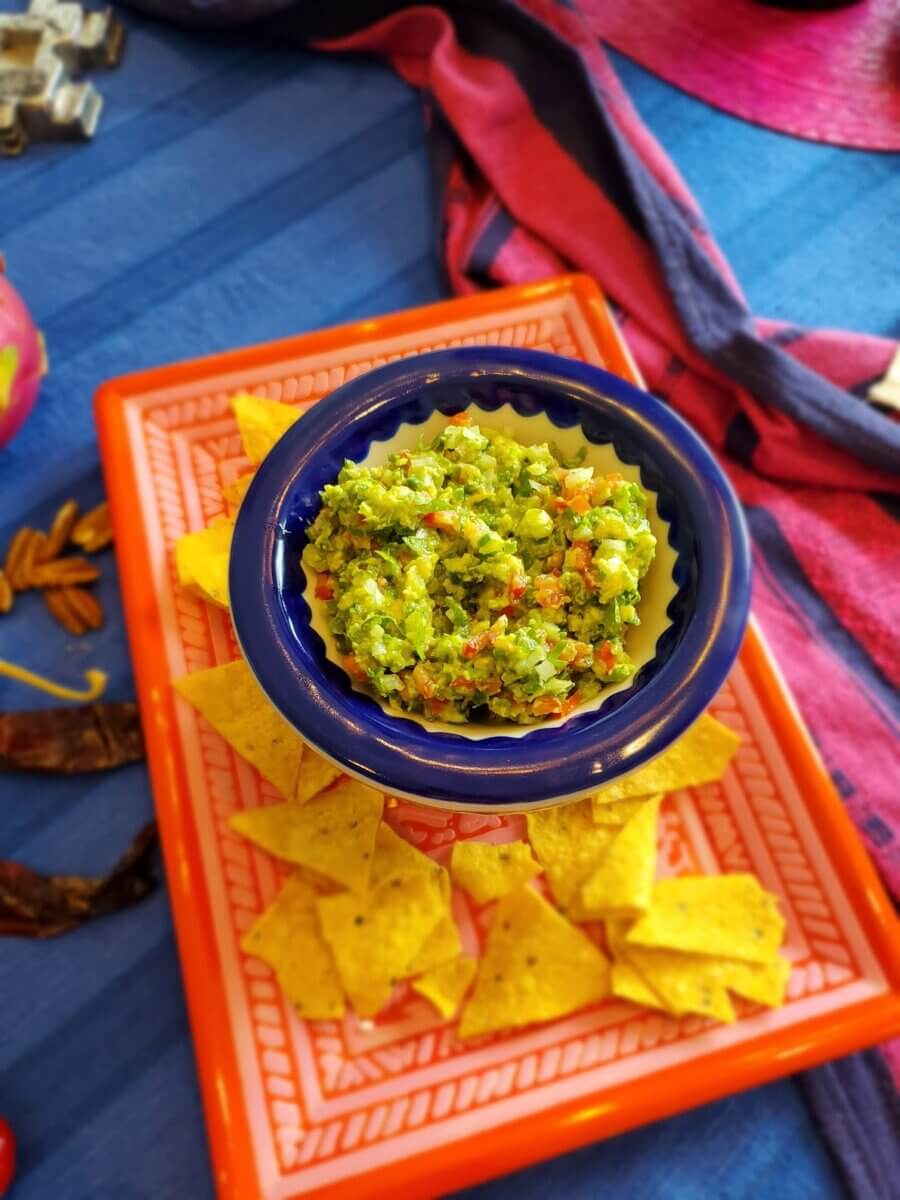
Madame Adriana described the history of Mexico cuisine, “Our traditional cuisine is a comprehensive cultural model comprising farming, ritual practices, age old skills, culinary techniques and ancestral community customs and manners. It is made possible by collective participation in the entire traditional food chain: from planting and harvesting to cooking and eating. The basis of the system is based on corn, beans and chilli; unique farming methods such as “milpas” (rotating swidden fields of corn and other crops) and “chinampas” (manmade farming islets in lake areas); cooking process such as nixtamalization (lime hulling maize, which increases its nutritional value); and singular utensils including grinding stones and stone mortars. Native ingredients include varieties of tomatoes, pumpkins, avocados, cocoa and vanilla provides variety to the basic staples.”

She further explained, “Aside from the ingredients previously mentioned, there is wider variety of that ingredients are originally from Mexico; such as turkey, papaya; pitaya (widely known outside of Mexico as dragonfruit), chia seeds, a wide variety of chilli’s, agave from which tequila and mezcal are made, nopal (cactus) and its fruit called tuna, beans and corn, amaranth, green beans, jicama and squash.”

Madame Adriana proudly remarked, “To this natural wealth, it is important to include the different influences Mexican gastronomy received over time, especially from Europe and the Middle East. First, from Spain for 300 years, and in the 19th century there was a strong French and Austrian culinary influence from the empire of Maximilian of Habsburg. Thanks to this influences and fusion, Mexican gastronomy was enriched even more. It was a slow and progressive process that culminated by the end of the 20th century when UNESCO recognised Mexico’s cuisine as intangible cultural heritage of humanity. UNESCO first registered our Mexican cuisine in 2010, even before the French cuisine, which was added to the list in 2012, followed by the Mediterranean and Japanese, both in 2013. According to world popular rankings, Mexican cuisine is among the top five most popular and prestigious cuisines in the world, along with the French, Chinese, Japanese and Indian ones.”

Mexican food and its culture are unique according to Madame Adriana, “Although many of our dishes are based on the traditions of ancient cultures and peoples (Aztecs, Mayans, Tarascans, etc.), they also have contributions from Mediterranean and European cultures, incorporated during the colonial era. These processes have been further enriched by influences from the Middle East and Asia over the years. Precisely, these mixed influences make Mexican gastronomy a clear reflection of the country’s culture. Thus, Mexican food, aside from being delicious, unique, colourful and highly valued internationally, is the product of the history and culture of Mexico.”

To underline an important fact, “Our gastronomy is product of a millenary culture and of the historical continuity and additions to ancient traditions. It also plays an important role as an element of identity for the Mexican people. Mexican food is collectively produced, is based on products originating from a very diverse land and boasts great creativity in its chefs, who over the centuries have been perfecting our gastronomy. It is a very balanced and healthy diet that for millennia has nourished the Mexican people.”

With the long traditional culinary history of Mexican story, I asked Madame Adriana on how Mexican food is influenced by. She replied, “From my personal point of view, there are two main elements to consider to evaluate a national gastronomy. The first set of elements is given by nature. Mexico is one of the most mega-diverse countries in the world, with more than 10,000 kilometres of coastline, tropical regions, arid zones, deserts, mountains, some of them with snow, large forests and valleys. On the other hand, Mexico is the cradle of great ancient civilisations: Olmecs, Teotihuacans, Purepechas or Tarascans, Zapotecs, Mayans and Aztecs, amongst many others.”

She elaborated further, “These two characteristics allow Mexico to have a great cultural and culinary diversity, but with common central elements in its gastronomy such as the central use of corn, tomato, chocolate, turkey, avocado and a wide variety of vegetables, seeds, fruits, fish and shellfish. Even some native flowers are used in the preparation of certain dishes.”

“Added to this natural and historical wealth, there is the influence that came from Europe and the Mediterranean throughout the centuries, including even influences from Asia thanks to the contributions received by the Acapulco Galleon, which operated for more than 200 years between the centuries XVI and XIX. Thanks to the sea route from Asia, spices, several kinds of fruits and rice arrived, which are now part of the daily diet of Mexicans. Likewise, Mexican contributions such as papaya, pitaya, chillies, tomato, avocado, chocolate and flowers such as cempasuchil (marigold) and poinsettia arrived to Asia.”

Key representative dishes

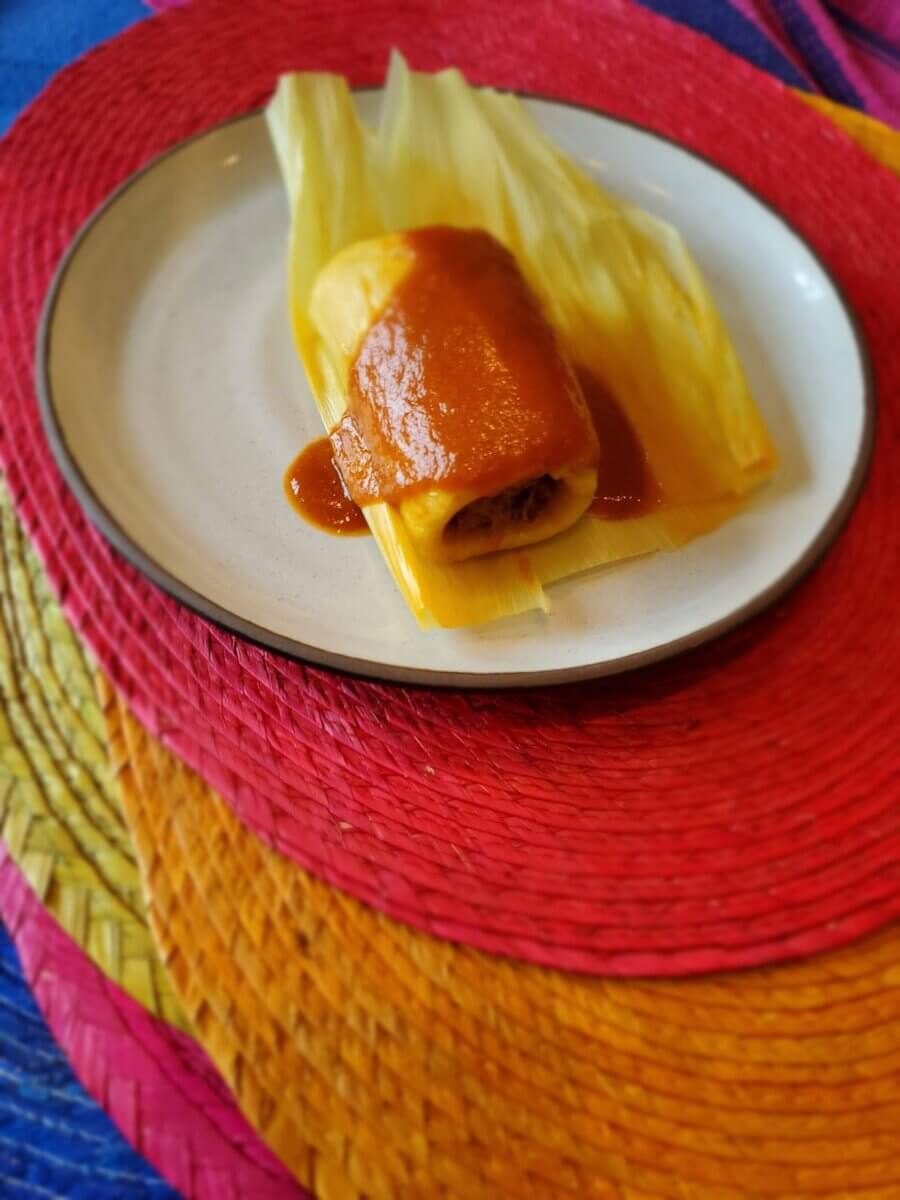
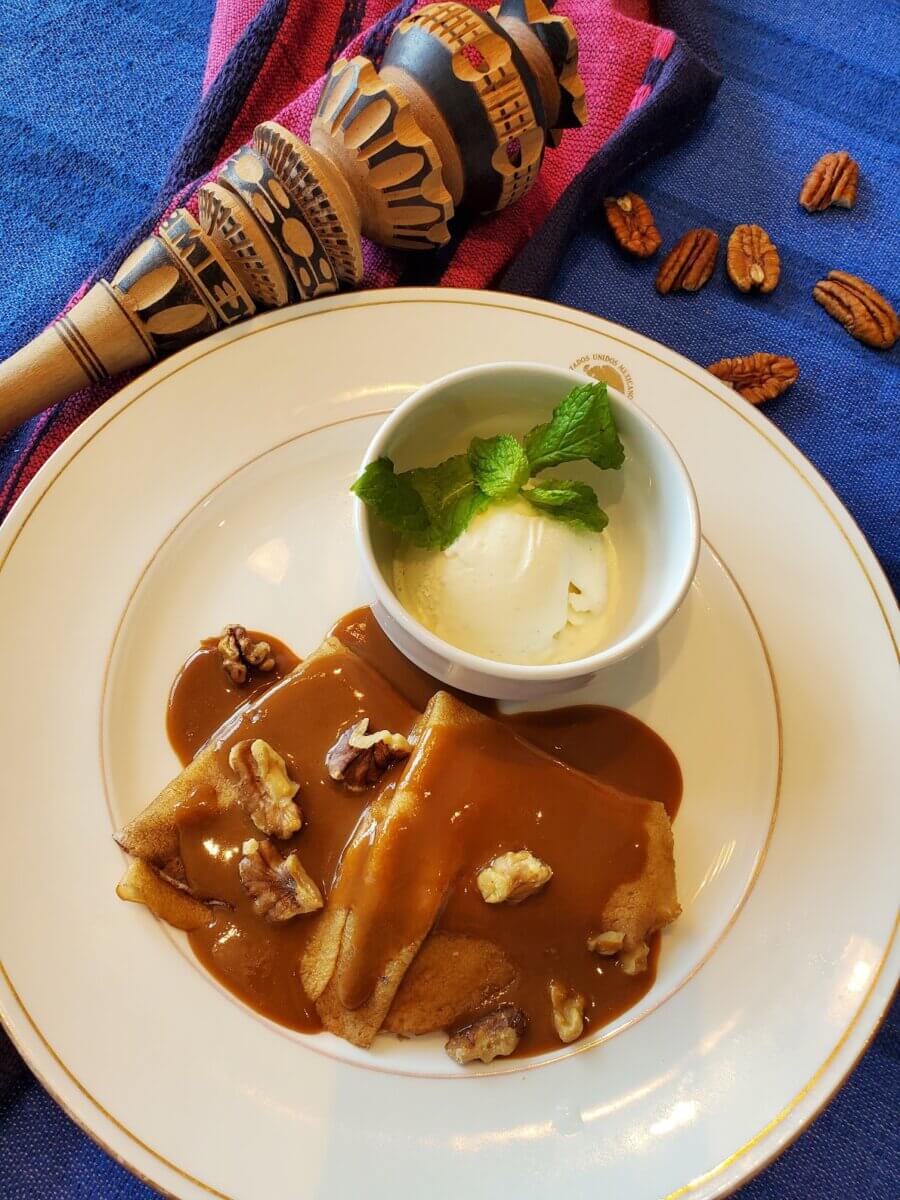
The list is a very long one, given the diversity and complexity of Mexican food. On the Mexican coasts, fish, shellfish and a great variety of “ceviches” (raw fish) stand out. The ceviche is also typical of various Latin American countries with coast to the Pacific.

In the central part of Mexico, “mole” is very common. Mole is a very complex sauce, which can include 20 or 30 ingredients, and it can take days or weeks to prepare. It is the dish that is used for great celebrations or special occasions.

In the North, the popular dishes are “cabrito” (baby goat) and different kinds of “barbacoas” (lamb meat wrapped in agave leaves and cooked underground on low heat overnight), which is a very typical dish to have on Saturdays or Sundays.

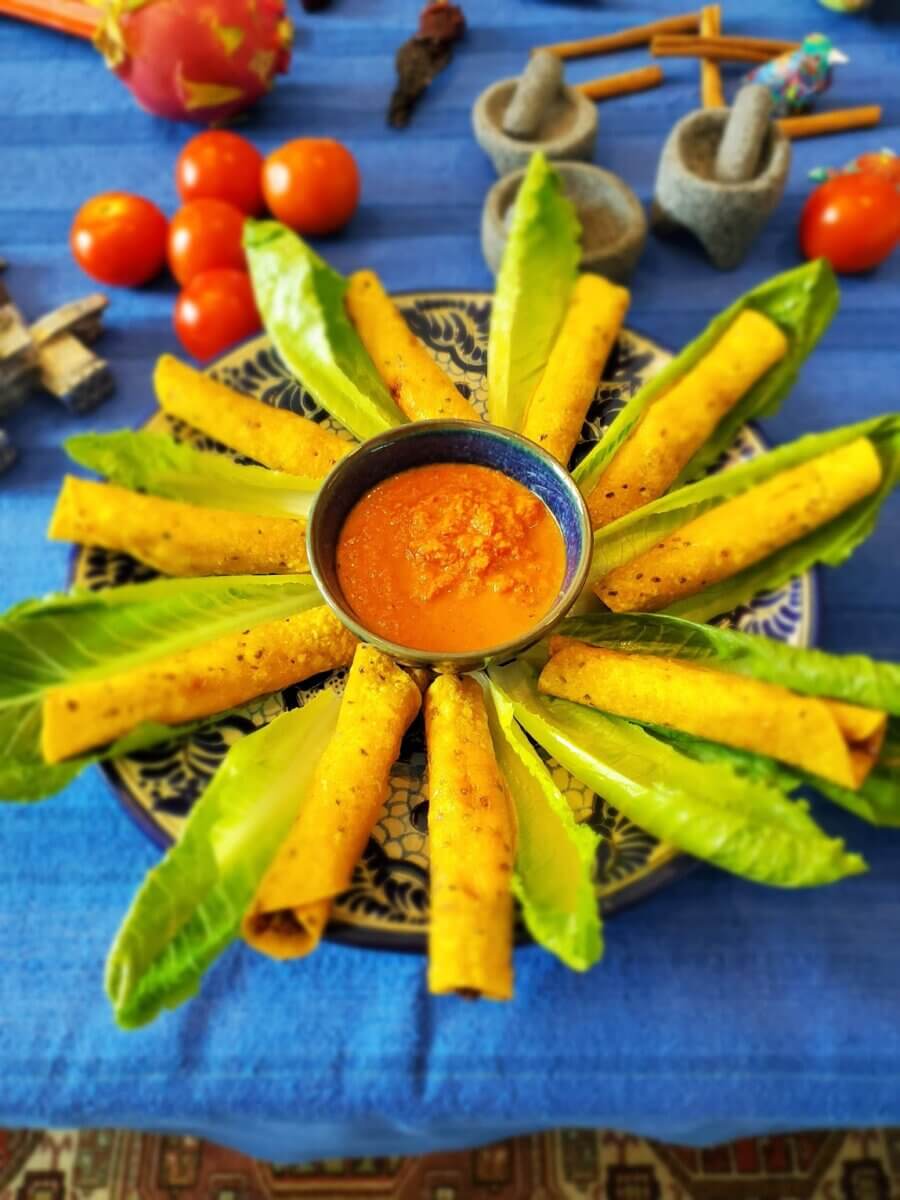
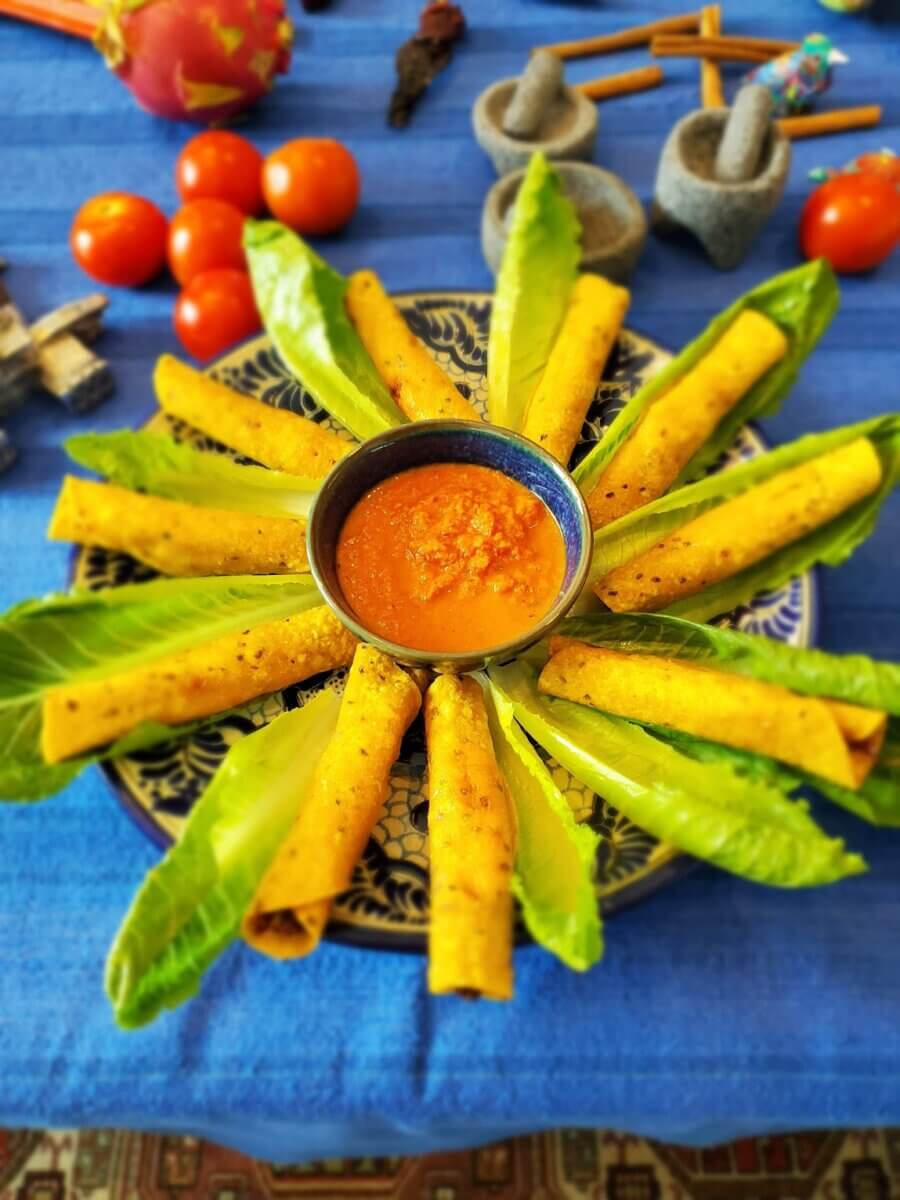
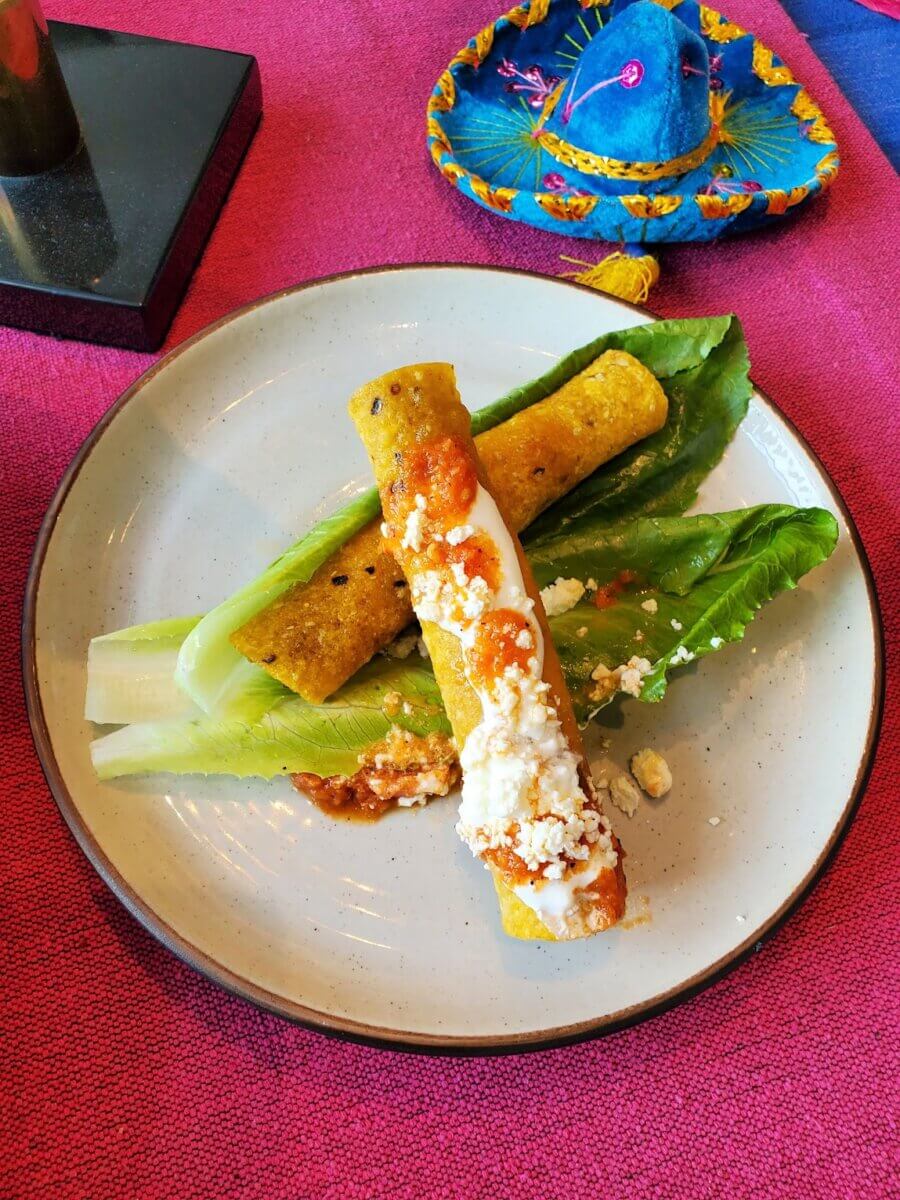
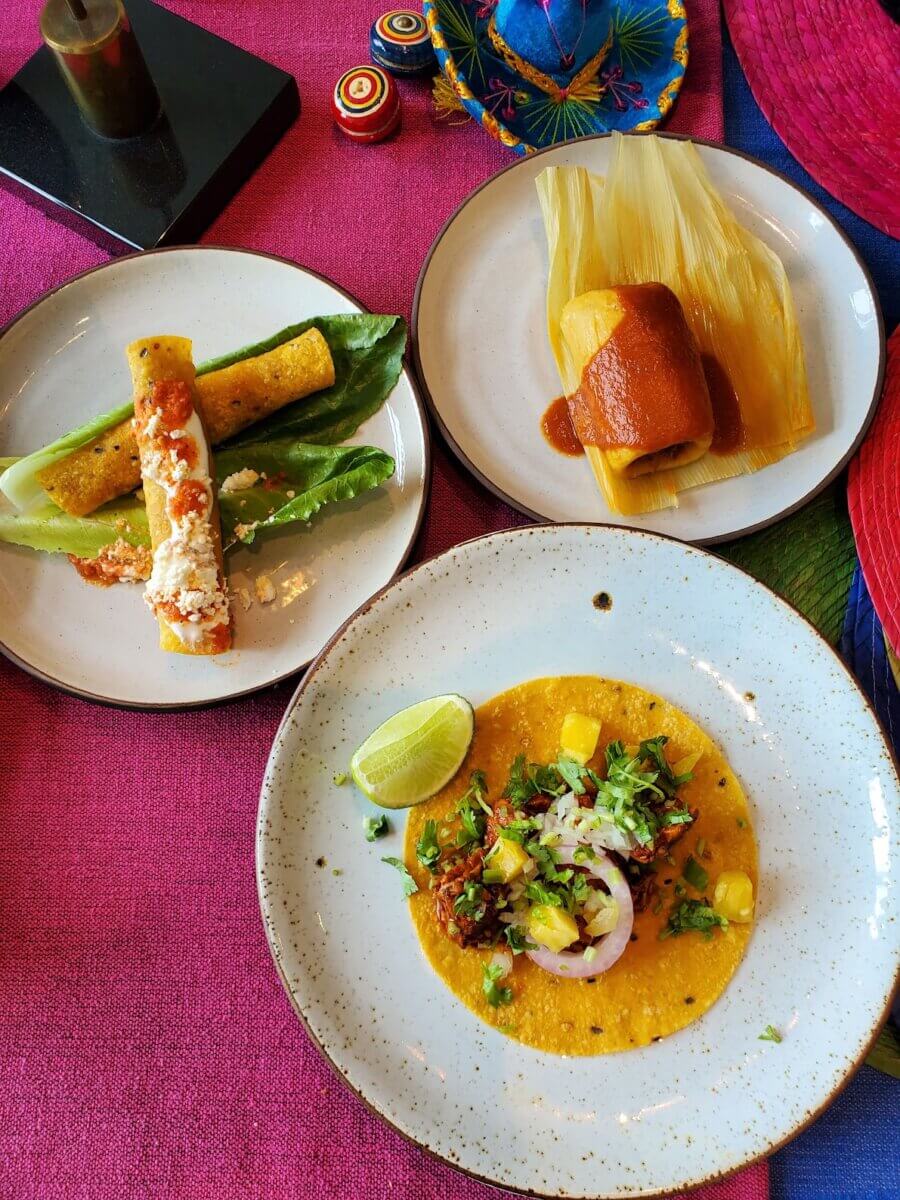
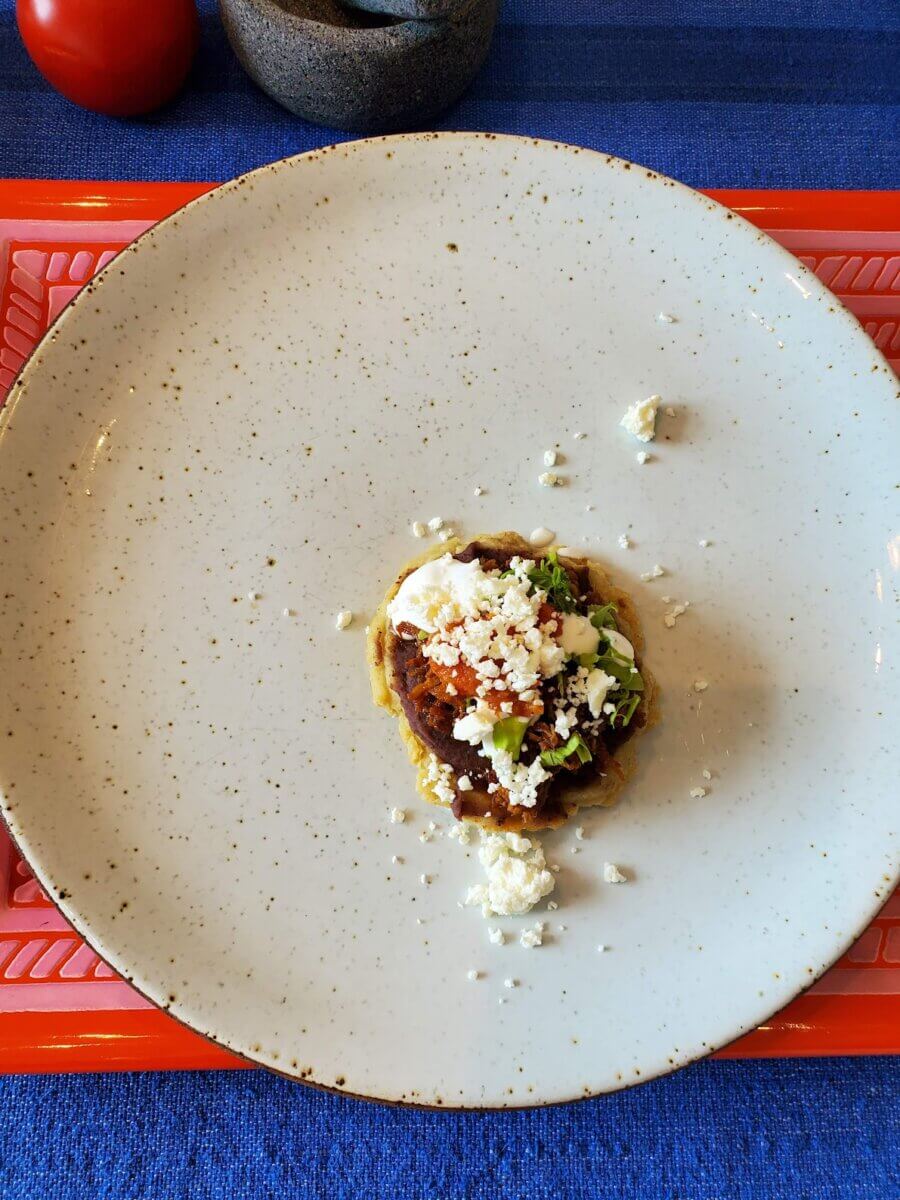
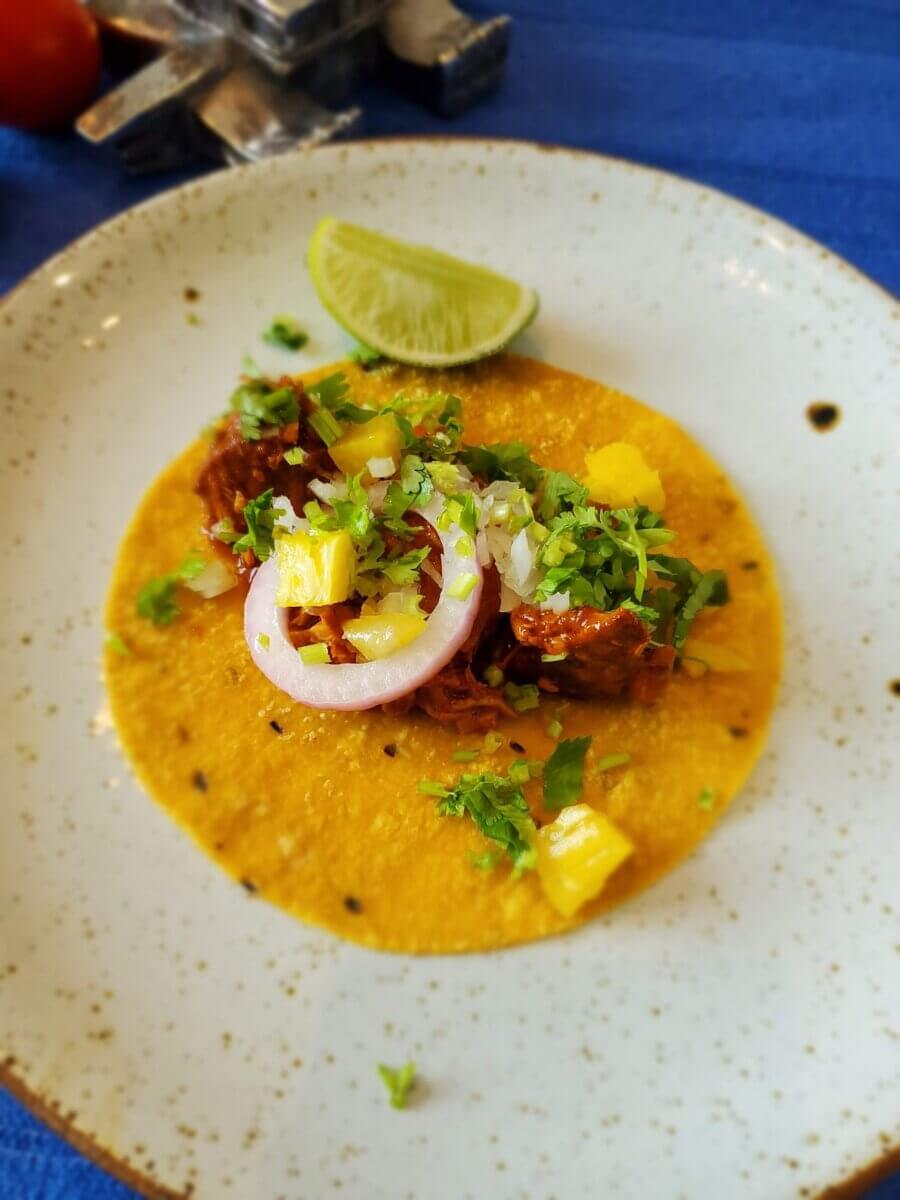
The country has an extensive variety of soups, salads and stews, even their fast food is also well known in the world, mainly meat tacos, which can be filled with beef, pork, lamb, chicken or even fish.

There are extensive selection of dairy based dishes, with a wide variety of cheeses, milk and sour cream. No doubt the dairy products guarantee tasty desserts, and with heavy influences from Spain, France and Austria, are also delicious and diverse.

In addition, there are excellent fruit liqueurs produced in Mexico. Mexico produces quality red and white wines, aside to the world famous tequila, mezcal, as well as beer.

Gastronomy, like any other cultural activity, is not something static; it evolves over time and through contact with other influences from other regions of the world. This tradition is the heritage of past civilisations, a culture inherited and transmitted from generation to generation that gives its own identity to each region of the country, making up the cultural mosaic that is Mexico.

Madame Adriana admitted, “Mexican cuisine is ancient and diverse due to its great wealth and geographic diversity. This tradition merges and is further enriched with the arrival of the Spaniards to Mexico. New products and spices are incorporated, and form a wide variety on which the “Criolla” (Creole) cuisine was established, that is, the fusion of both cultures. By the late 19th century, the elaboration of a more sophisticated food promoted by the government and the elites took hold. Good cooks were hired and even Italian and French chefs were hired in Mexico to teach new dishes and cooking techniques, which were incorporated into the Mexican cuisine. The growth of large cities in Mexico throughout the 20th century, and the arrival of international tourism generated the opening of hotels and large restaurants. This generated interest and taste for good Mexican cuisine, which has become one of the main tourist attractions in the country, because international tourists have been able to discover the richness and diversity of Mexican cuisine, which is delicious and unique.”

0 comment
0 FacebookTwitterPinterestEmail

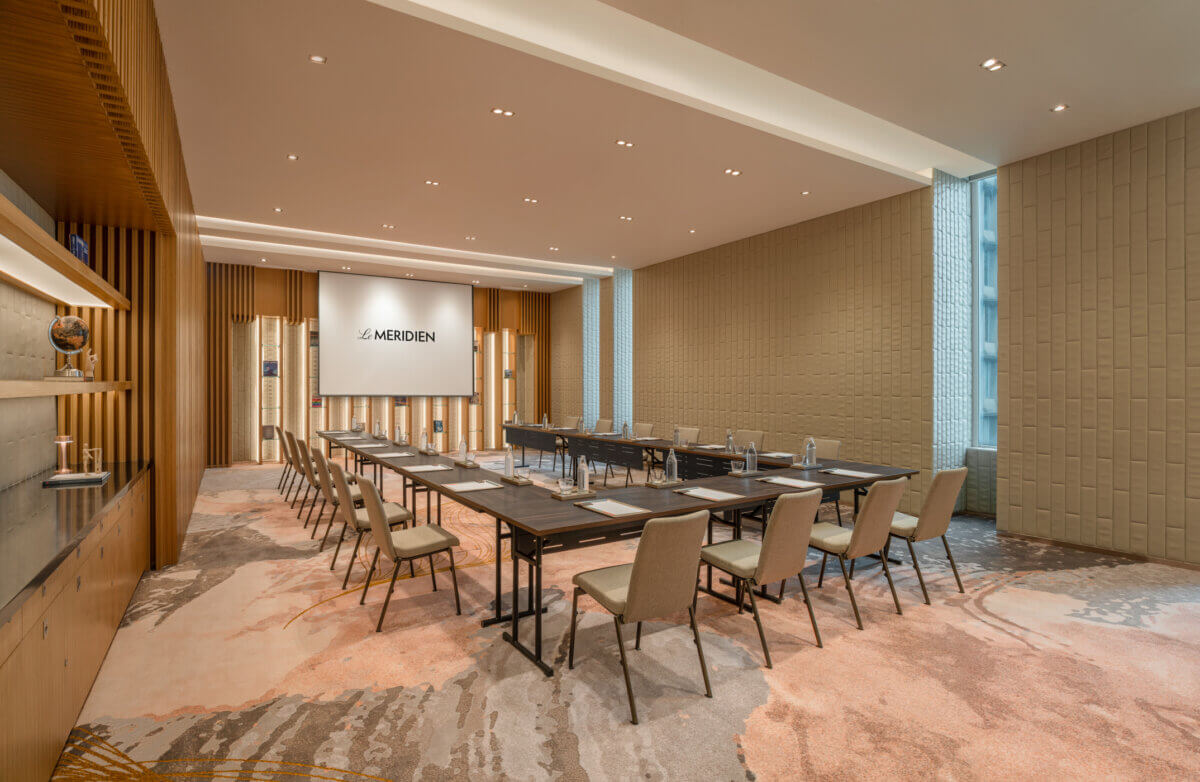
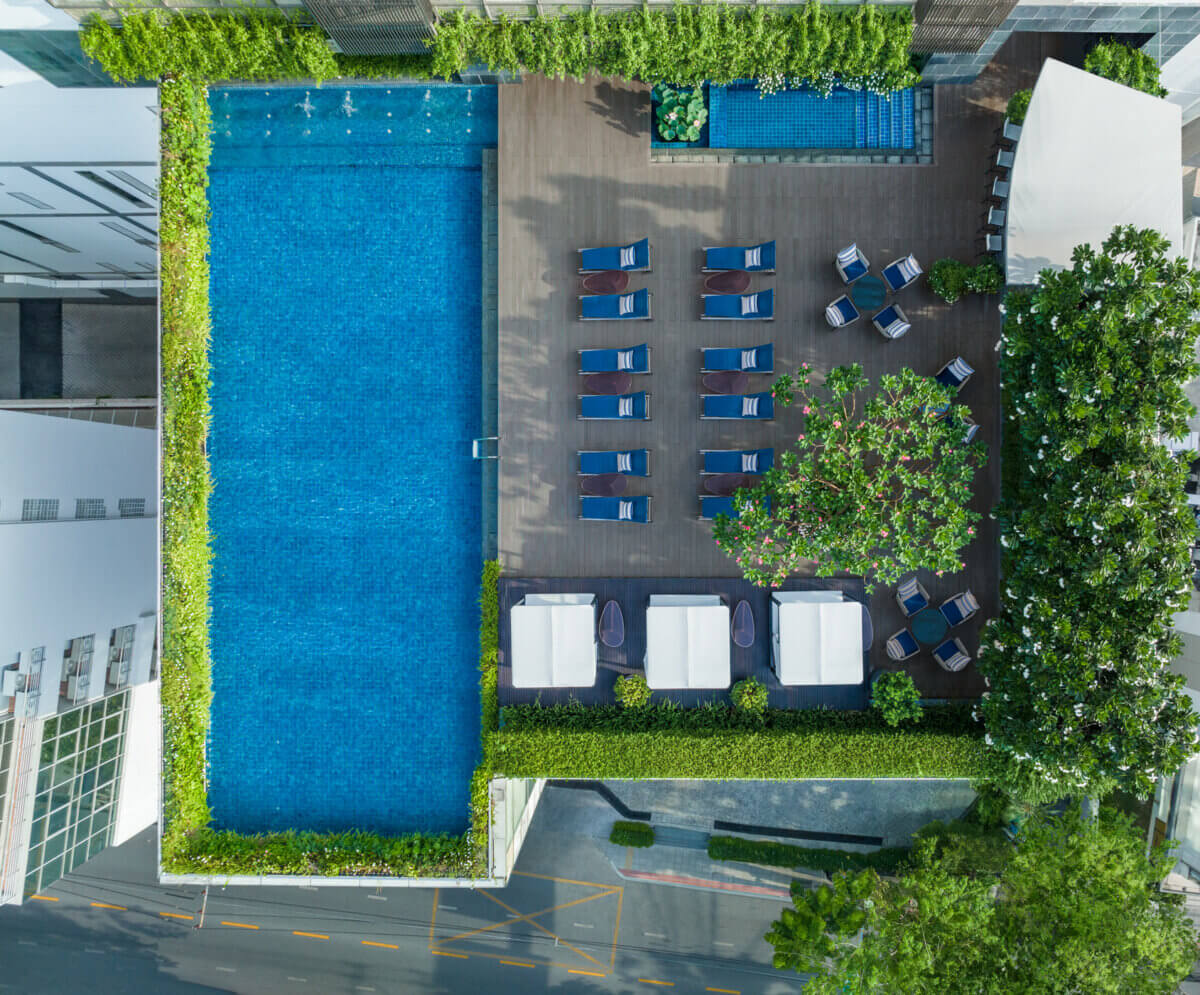
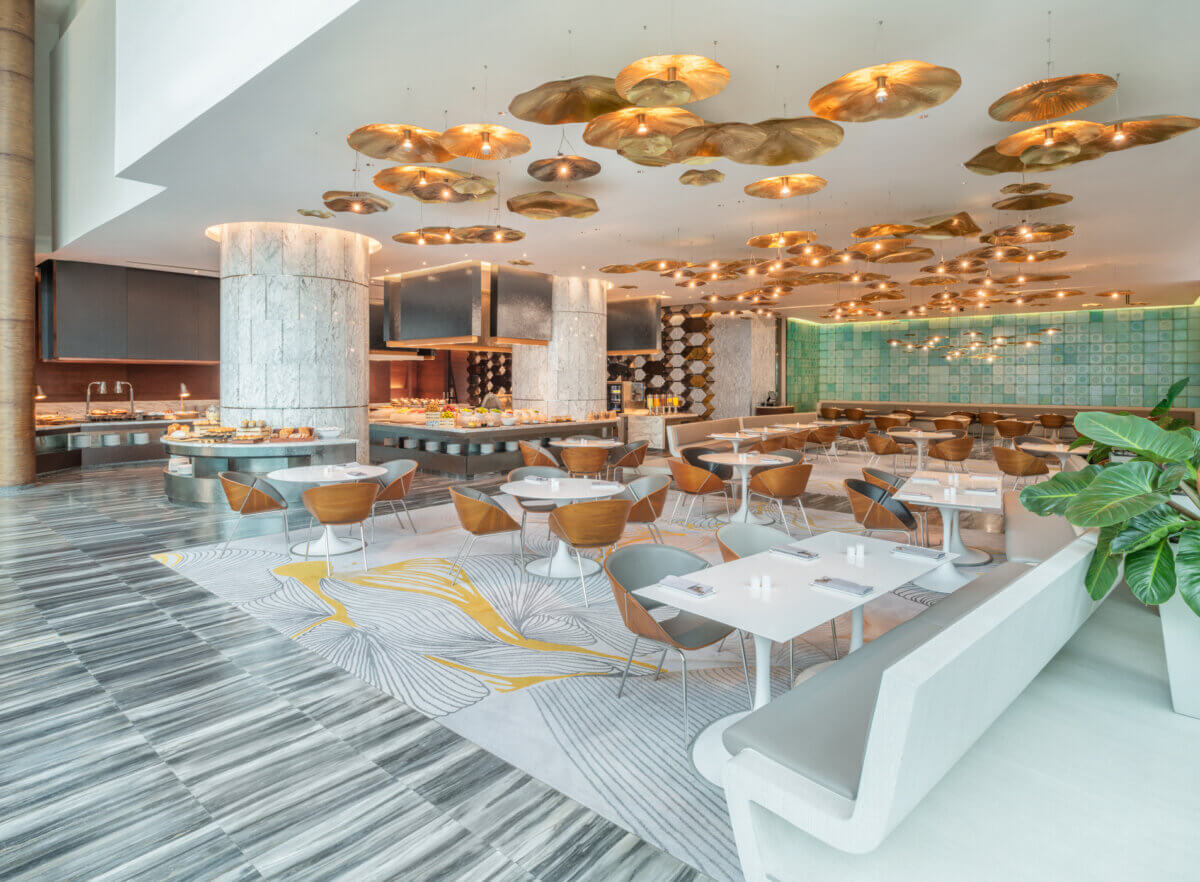
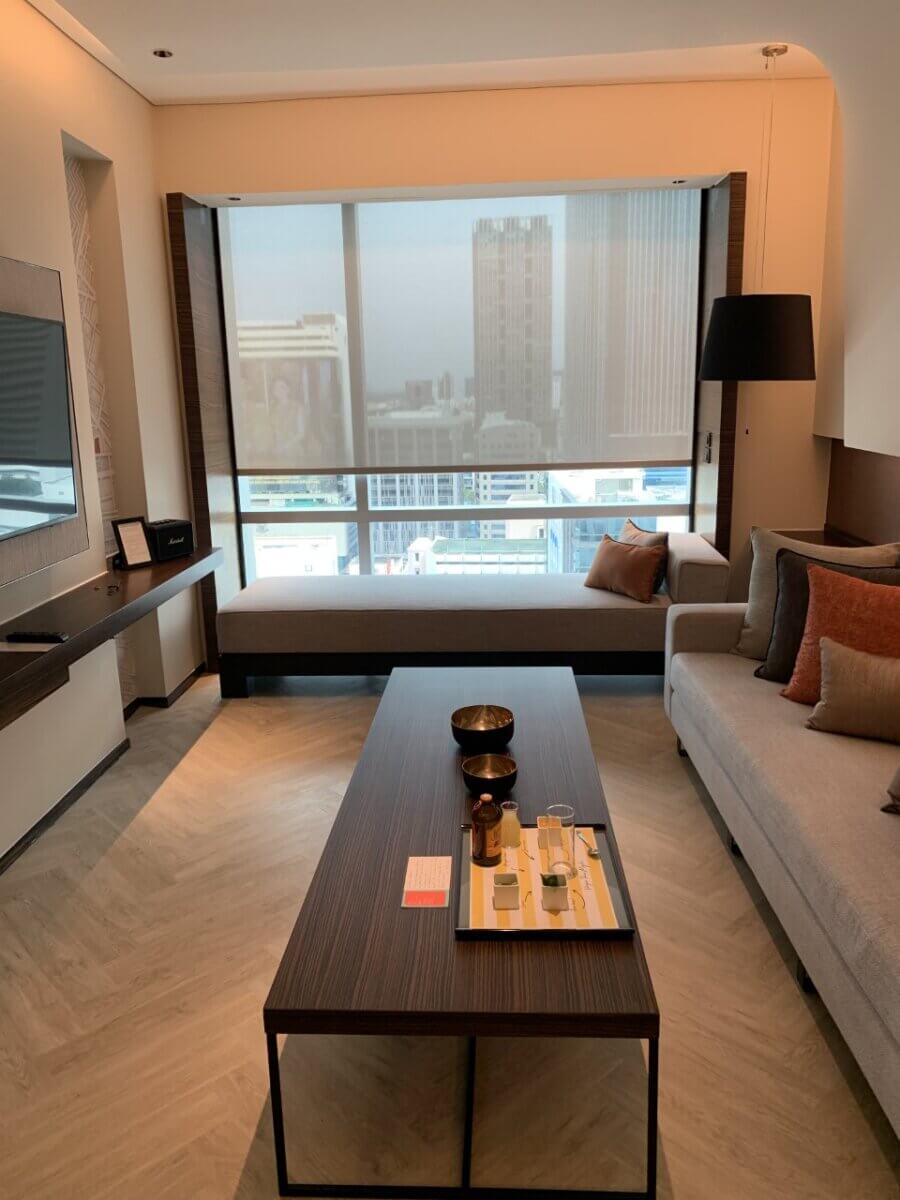
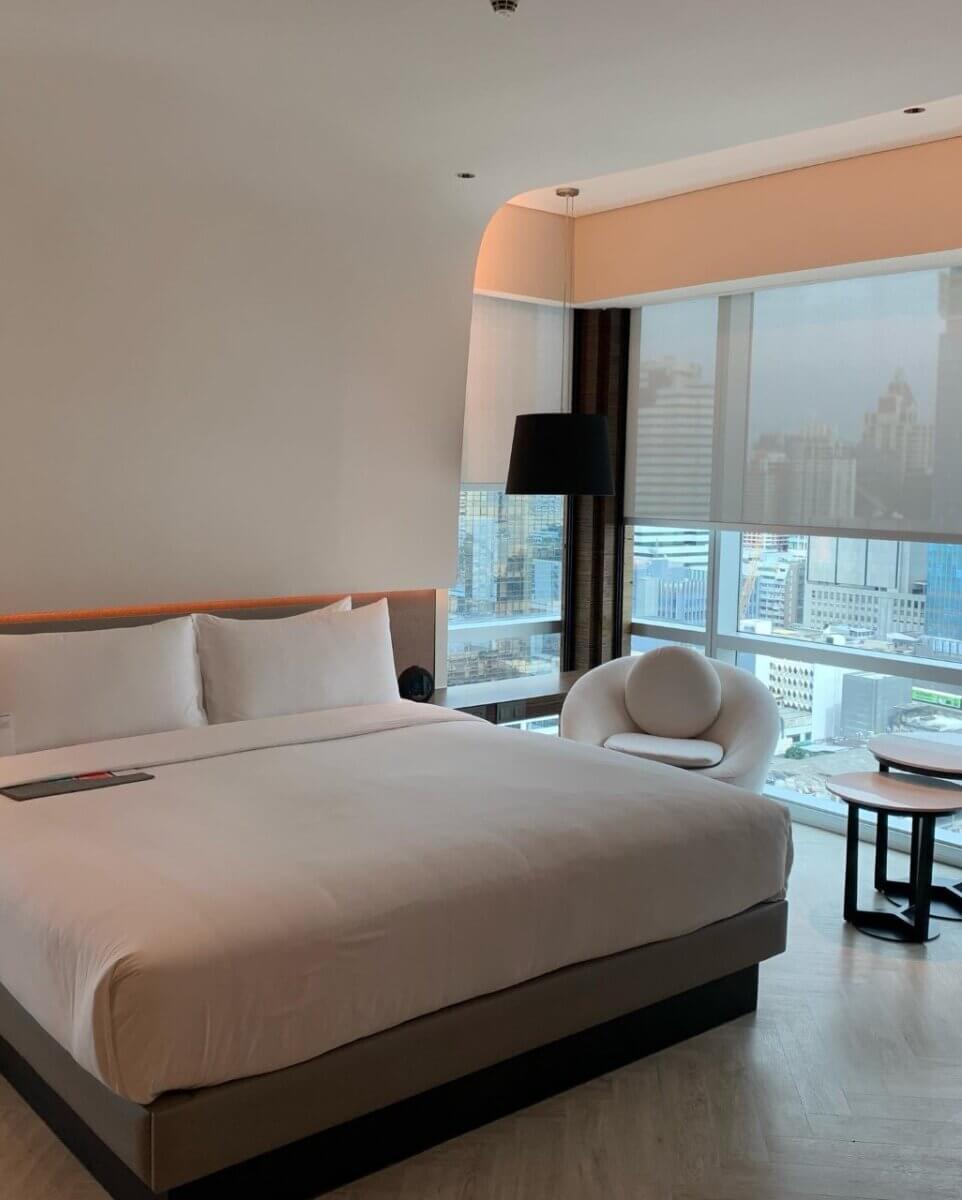
Le Méridien Bangkok is welcoming the world back to Thailand’s vibrant capital city following an extensive refurbishment that has elevated every aspect of this stylish, art inspired hotel.

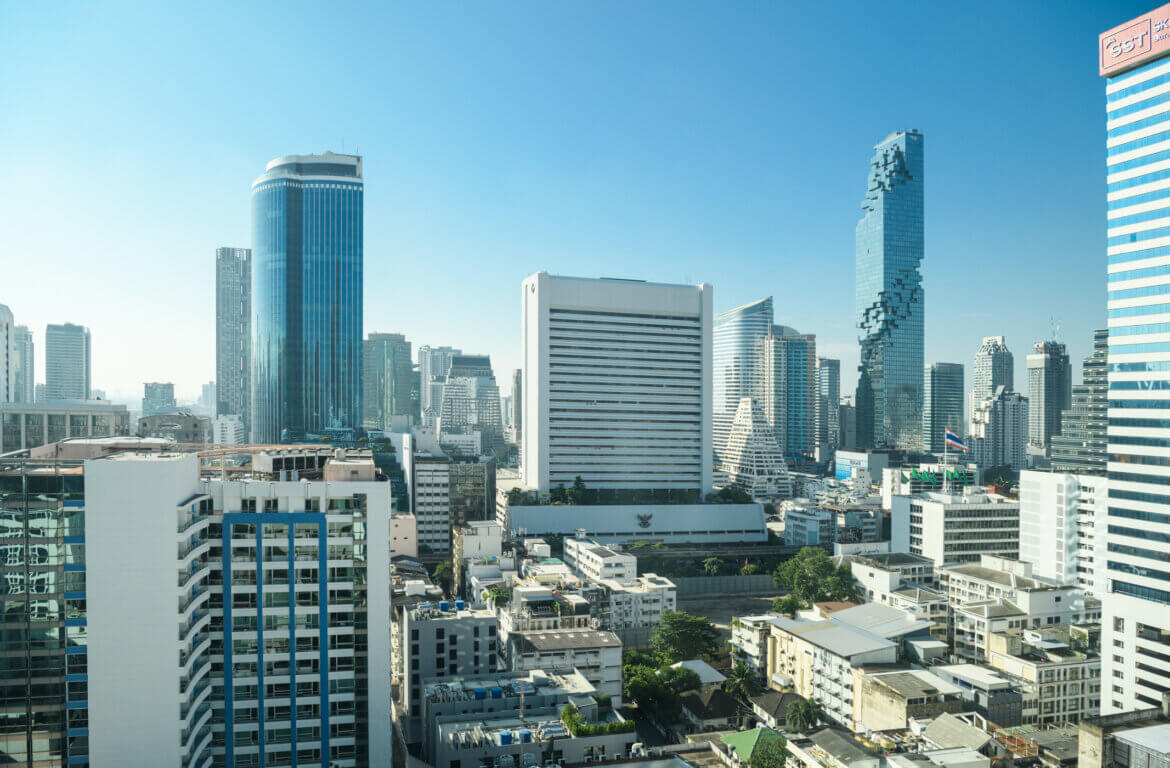
Nestled in the beating heart of Bangkok, surrounded by the restaurants, bars and nightlife of the Silom district and connected by Sala Daeng BTS and Sam Yan MRT stations, Le Méridien Bangkok puts guests in the heart of the action. With Bangkok now welcoming international visitors without any travel restrictions, guests can discover a new era of revitalised guest rooms and dining concepts that take inspiration from Bangkok’s treasure trove of traditions, artistic culture and upbeat urban vibe.

Definitive first impressions are created by the new look lobby where the iconic I-Jud giant white dog statue awaits with a playful welcome.

Marriott International Hotel

The refreshed and fabulous guest rooms are built with ergonomic design and modern amenities, such as touchscreen IP phones, LED Smart TVs and Bluetooth speakers. The rooms are complemented with comfy sofas, big floor-to-ceiling windows, extra long working desks with a number of electrical outlets for all business travellers, deep soaking tubs and separate rain showers to create a deep sense of calm. With striking views of the city from street to sky, these refreshed rooms set the stage for immersive urban adventures.

Marriott International Hotel

At Latitude 13 Indoor, à la carte local and international snacks and shareable dishes are available throughout the day. Signature items range from bomboloni sweet sensations to savoury crostini. Outside visitors are welcomed to take advantage of the friendly outlet in the lobby as a casual meeting places throughout the work.

Marriott International Hotel

Surrender to savoury succulence at Rolling Ribs Brew Bar & BBQ, where taste buds are treated to combos of ribs, pulled pork, beef brisket, chicken and more, accompanied by a selection of side dishes such as tangy coleslaw and barbecued corn on the cob, and washed down with signature cocktails straight from the wild west. A must try place for lovers of American style BBQ which gives the feeling of “TGIF feeling”!

A brand new bar, Tempo, sees mixologists embrace a Japanese attitude and use local plants and herbs to craft high end cocktails. Latest Recipe, the international culinary marketplace, enhances every dining experience with two tempting promotions. “La Cantine” is the restaurant’s brasserie style alter ego, where diners can come and unwind during the day with mouthwatering Euro-centric menus, from giant spinach ravioli and lobster tortelli to Merlot seafood soup, braised beef shin, roasted sea bass and more. Pick from quick two, three or four course set lunches every day from 12:00 to 14:30, priced at 390B, 490B and 590B net respectively. À la carte options are also available. Then in the evening, “Creative Hour” offers 120 minutes of free flow drinks and luxurious light bites between 19:00 and 22:00 hrs, priced at just 950B net per person!

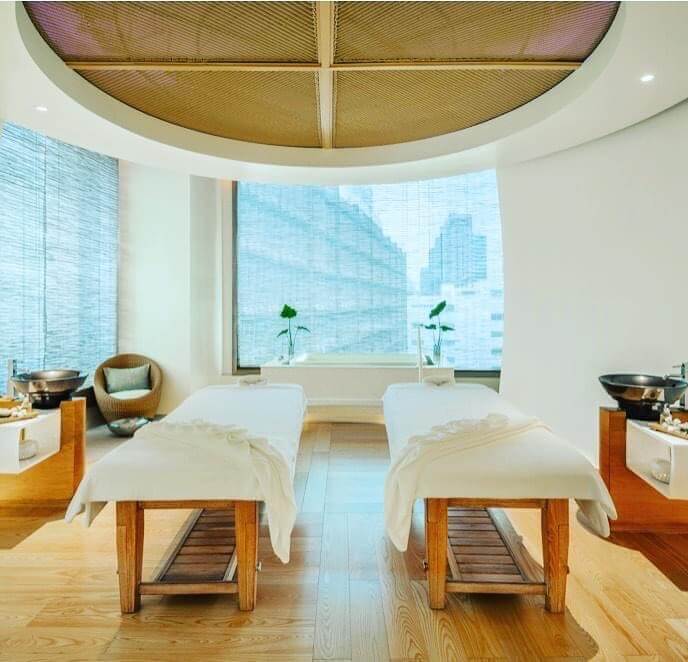
Inspired by the rich traditions of European spas, SPA by Le Méridien breaks away with refreshing interpretations reflecting the sophisticated ways of today’s international travellers. Seven treatment rooms are configured in circles to represent the global meridian from which the brand derives its life force. All treatments and therapies seek to achieve purification, restoration of natural energy, and mind and body harmony.

To celebrate the return of refined European hospitality to Le Méridien Bangkok, guests and local residents are invited to explore “Au Soleil by Le Méridien”. Allure yourself with afternoon tea, spa treatment and many more initiatives under Au Soleil theme at Le Méridien Bangkok

For more information and reservations, please contact 02 232 8888 or [email protected]
Website: www.lemeridienbangkoksurawong.com
Facebook: www.facebook.com/LeMeridienBangkok
Line: @lemeridienbangkok

0 comment
0 FacebookTwitterPinterestEmail

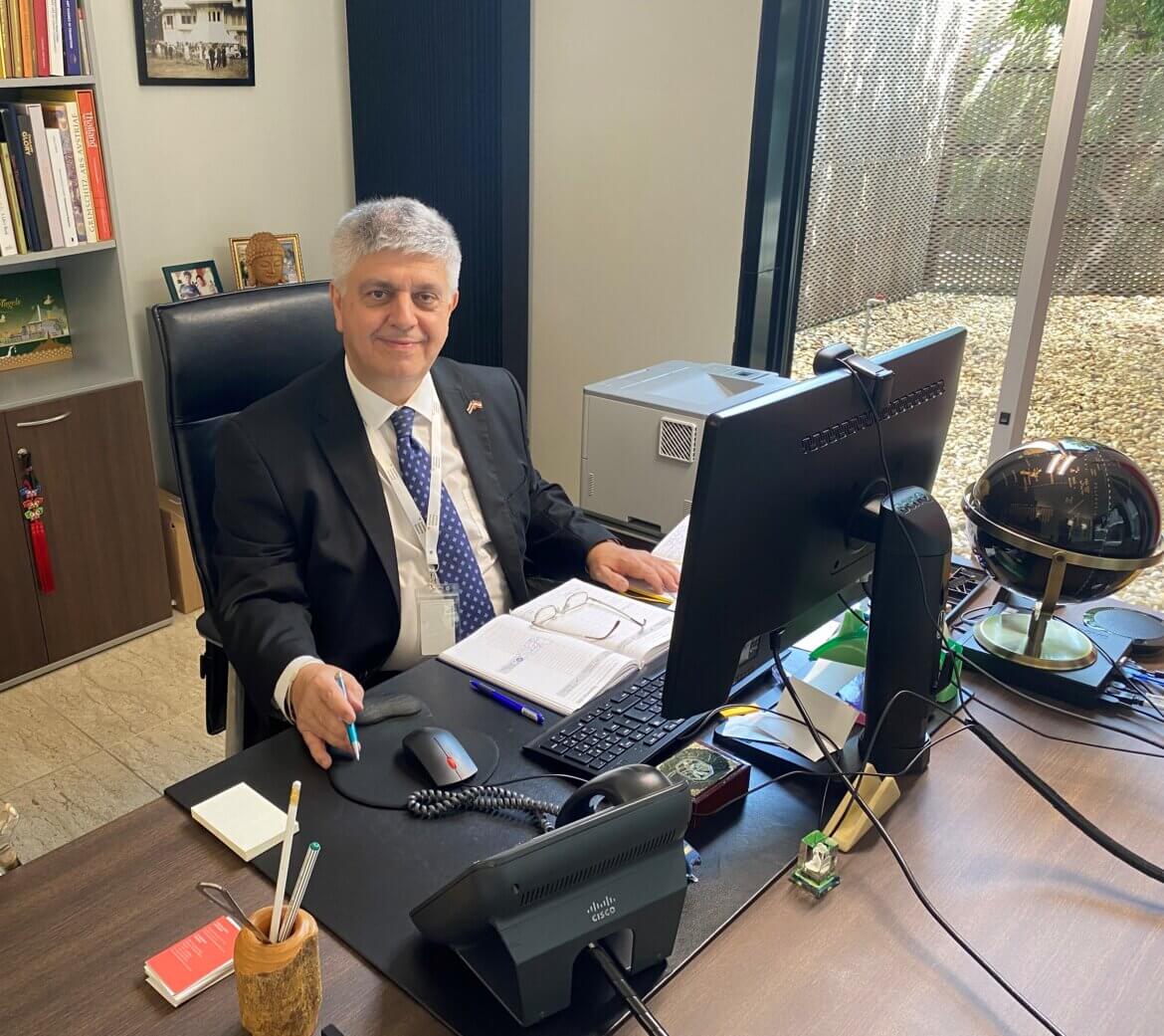
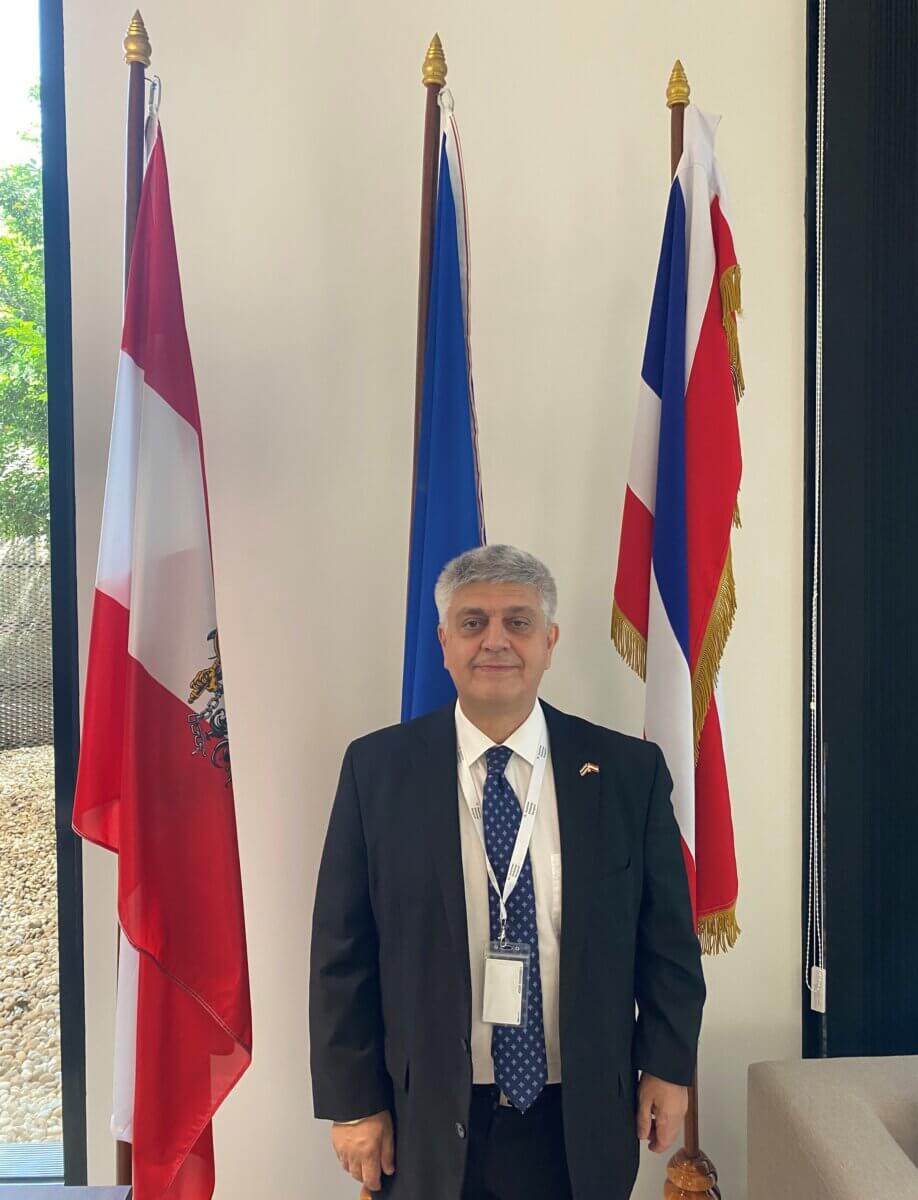
In 2019, the cordial relations between the Kingdom of Thailand and the Republic of Austria reached 150 years milestone. Expat Life sat down with H.E. Mr. Wilhelm Donko, the new Austrian Ambassador who arrived Bangkok in April this year. Ambassador Donko, together with Spouse, Madame Yan Donko. came directly from Oslo, Norway, where the diplomatic couple spent five years since 2017. Before that he was in Vienna for four years, and before that Ambassador in Manila and in Seoul.

Which city were you born and brought up?

          The Donko’s family origin is in Southern Bohemia. I was born in Upper Austria’s capital of Linz on the river Danube, but brought up in Schaerding, a picturesque town in Upper Austria with a population of only 6000, directly on the border to Bavaria. A small but very beautiful baroque town which I would strongly recommend everybody to visit during a holiday in Austria.

At which age did you decide you wanted to become a diplomat?

          When I was nearly 29 years old, I never thought about this job. However, It was only in Tokyo, where I was a postgraduate student in the late 1980s. I met my wife Yan, from Shanghai and was also a student at Tokyo University. I was looking for a job and as I always had been very interested in politics, history, geography etc., I thought then why not tried it?  

Do you have any other diplomats in your family?

          No, never; my father was an architect, my mother an office employee and later a housewife.

How do you see Thailand today, in ASEAN, and in a wider context?

Thailand is traditionally one of Austria’s most important partners; not only in the region, but in all Asia. We are also well aware that Thailand occupies a key position in the Association of South East Asian Nations (ASEAN), the founding document of this organization was signed in Bangkok in 1967. Like Thailand, Austria supports the struggle to uphold multilateralism in a climate of growing protectionism and rising great power competition. Bilaterally, we established formal diplomatic relations between Austria-Hungary and the Kingdom of Siam already in 1869 with the conclusion of a treaty on “Friendship, Trade and Navigation”; but already before the signature of this treaty, in 1865, we had opened the first honorary consulate in Bangkok. In 1872, i.e. exactly 150 years ago, the first Austrian ambassador presented his credentials to His Majesty King Chulalongkorn (Rama V) who later visited Emperor Franz Joseph I in Vienna, in 1897. In 1912 we had opened a resident embassy (a so-called legation) in Bangkok. I would also like to mention that we had been especially honored by diplomatic assignments and various visits of the Royal Family in Austria.

Do you see any similarities between your country and Thailand?

At first glance we are geographically far apart and very different, but at the end we must have some important similarities. Tourism is an important source of revenue for both countries and accounts for approximately 12% of both our GDPs, which means that hospitality is important for both of us. The comfortable ambience, the congeniality and coziness coming from the people is something, that I would see as a clear similarity between our two countries. In German we have the word “Gemuetlichkeit”, which means more than sociability or comfortableness and which I would define as a kind of modus vivendi, a way of living which is practiced in Thailand on all levels and in all situations.
Do you have children, if so at what age and where do they go to school, university or work?

Yes, we have two children, Wilhelm, born in 1993 and a daughter, Katharina, who was born in 1998. Our son is currently in Japan, at Waseda University together with his girlfriend Melanie who is at Meji University; and our daughter is in Copenhagen, at CBS (Copenhagen Business School).

How do you look upon your work here? How does an average day look like?

Since my arrival I made a large number of courtesy calls and was therefore out of my office very frequently. There is no classical “average day” in this job. After a local EU meeting or a visit to introduce myself to an important partner I might have to go somewhere outside of Bangkok to attend a ceremony at a new Austrian production plant or to deliver a speech somewhere at a school or university; in the evening I have to attend a lot of social events, together with my wife. Every day is different, there is no consistent order how a working day looks like.

Have you set some goals you really would like to fulfill before you leave Thailand?

My goal is to represent Austria in Thailand in the best possible manner. I will do my outmost to strengthen and improve our bilateral relations in all fields, to support the Austrian community here and to improve our economic relations, which are already developing very well. We have approximately 100 Austrian companies doing business in Thailand, a quarter of them are benefiting from the favorable investment opportunities and have production plants here. In a rough calculation with my commercial counselor we estimated that Austrian companies in Thailand provide currently jobs for more than 10.000 Thai workers directly and many more indirectly. Austrian expertise in the field of crystal cutting and jewelry, in railway technology as well as in vocational training and higher education - to mention just a few - are prominent examples of successful collaborations between Austria and Thailand which I would like to promote further. I think in my job it is not always helpful to define a certain goal or certain numbers, my overall goal is clearly defined in the first sentence of my answer already.

Have you managed to travel in Thailand yet?

Not so much as I had wished to do, but we were able to make some trips, including to Phuket, on the road and to some nearby places. Nevertheless, we know Thailand from many visits before. My first visit to Thailand took place in 1986, as a student with a backpack.

When you have a day off, what do you prefer to do? A hobbies or pastimes?

I have a hobby and it is a very intense and time-consuming one: I am very much interested in naval history. I wrote two dozen of books and many articles on this topic since the late 1970s, mainly on Austro-Hungarian naval history, but also on the U.S. Navy and - to a smaller extend – on Japanese and German naval history too. It might be a surprise to many readers that Austria, today a landlocked country, once had a navy and even a quite important one. I do not speak about the river Danube or Alpine lakes. Austria-Hungary had access to the Mediterranean (from 1382 to 1918) and was home of the 6th-largest navy in Europe in 1914, only England, Germany, France, Italy and (with some restrains) Russia had larger naval forces; outside Europe only the USA and Japan; in 1914 the Austria navy was the 8th-largest in the world. You would not think about it today, most people are associating Austria with music, Mozart, skiing, mountains, “Sound of Music” …. but wait! Wasn’t there a Captain von Trapp in this movie? Wasn’t he a naval officer? In Salzburg, in the Alps? Yes, Georg von Trapp, the main character in “Sound of Music”, was indeed a historical person; he had been a very successful Austrian submarine commander in World War One. Austria’s navy built also its own Dreadnought-battleships. And there were also many visits of Austrian warships to Siam between 1869 and the First World war and I was doing a lot of research work on all these visits too. So, to answer your question, I spend most of my free time in research work on naval history.

How many of your countryfolk are living in Thailand? When and why did Thailand become a desirable destination for your people?

A very difficult question, as we indeed encourage our national citizens to register at the embassy, but there is no legal obligation to do it. We often hear from Austrians in trouble, who come to the embassy or who simply need a certain document, that they had been living in Thailand for many years already, without any tracks or registration at the embassy. Some others spend a couple of months per year in Thailand, mainly in wintertime, the rest of the year in Austria; and COVID also changed a lot. Our guess is, that approximately 3,000 or more can be considered as living here in Thailand.

Does your country and Thailand have an exchange programme for students?

No, there is no specific exchange programme for students from Thailand or vice versa. The “OeAD – Agency for Education and Internationalization” in Vienna is the most important government institution for advising, supporting and connecting people in education, science, research and culture with various future-oriented programmes worldwide. I also would like to mention the ASEA-UNINET, a network which was founded in 1994 by Austrian and South-East Asian universities, including Thailand, as an association of European and regional universities.

Any fun moment from Thailand that youd like to tell us about?

There are fun moments every day, 24/7, no dull moments. Actually, it is fun every moment of the day to live in Thailand. Not everything is so serious as in other countries, if something does not work today, maybe tomorrow. Let’s see. As a European who was born North of the Alps, it is very nice to get used to that approach.

Do you regularly meet up with your community?

Yes, I try to meet the Austrian community wherever possible and I do my best to give them the feeling that the embassy and its staff is here for them. After the long COVID break, we have again personal meetings of our business community, we already had a so called “Heurigen”, a big wine festival and various other occasions to meet. As it stands now I am also very confident that we will be able to have this year again a national day reception, on October 26, and I am very grateful for that.

0 comment
1 FacebookTwitterPinterestEmail

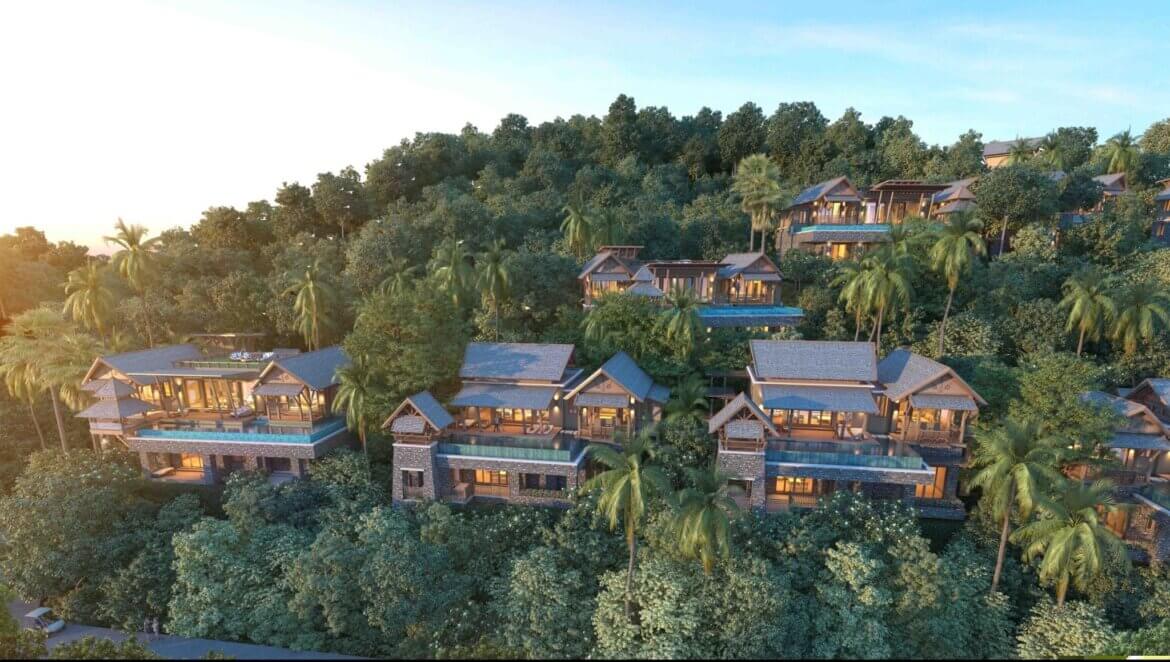
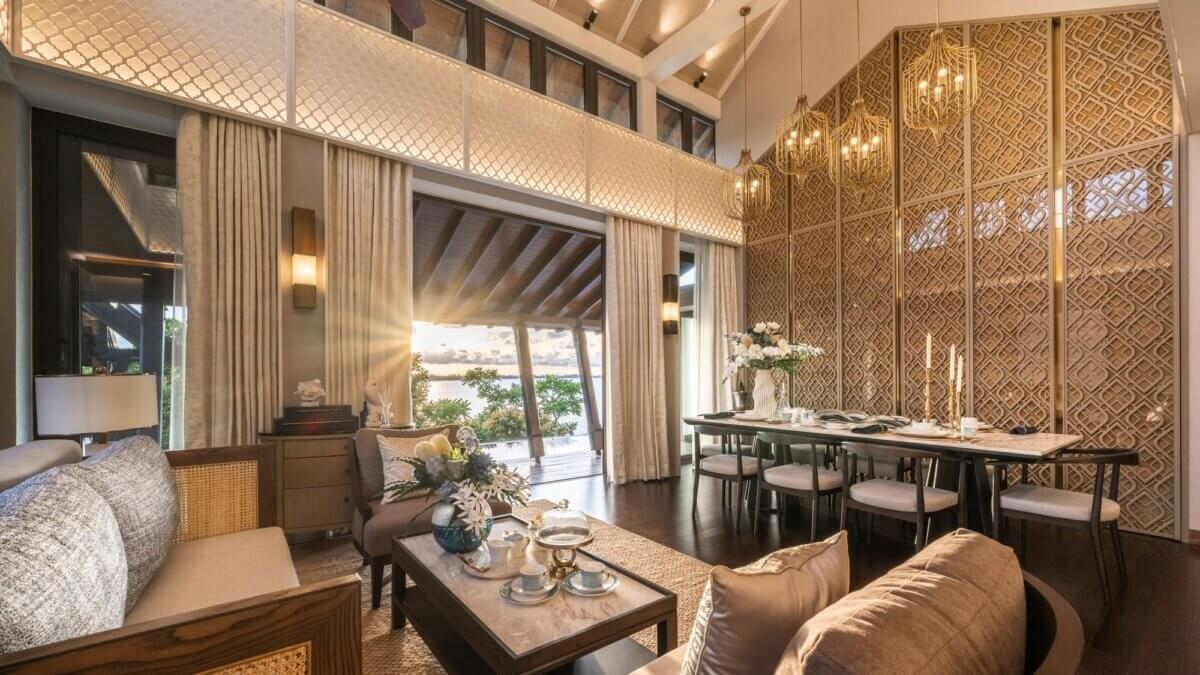
Grande Asset Hotels and Property PCL has partnered with the Amatara Wellness Resort to establish a seaside estate atop a mountain that offers opulence with a holistic wellness experience. Overlooking the Gulf of Thailand and the islands in Rayong province in the Eastern Economic Corridor area, the Amatara Residences Rayong is positioned as a new destination for world-class wellness-centric living that is friendly to the environment.

A new era of ethical living begins at a prime location of Thailand’s famous beach in Rayong as the Amatara Wellness Resort combines a right mix of wellness and luxury.

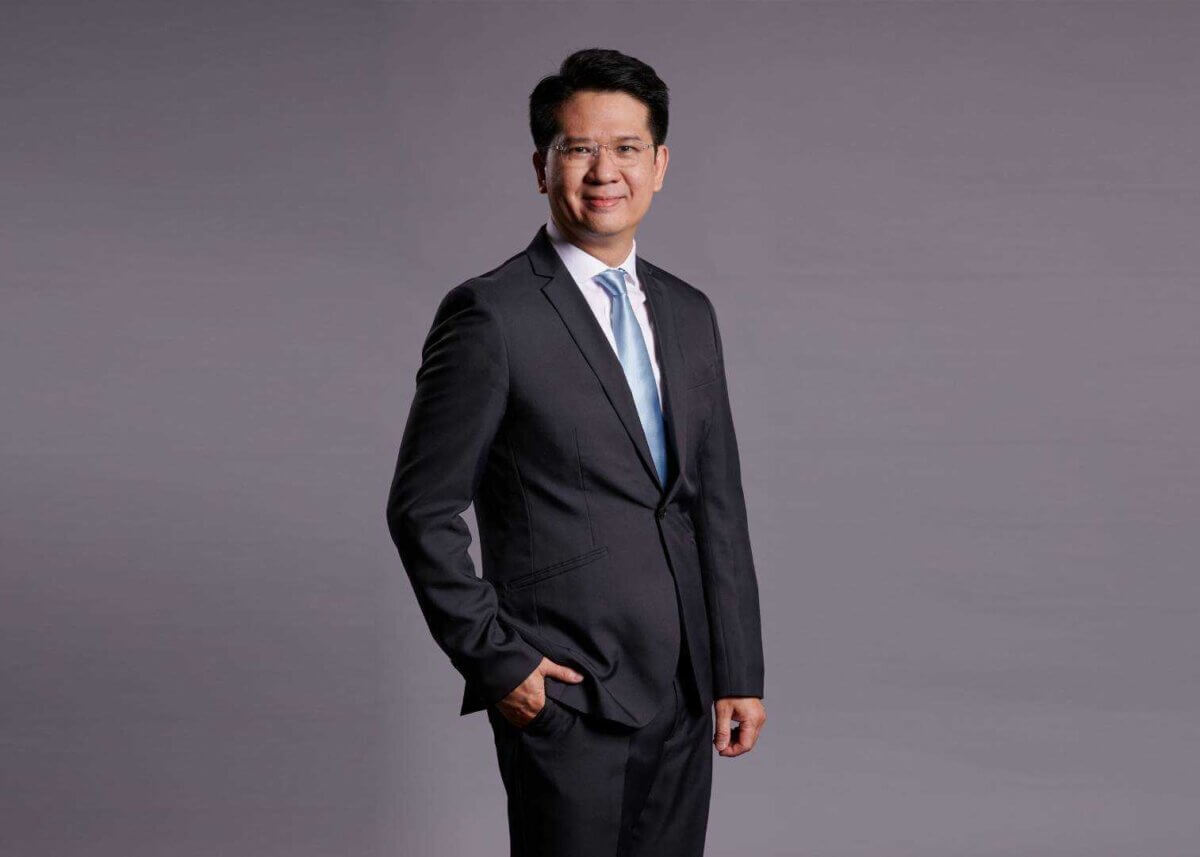
“The project responds to the growing trend of luxurious, healthy living that is strengthened by environmental awareness”, said Mr. Pheeraphon Nonthasoot, Executive Vice President Sales and Marketing of Grande Asset Hotels and Property Public Company Limited, Thailand’s leading real estate developer.

Amatara Residences Rayong consists of 61 pool villas, 282 condominium units and 209 5-star resort-style quarters. The estate’s common facilities include, among others, the Infinity pool, exclusive restaurants and Ocean Sky Bar which complement the lifestyle and creating a superior experience for its selected residents.

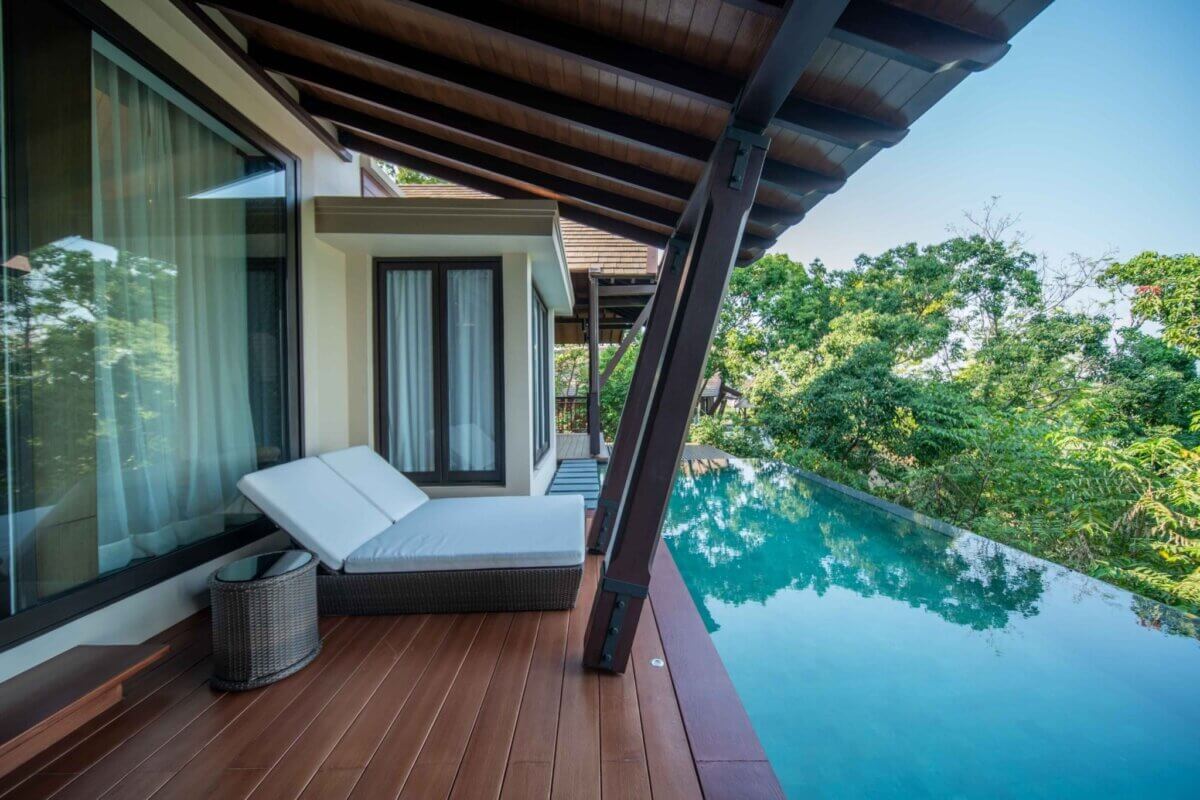
The project’s latest progress sees the completion of the first nine luxury beachfront pool villas which have featured contemporary Thai style based on the traditional architecture. The villas and facilities are designed to create a seamless harmony with the nature, such as the use of natural light and organic materials with state-of-the-art technologies thrown in to enhance the quality of life of residents.

In addition, the initiative offers wellness benefit programs, top-notch workshops, and leisure activities which are geared towards promoting contacting with the nature among people of all ages, from children to seniors, so that they have had a variety of different life experiences. Its ultimate goal is to enable every resident to find their own way of being physically, mentally and spiritually healthy.

One of the most outstanding features of Amatara Residences Rayong is its ideal location. It is situated in the Eastern Economic Corridor (EEC) where extensive infrastructure and facilities are being developed. A new transportation network is also under development to turn the EEC into an important economic centre and technology hub for Thailand and the ASEAN region in the future. Those developments will further transform Rayong as a prime location that attracts people to come to work, doing businesses and live. That will make the Amatara Residences Rayong even more prominent as an estate of choice for them as well.

In addition, the collaboration with Amatara Wellness Resort, a well-known health resort brand from Phuket with outstanding wellness services through natural methods, has strengthened the estate’s attractiveness as a wellness destination.
The collaboration between the two reputable leaders in their respective fields enables Amatara Residences Rayong to offer a unique experience and superior living with holistic wellness services — a global trend in new housing development. Amatara Residences Rayong will help elevating Thailand to become the world’s leading health tourism destination.

Mr. Pheeraphon Nonthasoot, Executive Vice President Sales and Marketing of Grande Asset Hotels and Property Public Company Limited described the Amatara Residences Rayong as an opulent place in the midst of serenity.

“It lies on the coast in a prime location tucked away in the midst of nature and fertile mangrove forests surrounded by more than 50,000 well-preserved plants. The project also has various systems in place to take care of the environment around its site. For instance, there is a system for treating rainwater for use in the project, and a wastewater treatment that takes effluent upward into the top drain to prevent the release of wastewater into the sea.”

Living quarters of Amatara Residences Rayong come with sea views, the private infinity pool, spacious living room, fully fitted kitchen and dining area. In terms of services, the project provides private parking and security, premium assistance services such as 24-hour concierge services, maid service, bellboys, butlers and buggy drivers. All of these will allow residents to take their lifestyles to the next level of peace, contentment and comfort.

Amatara Residences Rayong is easy striking distance of Bangkok, only 180 kilometres from Bangkok or about 2-hour drive. Alternatively, it can be reached by air with the U-Tapao Airport 77 km away. Units at Amatara Residences Rayong are priced from 33 million baht. For more information, call 095 575 9999.

0 comment
0 FacebookTwitterPinterestEmail

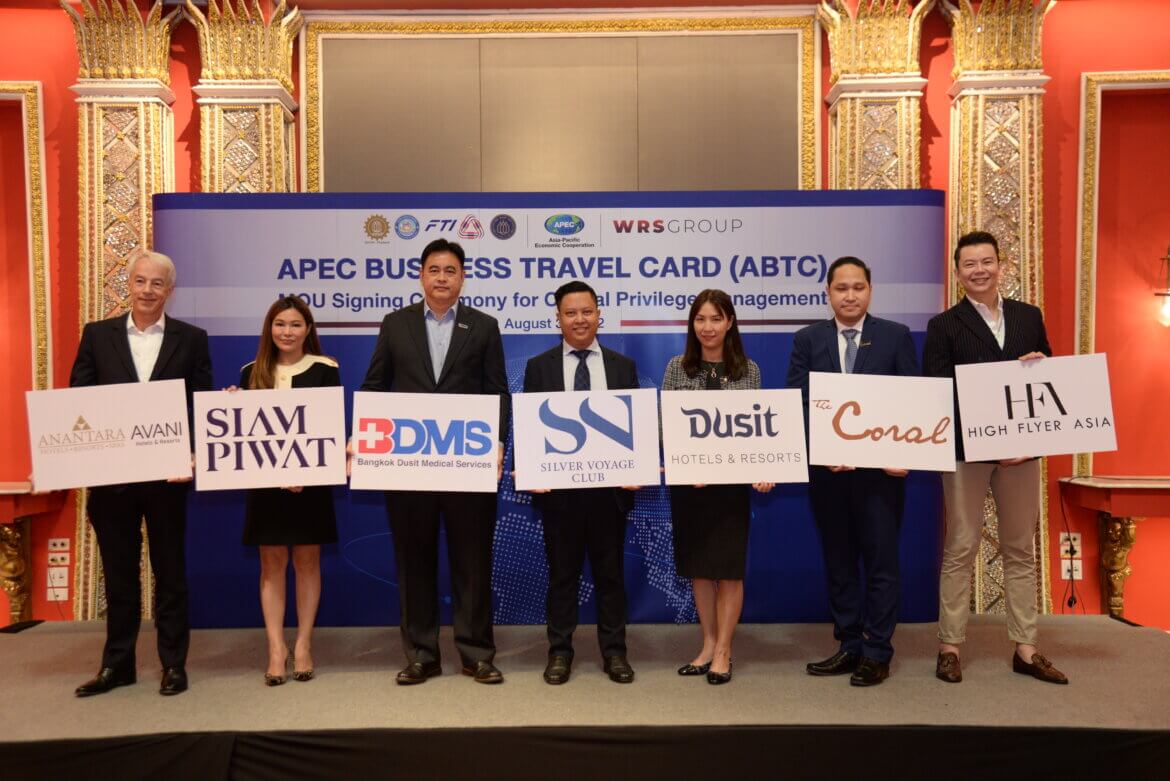
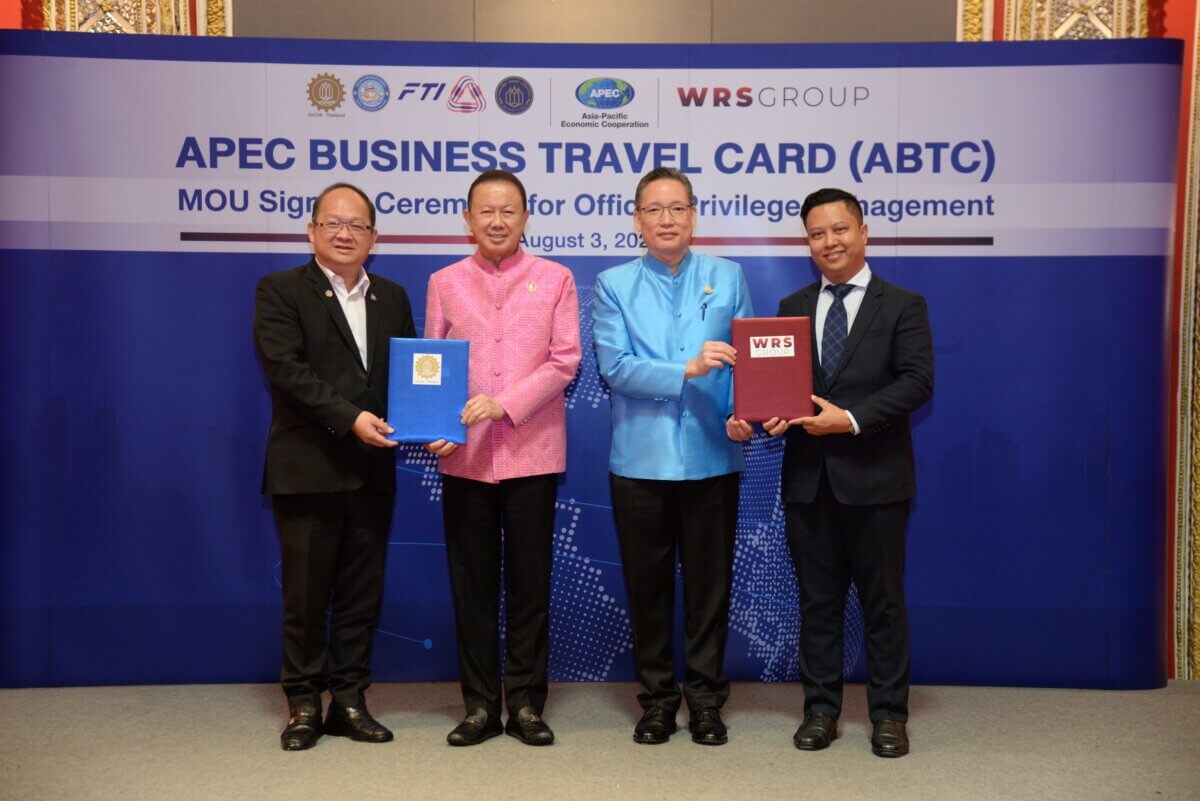
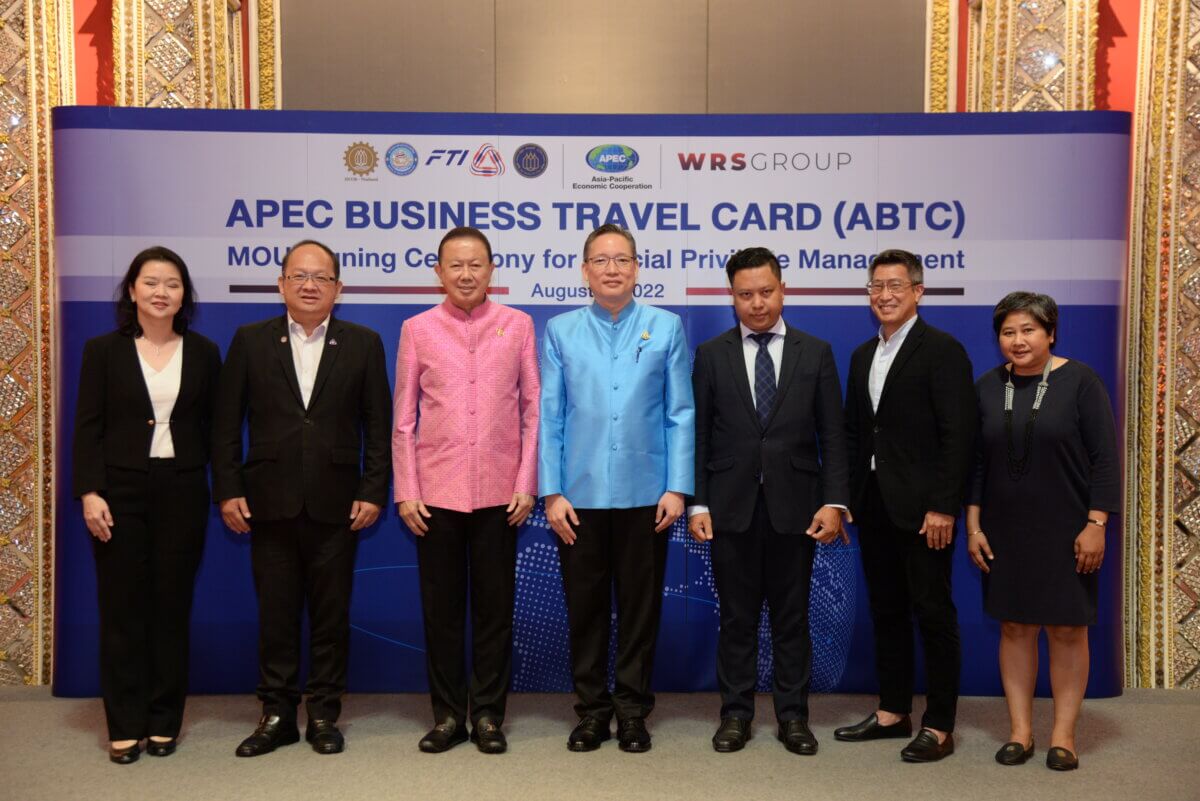
Joint Standing Committee on Commerce, Industry and Banking (JSCCIB) Thailand signed the MOU to appoint WRS Group to manage the world class privileges of the APEC Business Travel Card (ABTC) in order to match the premium lifestyle and travel for both domestic and international travels of APEC businesspeople.

Mr Jakkapan Rattanapet, Founder and CEO of WRS Group, recently joined the MOU ceremony with JSCCIB’s representatives, Mr Payong Srivanich, the President of JSCCIB and the President of Thai Bankers’ Association, Mr Sanan Aungubonkul, the President of The Thai Chamber of Commerce and Board of Trade of Thailand, and Mr Kriengkrai Thiennukul, the President of The Federation of Thai Industries, for the appointment of WRS Group to solely manage the premium privileges and benefits for APEC Business Travel Card holders at the Montien Hotel, Surawong Bangkok.

Mr Jakkapan Rattanapet, CEO of WRS Group, revealed that WRS Group was genuinely honoured and glad to be appointed by JSCCIB as Thailand’s leading luxury lifestyle services provider and privileges sourcing and managing company for more than 15 years. WRS Group has four businesses under its wings: World Reward Solution, a world class privilege sourcing and composing services for corporations. Next, WRX, an online platform development services, applications and technologies, and White Glove Delivery and Services, premium lands logistic services such as global and domestic limousine services and premium gift delivery services. And lastly, Silver Voyage Club is a concierge and luxury lifestyle services management for affluent clients. WRS Group has well rounded experiences in taking care of high-net-worth individuals and corporations in Thailand and Asia.

“WRS Group is ready and on its full capacity to bring its expertise and technology to develop and connect alliances nationally and internationally to provide seamless convenience in terms of travel and lifestyle to business travellers in this year in which Thailand hosts the APEC 2022. We realise the goal to develop and revive the travel and tourism sector, and we are confident that we, together, can very well take care of business travellers who hold the APEC Business Travel card, which also contains a “Business Visa” for smooth travelling. This initiative will definitely and wholely create a great impression towards Thailand.” Said Mr Jakkapan Rattanapet.

Mr Payong Srivanich, the President of JSCCIB and the President of the Thai Bankers’ Association, mentioned that WRS Group was selected since it has a long term specialty in luxury lifestyle services and premium privileges management. APEC Business Travel Card holders will enjoy most of the privileges apart from travelling smoothly since the card includes a “Business Visa” that allows holders to travel between 19 APEC economies easily. The 19 APEC economies include Australia, Brunei, Chile, China, Hong Kong, Indonesia, Japan, South Korea, Malaysia, New Zealand, Peru, the Philippines, Papua New Guinea, Singapore, Thailand, Taiwan, Vietnam, Mexico and Russia. In addition, the holders will be privileged to prioritised through the �?APEC Lane’ at the immigration of participated international airports.

Mr Sanan Aungubonkul, the President of the Thai Chamber of Commerce and Board of Trade of Thailand, said that this moment is crucial to collaborate and revive the Thai economy together. Therefore, having an expert and an experienced company such as WRS Group to take care of premium privileges and benefits for APEC Business Travel Card holders will help reassure worldwide business travellers to travel to Thailand, especially this year when Thailand hosts the APEC 2022. “We need to select the best for Thailand to promote what we can offer to global citizens,” said Mr Sanan Aungubonkul.

Mr Kriengkrai Thiennukul, the President of The Federation of Thai Industries, mentioned that “as a representative of Thai industries, I work closely with both the private sector and government for both nationally and internationally matters. I also need to take care of improvement and strategies to support the development of industries and the country’s overall economy. I am delighted that WRS Group helps us to put all their efforts into handling premium privileges and benefits for all APEC Business Travel Card holders as this will also help to enhance our country’s image to the world”.

For this occasion, WRS Group has joined hands with seven business alliances domestically and internationally to create world class premium privileges and benefits for APEC Business Travel Card holders. They are BDMS Hospital Network, The Coral Executive Lounge, Dusit Thani Hotels and Resorts Group, High Flyer Asia, Minor Hotel Group, Siam Piwat Company, and Silver Voyage Club.

All details of the new version of the APEC Business Travel Card (ABTC) with the best world class privileges throughout the membership life, information on membership tiers and all privileges will be revealed in APEC CEO Summit 2022 on November 16 - 19.

0 comment
0 FacebookTwitterPinterestEmail

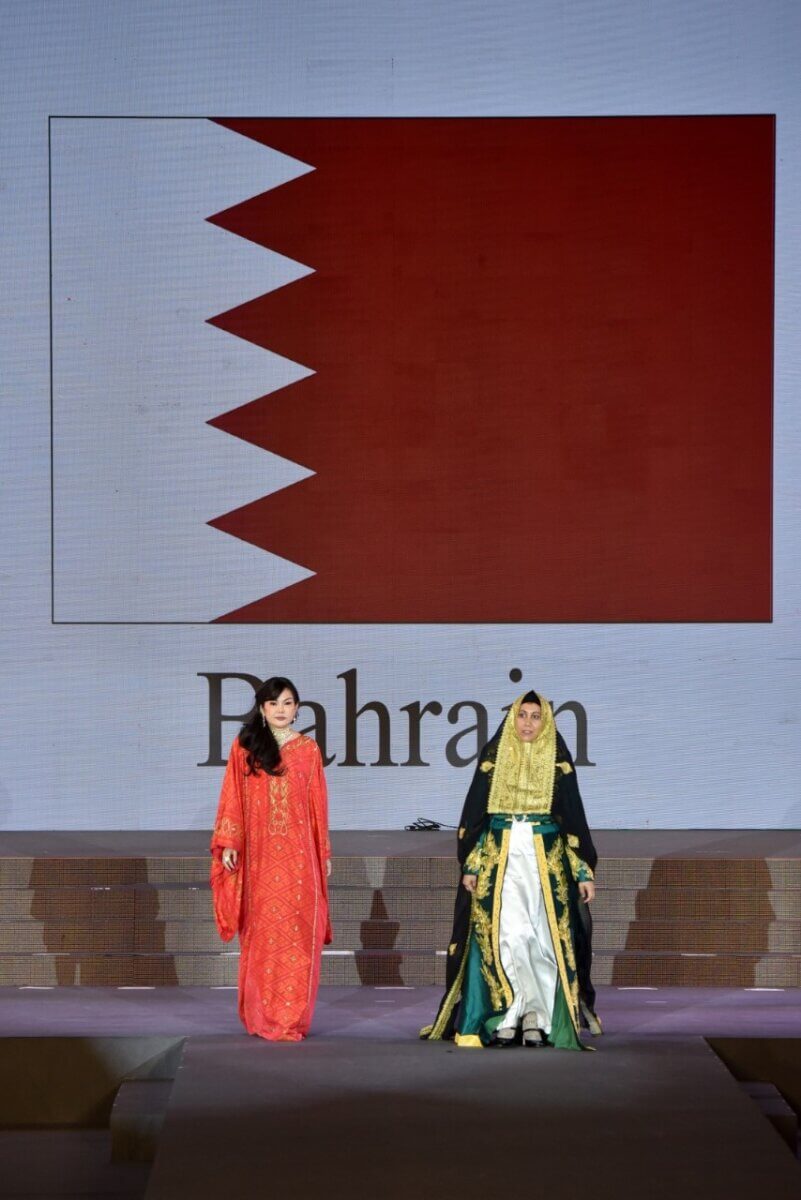
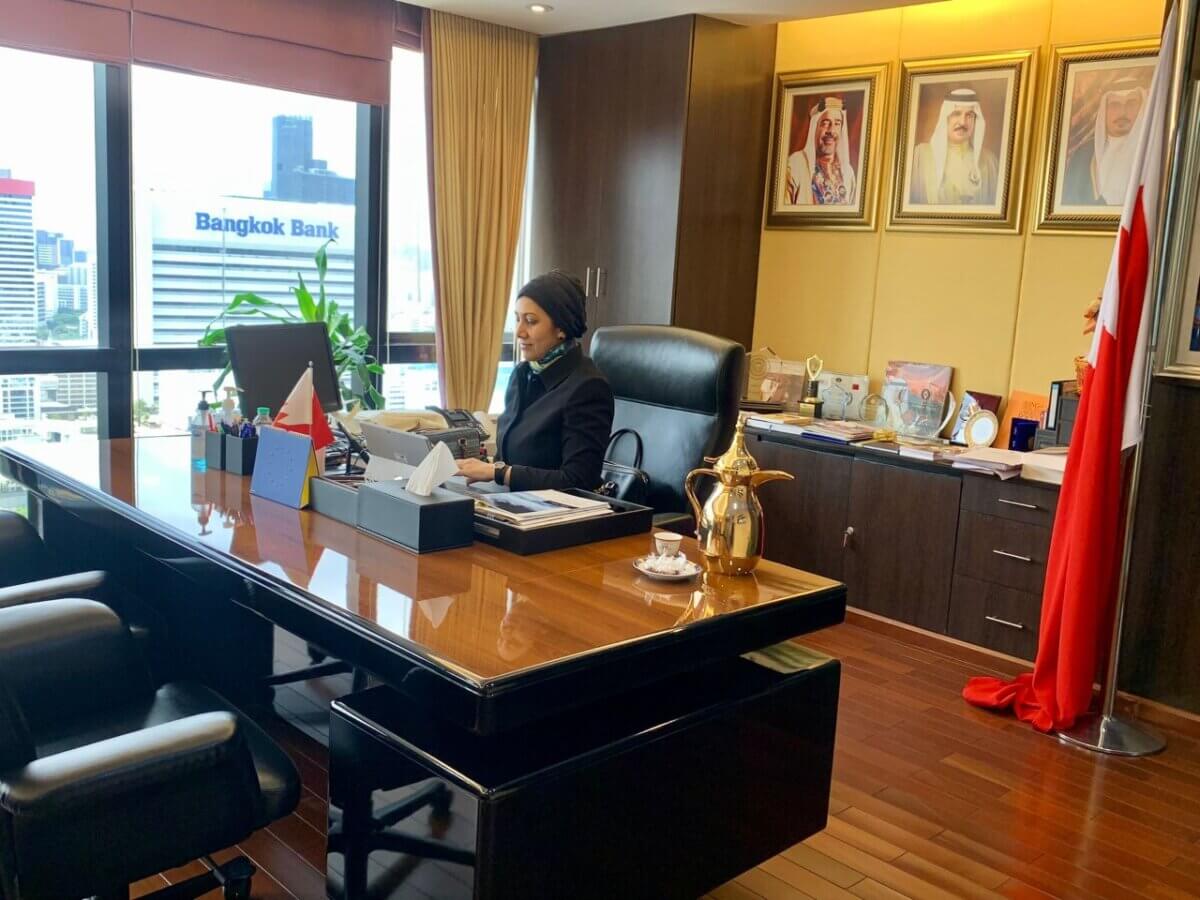
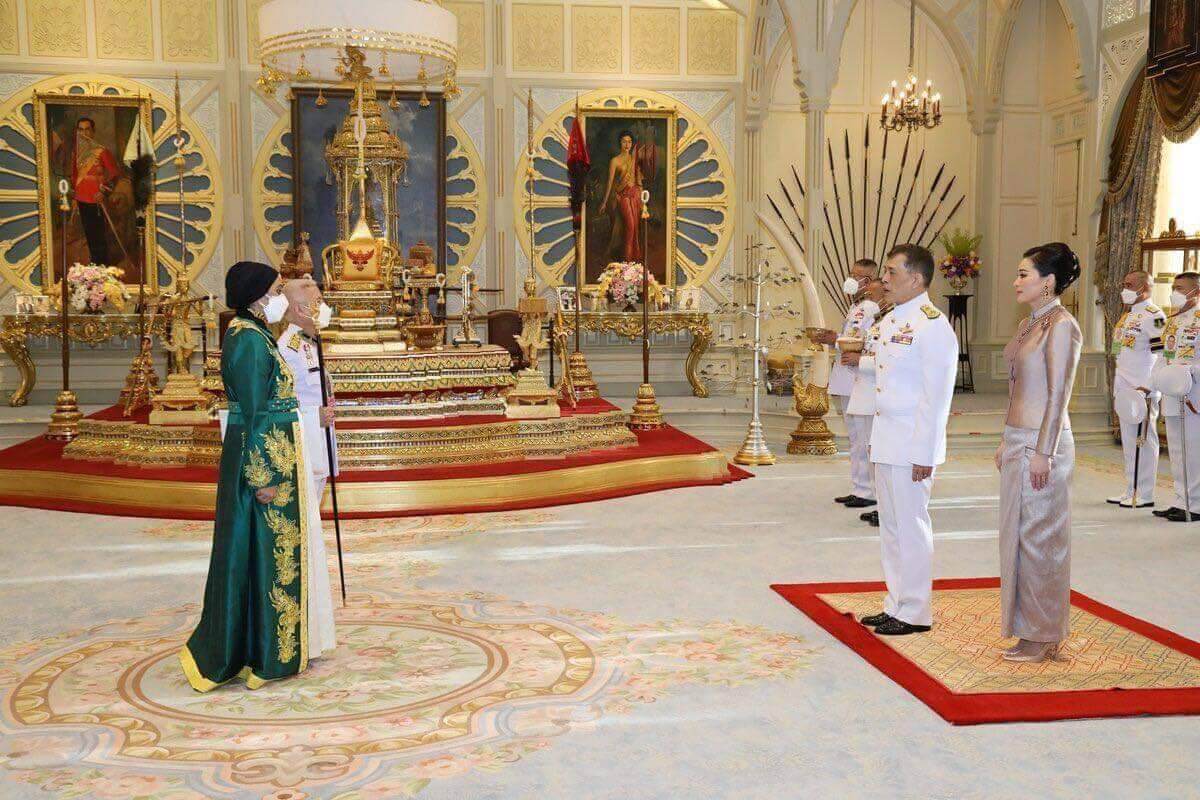
H.E. Ms. Muna Abbas Mahmood Radhi, the new Ambassador to the Kingdom of Thailand arrived Thailand directly from Bahrain in September 2021. In June, Ambassador Muna presented her credentials to His Majesty Raja Maha Vajiralongkorn Phra Vajiraklaochaoyuhua. She is in charge of Singapore, Myanmar, and Laos Republic in capacity as non-resident Ambassador. Expat Life had the opportunity to meet up with Ambassador Muna in the embassy office. She disclosed that her relations with Thailand goes back to 10 years when she was the officer in charge of Asia and then the Director of Afro-Asian Affairs Directorate in 2017 until the appointment to Thailand.

She was previously posted in Geneva, looking after the office of the United Nations, covering Bahrain’s membership at the Human Rights Council, World Health Organisation, International Labour Organisation and other multilateral organisations based in Geneva.

Which city were you born and brought up?

I was born, lived and raised in the capital Manama. I later moved to live in Riffa with my parents

At which age did you decide to become a diplomat?

I always wanted to become a diplomat from a very young age. To achieve this goal, I started learning foreign languages, starting with French, at Richmond, the American International University in London, and continued learning French at Alliance Francaise in Bahrain, and then spent one year in France at the Sorbonne University. Then I started learning Spanish in Bahrain, and in 2019 I started learning Russian language. My goal is to know the six official languages of the UN. Since I was appointed as Ambassador in Thailand, I decided to explore the Thai language and culture, so I am studying Thai language at Berlitz Institute here in Thailand.

Do you have any other diplomats in your family?

I have had cousins who worked at the Ministry of Foreign Affairs, but no one from my close family is a diplomat. My elder sister is a computer programmer and youngest brother also work in a bank and I have a young sister who is a dentist working in Bahrain.

How do you see Thailand today, in ASEAN, and in a wider context?

This year marks 45 years since the establishment of diplomatic relations between Bahrain and Thailand, based on the common desire to strengthen friendly relations and develop bilateral cooperation in various fields of common interest between the Kingdom of Bahrain and the Kingdom of Thailand and keenness to develop relations based on mutual respect of the sovereignty and territorial integrity of both countries, in accordance with the principles of the United Nations and international law.

Bahrain and Thailand enjoy historical and longstanding relations, and this is reflected in the high-level bilateral visits between the two countries. In 2019, Bahrain signed the Treaty of Amities and Cooperation of ASEAN (TAC), aiming at further strengthening cooperation with ASEAN countries in political, economic, cultural, educational, agricultural, and other fields, and its desire to develop it into a partnership relation in the cooperation sectors with ASEAN. This reflects the vision of His Majesty King Hamad bin Isa Al Khalifa, King of the Kingdom of Bahrain, with support of His Royal Highness Prince Salman Bin Hamad Al Khalifa, Crown Prince and Prime Minister of Bahrain, to strengthen cooperation with all, encourage dialogue among civilizations, cultures and religions, support all efforts to promote regional and international security and peace, and develop relations and joint cooperation with the Asian continent. Bahrain has always considered Thailand as a gateway to SE Asia, while hoping that Thailand considers Bahrain as a gateway to the Gulf region market. 
Do you see any similarities between your country and Thailand?

Bahrain and Thailand share close ties and cooperation at various levels, including political, economic, social, and cultural relations. Non oil trade exchange reached 318 million USD in 2019. 

Recently, THAI MART BAHRAIN - An only total showcase of Thai Products in the Middle East was opened in Bahrain. Located in the heart of Diyar Al Muharraq, Kingdom of Bahrain: Thai Mart is an only complete Thai Shopping Mall in the Middle East. Thai Mart has over 130 retail outlets and variety of food and beverage outlets. Thai Mart offers wide range of authentic Thai products, combined with variety of fine dining, entertainment, and leisure attractions. The niche component of Thai retail shops, Jewellery Trade Centre, international cuisine, massage and spa center, and kids entertainment area will offer you great shopping and dining experience. The project of fine and strong collaboration between Thailand’s Vega Intertrade & Exhibitions LLC., and Bahrain counterpart Diyar Al Muharraq. Thai Mart is a new community mall with real Thai ambiance in the decoration, architecture, products, services, and activities for the best Thai experience to the visitors.

Do you have children, if so at what age and where do they go to school, university or work?

I am not married and do not have children. 

How do you look upon your work here? How does an average day look like?

I always plan my workday ahead and come to office with a check list to do. I look for new opportunities to tighten ties between Bahrain and Thailand in the various fields. 

Have you set some goals you really would like to fulfil before you leave Thailand?

As Bahrain Ambassador to Thailand, my goal is to strengthen bilateral ties and bring them to a higher level, especially in view of Bahrain Economic Vision 2030 and Bahrain post-Covid Economic Recovery Plan and which focuses on increasing foreign direct investment in Bahrain in important strategic sectors including manufacturing, information technology, education, tourism, healthcare. 

Some sectors, like tourism and healthcare and wellbeing are important sectors for Thailand as well including East Economic Corridor and Thailand’s this year hosts the Asia-Pacific Economic Cooperation (APEC) summit under the theme of sustainability, balance, and green economy, which focuses on reviving the economy affected by the Covid-19 pandemic, opening the country to tourism, curative hospitalisation and promoting a circular, vibrant and green economy. This complies with Bahrain’s chairmanship of Asia Cooperation Dialogue (2021-2022) under the theme “post Covid green recovery in the health sector”. We will try to benefit from our experiences in these fields for the mutual benefit of the Governments and peoples of both friendly countries.
Have you managed to travel in Thailand yet?

I have paid a visit to Ayutthaya, the old capital of the Kingdom of Thailand. I also visited the ancient city to discover the heritage of the different provinces of Thailand. Due to the current Covid situation I didn’t get the chance to explore more of beautiful Thailand. However, I have a pending invitation to visit Pattaya and the southern part of Thailand, from Prince of Songkhla University which I’m looking forward to. 

When you have a day off, what do you prefer to do? A hobby or pastimes?

During days off, if I have my family visiting me, we try to discover the different parts of Bangkok, the remarkable shopping malls, and good food. Otherwise, when I am alone, I like to learn foreign languages or read a book in my flat and enjoy watching the rain from my balcony which overviews Lumpini Park and the golf course.

How many of your countryfolk are living in Thailand? When and why did Thailand become a desirable destination for your people?

Some hundreds of Bahrainis live and work in Thailand, and some retired people come to stay and enjoy the green life. Thailand has become a desirable destination for Bahraini people ever since direct flights were established between the two friendly countries based on Air Service Agreement signed in 1978. Many Bahraini tourists come to visit due to visa facilitation between the two countries. Thailand is considered the second largest tourist destination for Bahrainis. 
Does your country and Thailand have an exchange program for students?

A Memorandum of Understanding between the University of Bahrain and Prince Songkhla University of Thailand was signed in Manama on April 25, 2017. Five students were nominated to study in the Kingdom of Bahrain pursuant to the MOU. Eight other Thai students are studying at the expense of the Kingdom of Bahrain.
Any fun moment from Thailand that you’d like to tell us about?

Once, we took the longboat in a river trip through the canals towards the Chaw Phraya River, visiting the old temples in Bangkok. It was an interesting experience. I also enjoyed the elephant ride in Ayutthaya, but I do not  think I will repeat it.

Do you regularly meet up with your community?

Since Thailand is a tourist destination for Bahrainis, who come for pleasure as well as for medical tourism, I intend to meet Bahrainis who reach out to the embassy and visit us and provide them with consular services.

0 comment
0 FacebookTwitterPinterestEmail

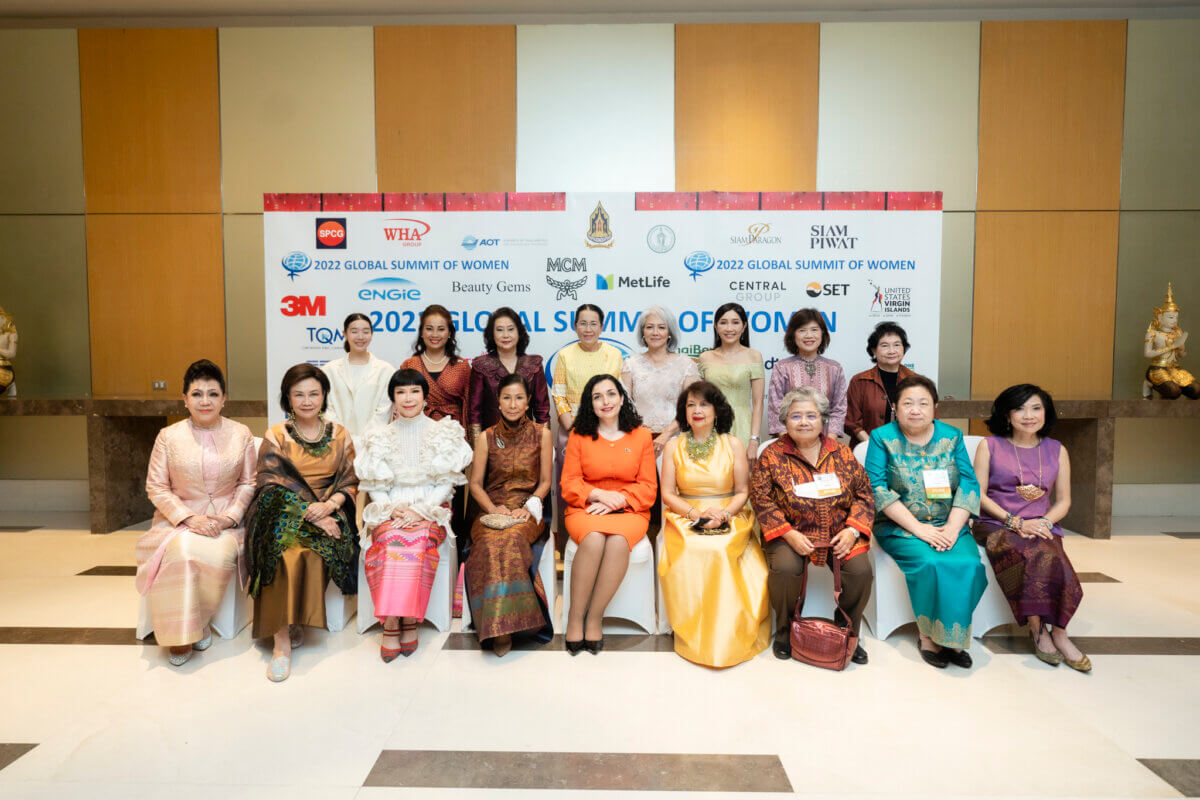
Many women leaders are sharing the global stage. One of the world’s newest democracies, Kosovo declared independence from Serbia in 2008. Dr. Vjosa Osmani Sadriu, a then 38-year-old US educated reformist lawyer was elected President in April 2021. 

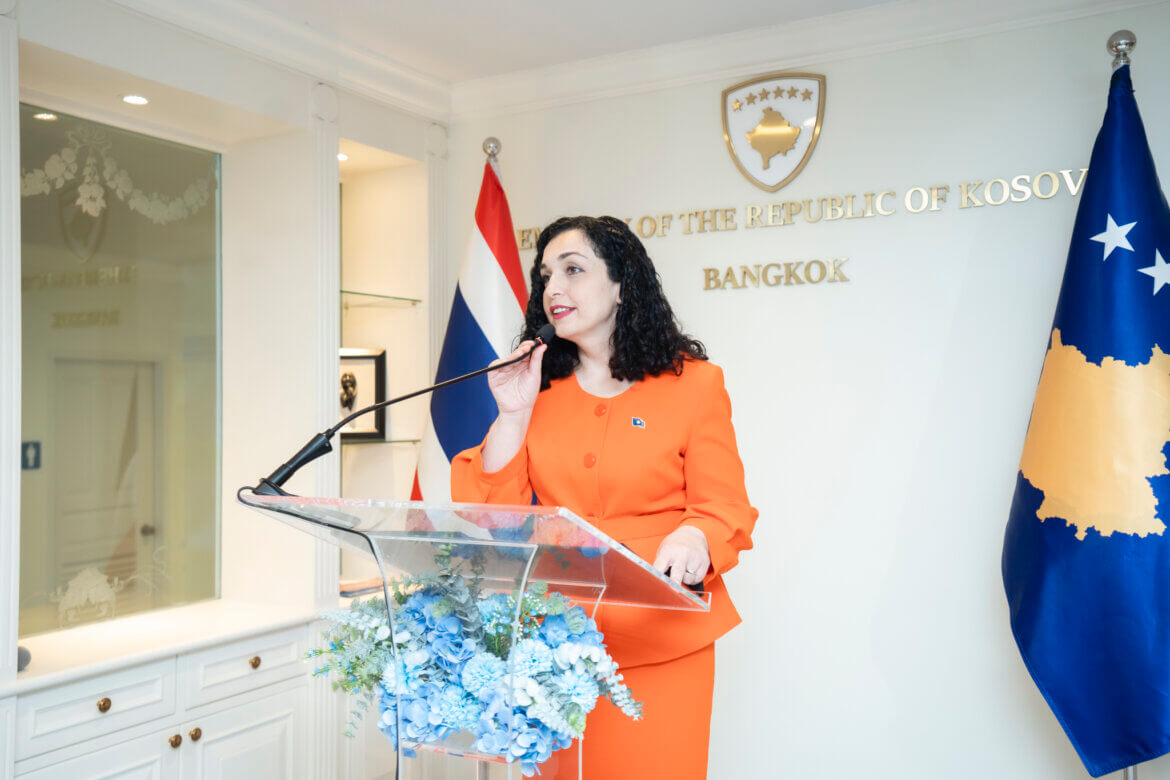
President Osmani recently visited Bangkok to present a keynote speech at the Women Global Summit. Expat Life was very fortunate to be selected as one of the exclusive media channels to sit down with Her Excellency to talk about women’s role in politics, gender equality and women empowerment. 

You are a trailblazer in your political career as the first female Speaker of the Assembly of Kosovo, how do you see the role of women in politics?

Women empowerment means more women in all walks of life – in politics, entrepreneurship, academia, and civil society. The common denominator for a better representation on all these spheres is the need of transforming power relations and addressing structural inequalities. With a much more women powerful presence, the rules of the game will continue to change. More women politicians and more female business leaders, means a fairer treatment for all, including gender equality. I speak from experience: in 1999 Kosovo was a country in ruin as consequence of the genocidal regime of the then-Serbian ruler Slobodan Milosevic - 13 thousand people were killed, half of the population bore the �?refugee’ tag, 70 per cent of properties were destroyed. After the liberation, the country had to go through big transformation - political, economic and cultural. Women were integral part of the peaceful resistance, of the war and of the post-war transformative work. It has not been always easy but today, our society is one of the most progressive, wise and visionary societies, by understanding that women perspective, thoughts and style of leadership enrich government and make it more responsive. It is, therefore, no coincidence that as we speak, 35% of MPs and 33% of ministers in Kosovo are women, and the country has elected two women Presidents. Wherever there are women, there is more accountability. Same as the economy, which does not work only based on the law of supply and demand, in politics also beliefs and perceptions change reality. This has happened in Kosovo, where the energetic measures against corruption have resulted with increased foreign investments and a double-digit growth in 2021.

Your professional background has covered lecturing in various universities, how important do you view education as an opportunity for gender equality?

Numerous studies prove that a child who is exposed to words, readings, love and caring in his first three years, has better chances to succeed later in life. Let us call it a foundation. Again, women, mothers are the ones who are in closer contact during this period. As the proverb has it, educate a woman and you educate an entire nation. On a second reflection, it is not only the individual effort of a woman, of a mother, to educate her own child. The entire system in place, meaning a society that grants equal rights to women that treats women with dignity, a society that values their contribution, equally as much of that of men, it is the kind of society that protects the mothers and children and allow a healthy upbringing. This transformative work cannot be done in one generation but it is the duty of one generation to start it. From a patriarchal society, we navigate a system of values where leadership, authority, power is associated with men and masculinity. We need to correct that, speak up, stand up and build up in favor of a more equal society. We need an equality contract between all members of society – women and men.

As a married mother of twins, and at the same time being the head of state, how do you strike a work life balanced for your young family?

It is a combination of factors and one is the equality with my husband and the very supportive role of our respective families.

Certainly, it is not an easy walk. It starts with the motivation to succeed - our potential was quietly suppressed within four walls, for centuries. In the last 100 years the progress has been enormous.

It continues with the desire to serve. This is a journey that starts with you and a process during which one understands and controls the self before exercising leadership and providing service to others.

Keeping the priorities right, is the third thing. In order to excel, is not the likability, but credibility that should be sought.

Last but not least - being prepared to fail. The failures are the seal of achievement. We should not be afraid of them. We should learn from them and move forward.

I have looked for and found role models in the history of my country, in my family, in today Kosovo society as well as women worldwide. As more women go into the public domain, we can interact and support each-other. Numbers matter. We should lean in. Hence, my presence in Global Summit of Women is a testimony of my commitment to the women empowerment. We lead through example. We learn through cooperation. It is an enriching experience.

As a woman country leader, what specific agenda have you set for Women, Peace and Security for Kosovo?

Kosovo is a safe country and a thriving economy. We are here because of our determination and because of the help that was unwaveringly granted to us by the international community during the dark hours, back in the �?90s.

It is about time that Kosovo showcases that it is not merely a consumer but also an exporter of peace and stability. Therefore, my office will host in the capital Prishtina this October the first edition of the Women, Peace and Security Forum. Hosting the Kosovo international WPS Forum is indeed one of our Summit for Democracy’s Year of Action commitments, however Women Peace and Security are central pillars of Kosovo’s vision for sustainable peace domestically, regionally and globally. The WPS Forum will occur at a time when peace, freedom and security are under attack in the very heart of Europe, with women and girls yet again at the center of violence, torture and inhumane treatment. The Forum aims to bring together world leaders, academics, civil society, representatives of international organizations, influencers and other interest groups at the center of the Western Balkans to discuss challenges posed to the WPS Agenda and the underlying importance of this agenda for enduring, equitable and sustainable peace, but equally so, for the empowerment of girls and women around the world. The Forum will focus on Partnerships for Sustainable Peace and serve as a platform for sharing best practices and lessons learned, as well as developing inclusive and gender balanced strategies and designing new frameworks of action in the wake of an ever-changing architecture of security and peace in Europe and beyond. Striving to promote peace, freedom and democracy around the world, this Forum puts girls and women at the center of successful and sustainable efforts in this endeavor. In this spirit, the Forum will promote a stronger role for women across all areas of life and in particular towards advancing the WPS Agenda.

You are an advocate to sustainable development, what plans have you set for Kosovo to achieve this?

The geopolitical context of the moment has created a sense of unprecedented urgency to diversify energy sources. There is no quick fix but we are working to strike the right balance between solutions that do not compromise the security of energy supply today, and solutions that do not jeopardize our ambitions for decarbonization in the future on the other. There is a dialogue in the country that aims a shared vision for a green, sustainable, and healthy future.

Even before the Russia’s invasion of Ukraine and the consequential spiking energy prices, we were working on a green agenda. Two years ago, Kosovo and other Western Balkans countries signed Sofia Declaration on the Green Agenda that aims to align our region with EU Green Deal. We are committed to ending the use of all fossil fuels by 2050 and reducing greenhouse gas emissions by 2030.

Green energy, investment in energy efficiency, sustainable waste treatment and reduction of their production, protected environment, livable cities, smart transport, and clean air – are the new investments, education and labor front.

We are taking an integrated approach by working on three levels: municipal, national and regional (the Balkans). Kosovo is a landlocked country therefore we have invested in connectivity and transport. Now the challenge is to make the transport system more efficient. In this regard, we have committed to building a railway with neighboring Albania, ensure access to the sea and will connect Kosovo to major European transport corridors. This will be a big project and an opportunity for foreign investors.

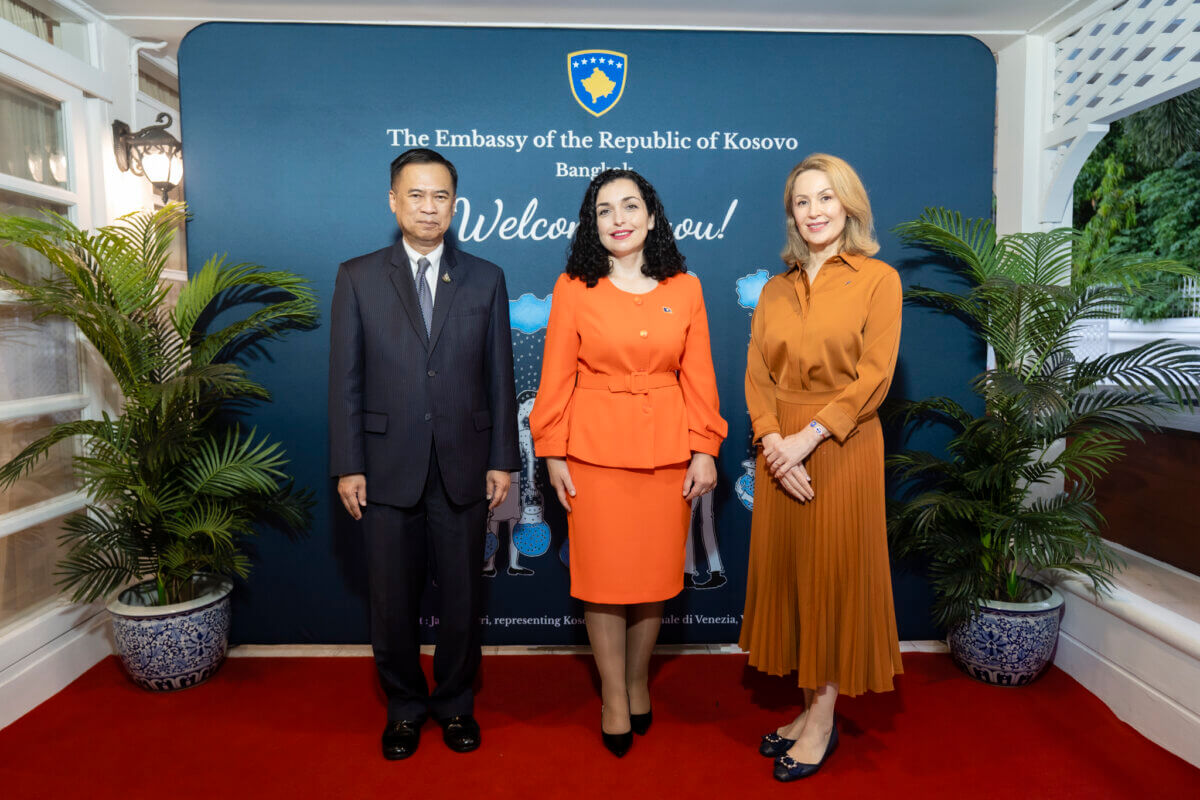
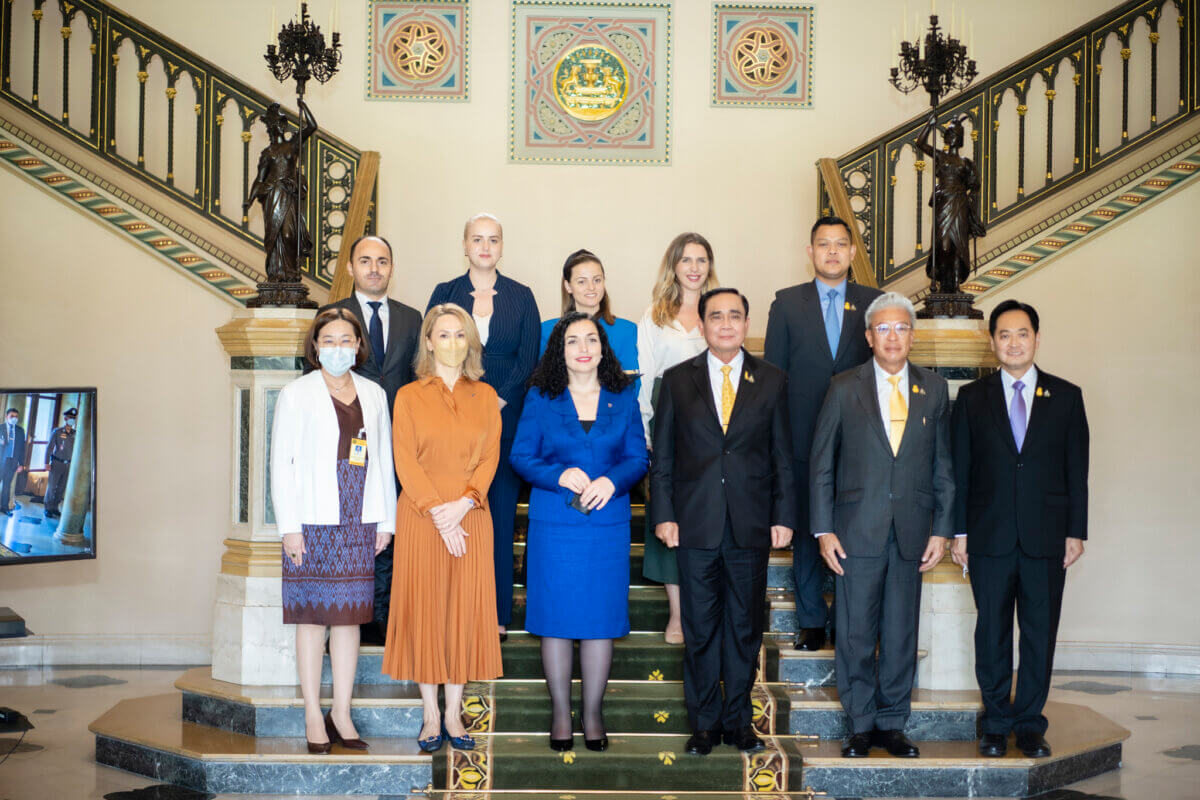
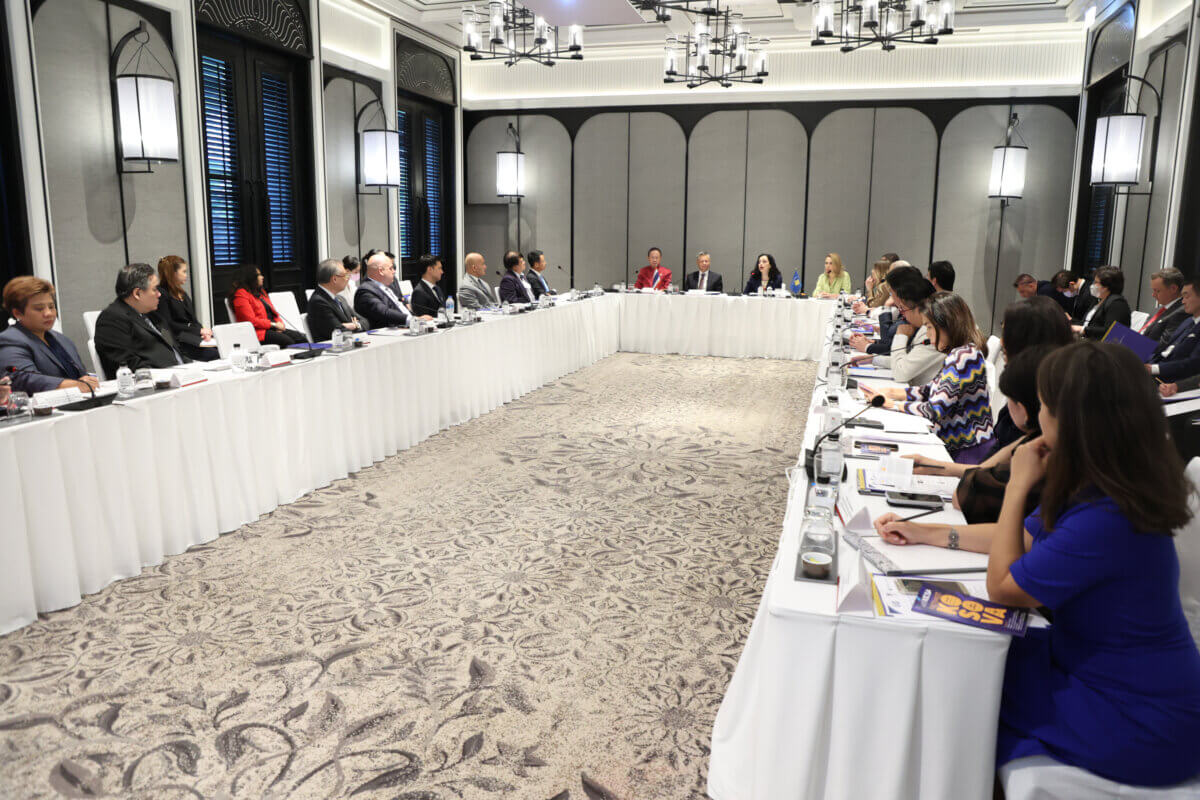
During her two-days short visit, President Osmani officiated the opening of The Embassy of Kosovo to the Kingdom of Thailand. President Osmani paid a courtesy call to Thai Prime Minister Prayut Chan-o-cha at the Government House. To initiate more business opportunities, President Osmani met with key representatives of Joint Foreign Chamber of Commerce and held round table discussions with Diplomats Council of Thailand.

0 comment
0 FacebookTwitterPinterestEmail

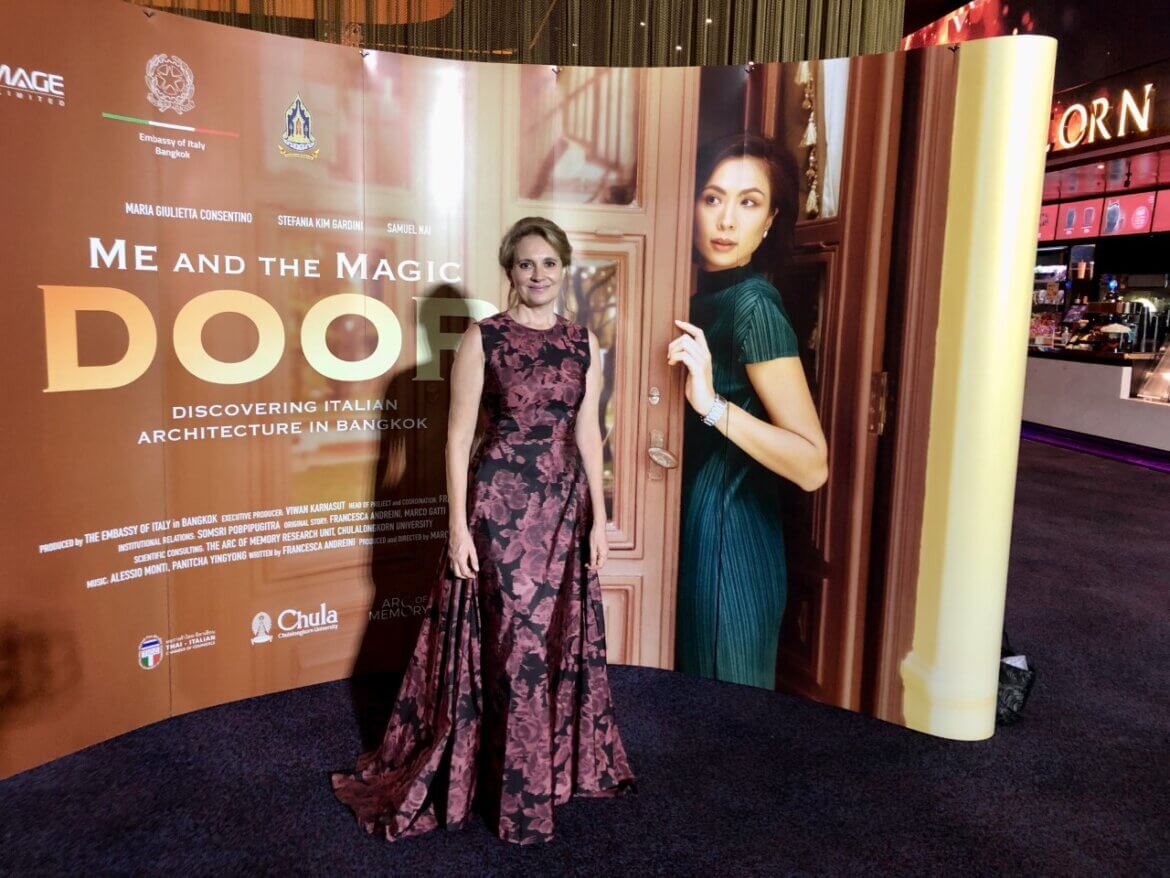
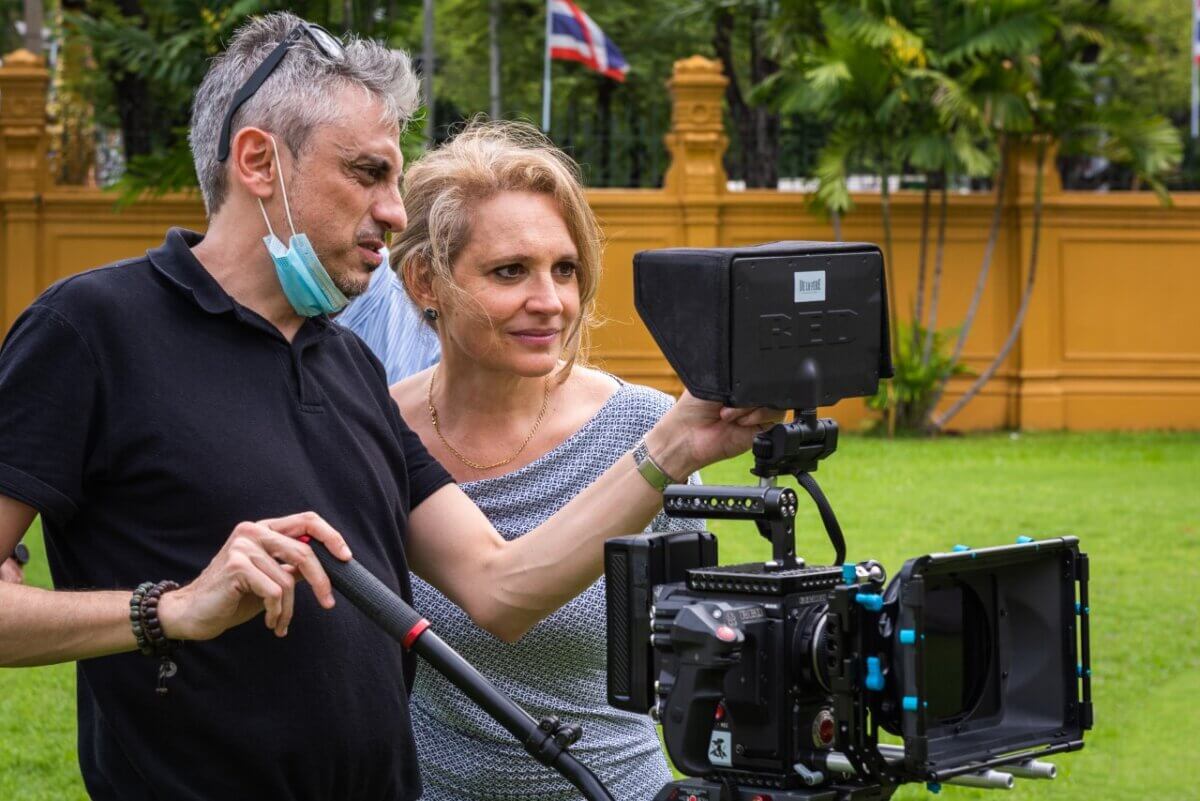
“ME AND THE MAGIC DOOR - Discovering Italian Architecture in Bangkok”, a documentary film, was recently released by The Embassy of Italy in Thailand, together with the Thai-Italian Chamber of Commerce and Max Image Co., Ltd., with the aim of promoting artistic and cultural cooperation among Italy and Thailand.

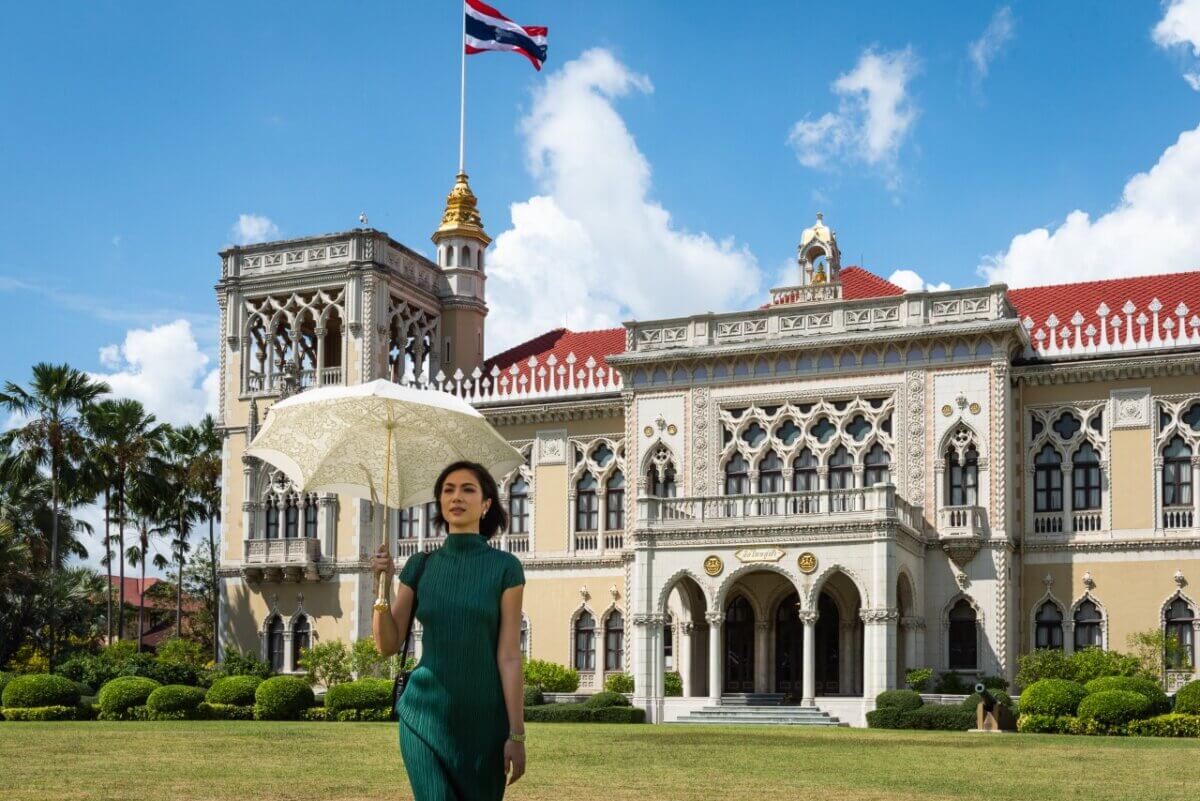
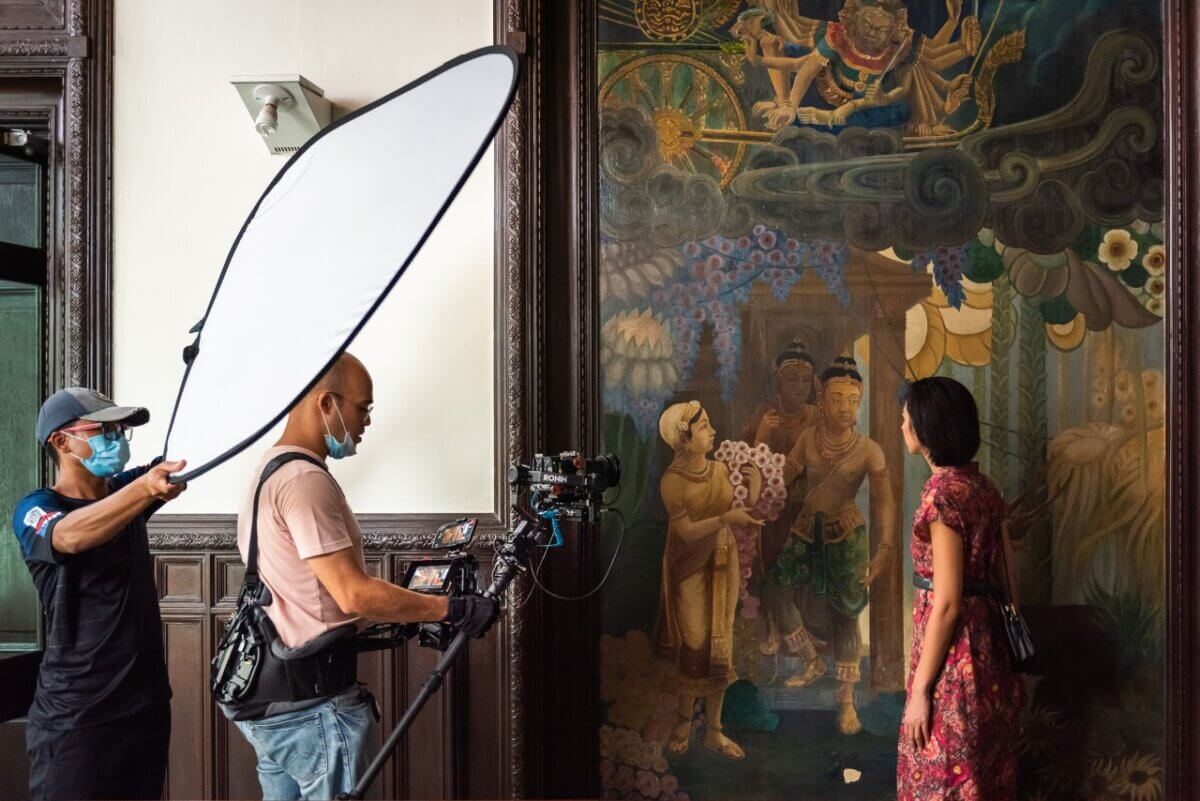
The documentary unfolds from the perspective of Fai, a Thai-Italian character who travels to Thailand to write an article about the Italian cultural heritage in Siam. The audience can follow Fai’s journey and her discovery of many iconic places such as Ananta Samakhom Throne Hall, inside Dusit Palace, Baan Norasing (Government House), Baan Phitsanulok and several other impressive buildings created by Italian architects and decorated by Italian artists, under the guidance of Thai personalities of the time, during the late 19th and early 20th Centuries.

H.E. Mr. Lorenzo Galanti, Italian Ambassador to Thailand explained, “After the reunification of Italy in 1861 the Kingdom of Siam established friendly relations with Italy. His Majesty King Chulalongkorn (Rama V) and King Vajiravudh (Rama VI) were profound connoisseurs and admirers of Italian art and culture. Therefore, several construction projects in Bangkok were assigned to a group of Italian experts, creating the conditions for a highly successful artistic cross-fertilisation.”

Directed by Marco Gatti, written by Francesca Andreini and starring Stefania Kim Gardini, Giulietta Consentino and Samuel Nai. Expat Life sat down with Madame Francesca, spouse of the Ambassador of Italy to Thailand to learn more about this inspirational story.

What inspired this film project?

Unlike other countries, where European architecture is present as a result of a history of colonialism, here in Thailand it was the result of an Italian immigration of high professional quality. Under King Mongkut (Rama IV) some Italian entrepreneurs had already opened flourishing constructions and import businesses in Bangkok, but the real blossoming of Italian architecture came under King Chulalongkorn (Rama V) and his son, King Vajiravudh (Rama VI). The two monarchs had great admiration for the culture and art of our country and encouraged the arrival of young professionals, as well as established figures, from Italy to work on the modernisation of Bangkok.

These Italian professionals were contracted to build palaces that were ambitious and innovative at the time. Their quality and aesthetic value are such that today these buildings are still perfectly preserved and several among them host Royal or governmental institutions. Italian engineers, architects and artists found in what was then called Siam a welcoming, friendly country that granted them an opportunity for professional and artistic expression. Many of them spent their entire professional lives in Siam, and some became relevant in the Kingdom’s cultural scene.

It was a very beautiful story, and the Italian Embassy decided to tell it, as a tribute to the extraordinary professional and artistic skills of our compatriots, as well as a testimony to the excellent and long-standing relations between Italy and Thailand.

With this documentary project, you received a lot of support from many organizations, who are the key ones that made it happen?

We are very grateful to the Thai institutions, which not only allowed us to shoot the documentary, but accompanied us through all stages of the filmmaking process. I would like to express my deep gratitude to the Royal Household Bureau, which graciously provided us with permission to show some Royal palaces, such as Anantha Samakon and Saranrom Palace. We are also very grateful to the Office of the Prime Minister for allowing us to film some beautiful scenes outside and in the main lobby of the Government House and Baan Pitsanulok, the official Prime Minister’s residence. The Ministry of Foreign Affairs followed us all the way through the preparation of the documentary, helping us to understand what bureaucratic processes we needed to follow.

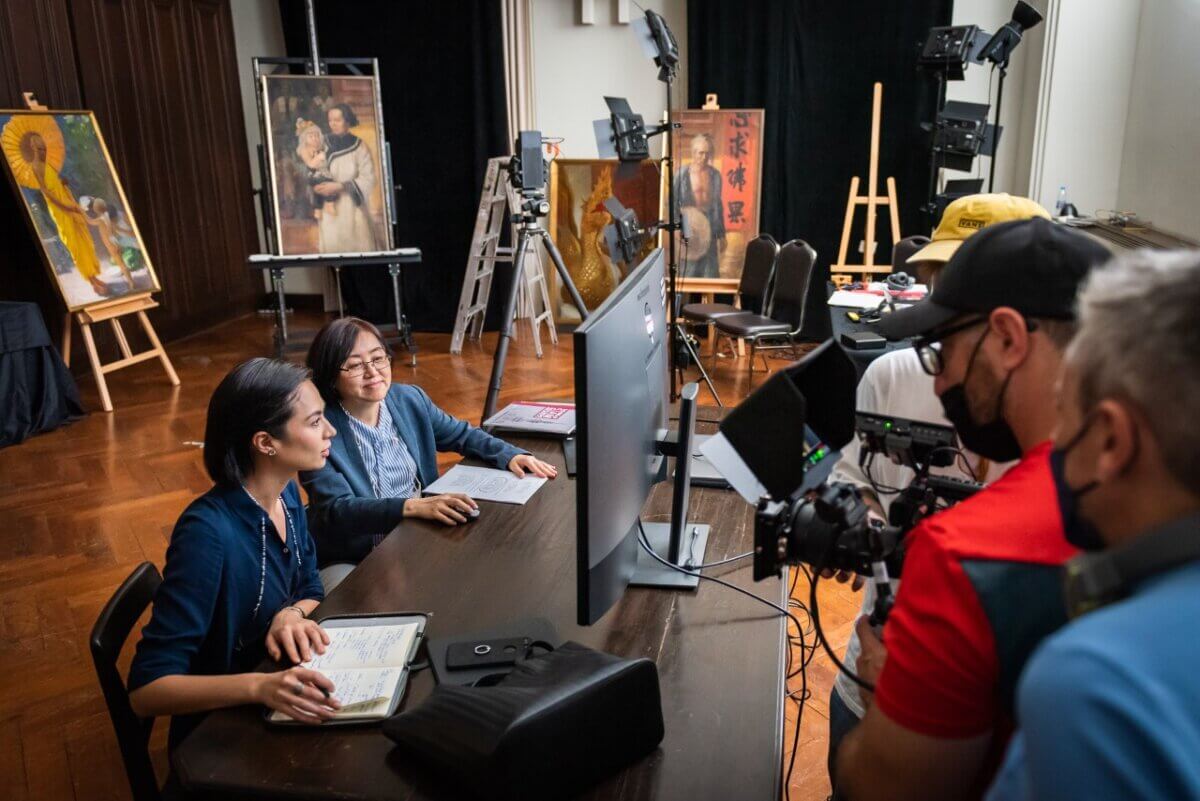
The contribution of Chulalongkorn University, and in particular of Professor Neungredee Lohapon, who formed the scientific committee for the documentary, was also invaluable, as she verified through original documentation the accuracy of the data we provided. Professor Neungreudee, and the Arc of Memory research Unit, led by her, also made available the paintings we showed in the film. The Ministry of Culture kindly granted its patronage and provided a valuable final check on the contents of the documentary. Last but not least, I would like to mention the contribution of the Thai film Bureau, which supervised all the filming, allowing us to work in a peaceful and fully cooperative atmosphere.

What obstacles did your team encounter and how were they overcome?

The main obstacle was working during a pandemic.The various preventive measures obviously complicated our work and increased the costs. Due to Covid we had to give up filming at a location that was very important to us: Museum Siam. It was closed for a few days due to a case in their staff, and, being on a tight budget, we could not reschedule the filming on an extra work day.

The shooting was a race against time: we had an extremely tight schedule! The film is smooth, entertaining, it is not a classic documentary as it combines the educational part and a fictional story. It is particularly exciting and yet, it is extremely rich in information. I am sure that while the audience watches it, they cannot imagine that it was shot in only two weeks!

The other big obstacle was the heat. The shooting was almost entirely outdoors, and you can easily imagine how much effort it cost to be outdoors for a whole day (from sunrise until sunset). Last but not least, there was the problem of the actors’ makeup, which was flaking off because of the heat!

Different from writing a book, what lessons have you learnt in terms of experience with this adventure?

Writing fiction and writing screenplays are two completely different jobs. When you write a screenplay you can only use images, you cannot describe anything you cannot see on the screen, so you have to create images that can also reveal what is not said, such as people’s moods, or their past history. For a fiction writer like me, it can be a real challenge!

It was not the first time I had tackled this terrain though, because I had already written several screenplays many years ago. A screenplay that I co-wrote, Senza me, received state recognition of cultural interest in 2010!

I enjoyed reacquainting myself with an old passion of mine.

Any fun or heartwarming moments you recall during the filming?

There were countless hilarious episodes that made us laugh so much during the shooting. For example, when the actors could not remember their lines and made funny expressions. In general, I cherish the memory of the very special atmosphere on the set: we all were working under a lot of pressure but with extreme passion and the collaborations between us was total. There were countless problems to solve on the spot: the light not being the right one, a sudden rainfall, a location that was supposed to be free being suddenly occupied… but these difficulties made our collaboration even more intense!

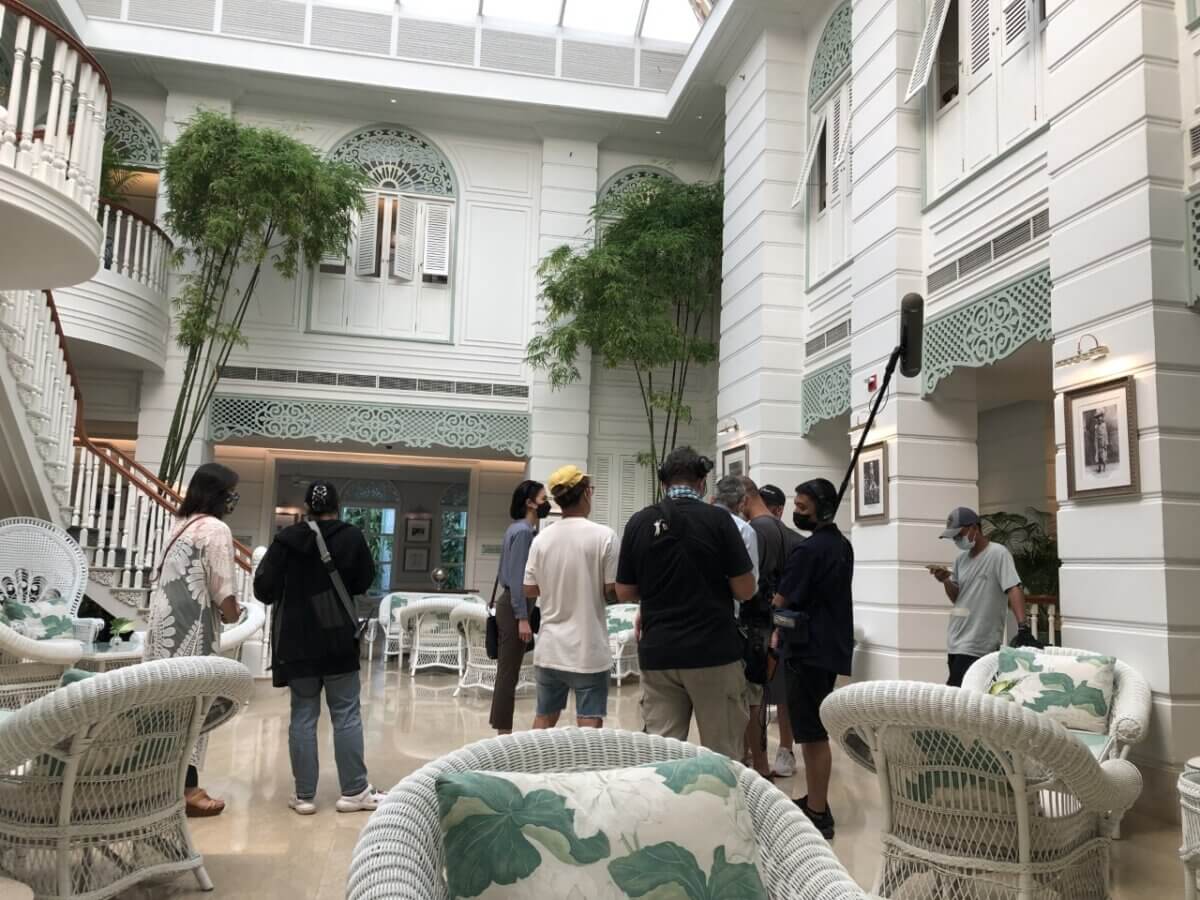
A particularly funny situation was our shooting at Mandarin Oriental: there were guests in the rooms above the halls where we were shooting so we had to whisper the directions while we were working, and that created very funny moments. Imagine a typical set, where everybody shouts instructions, but having to work in a whisper or using mimics: what a comic scene!

The most intense moments were perhaps when we looked at each other, at the end of the day, tired, but with satisfied faces for the work we had done.

What message do you want the audience to take home after seeing the movie?

The first two screenings, organized by the Embassy, were very well received. Various institutions from both Thailand and Italy have asked us to screen Me and the Magic Door, and at the moment there are already nine events scheduled between August and September. I think the success is due to both the formal pleasantness of the film and the idea behind the project, which is to highlight how important cross-cultural exchange and collaboration are. In times like these, of conflict and serious tensions between countries, it is very nice to be able to get this message across to so many people.

As you will be leaving Thailand soon, any last words you would like to share to our readers and the Thai communities?

When my husband and I arrived in this beautiful country, four years ago, we noticed the mutual sympathy and respect that unite Italians and Thais. In making this documentary, I understood where these deep and ancient feelings came from. I am very happy and proud to be able to convey this “discovery” of mine to a wider audience. I therefore leave Thailand with the pride of being able to contribute in a very small way to this beautiful story of friendship, and hoping that it will bear many more wonderful fruits in the future.

As our interview drew to a close, Madame Francesca reminded that this documentary film is a non-profit cultural project to be screened for educational purposes and to stimulate cultural tourism. Whoever is interested can request permission to arrange the screening by contacting the Embassy of Italy in Thailand.

0 comment
0 FacebookTwitterPinterestEmail
Newer Posts