“Demand quality not only in the products you buy but also in the life of the person who made it”:Orsola de Castro
I met Patsy Tapasanan around eighteen months ago, I did not know much about her at that time. I came across her profile while I was doing some research on the work Fashion Revolution does in Thailand.
For those of you who have not heard of this organisation, it was founded on 24th April 2013 when the Rana Plaza building in Bangladesh collapsed. More than 1,100 people died and another 2,500 were injured, making it the fourth largest industrial disaster in history. Fashion Revolution works towards transparency and accountability in the fashion industry, particularly in what we now call fast and disposable fashion.This tragedy was preventable. In the aftermath, survivors told stories of how they noticed cracks in the building and knew the building was hazardous just days before the collapse. Multiple workers told their supervisors that they were afraid to enter the building and continue working. The retails shops and banks on the ground floor shut down their operations, but the demand of an insatiable fashion industry forced garment workers to keep working. The ugly truth is that some of us may have bought and wore the clothes they made. People had to dig through the rubble looking for clothing labels in order to figure out which brands were sourcing from Rana Plaza. In some cases, it took weeks for brands to determine why their labels were found in the ruins and what sort of purchasing agreements they had with those suppliers.
The culpable brands weren’t limited to fast fashion retailers but included mid-priced brands too.This is because the vast majority of today’s fashion brands and retailers do not own their manufacturing facilities. Fashion supply chains are highly globalised, complex and opaque. Business relationships are often very murky and subcontracting is common. This lack of transparency costs lives.
Many people still remain in the dark, unaware that their clothes may be contributing to the climate crisis and human exploitation. I strongly believe that most people don’t want to support or encourage modern day slavery and wanted to write more on the ugly side of the fashion industry to create awareness.The Rana Plaza incident definitely changed my relationship with fashion because fashion should be empowering. When fashion comes at the cost of social and climate injustice, it is deeply disturbing. I wanted to understand the work Fashion Revolution ,Thailand is doing towards creating awareness and that is why I went to meet Patsy who is a part of the core team of Fashion Revolution, Thailand. At that time , I had read briefly about her but did not know the full extent of the work she has been doing towards empowering elderly women in Loei province through her social enterprise, Folkcharm.
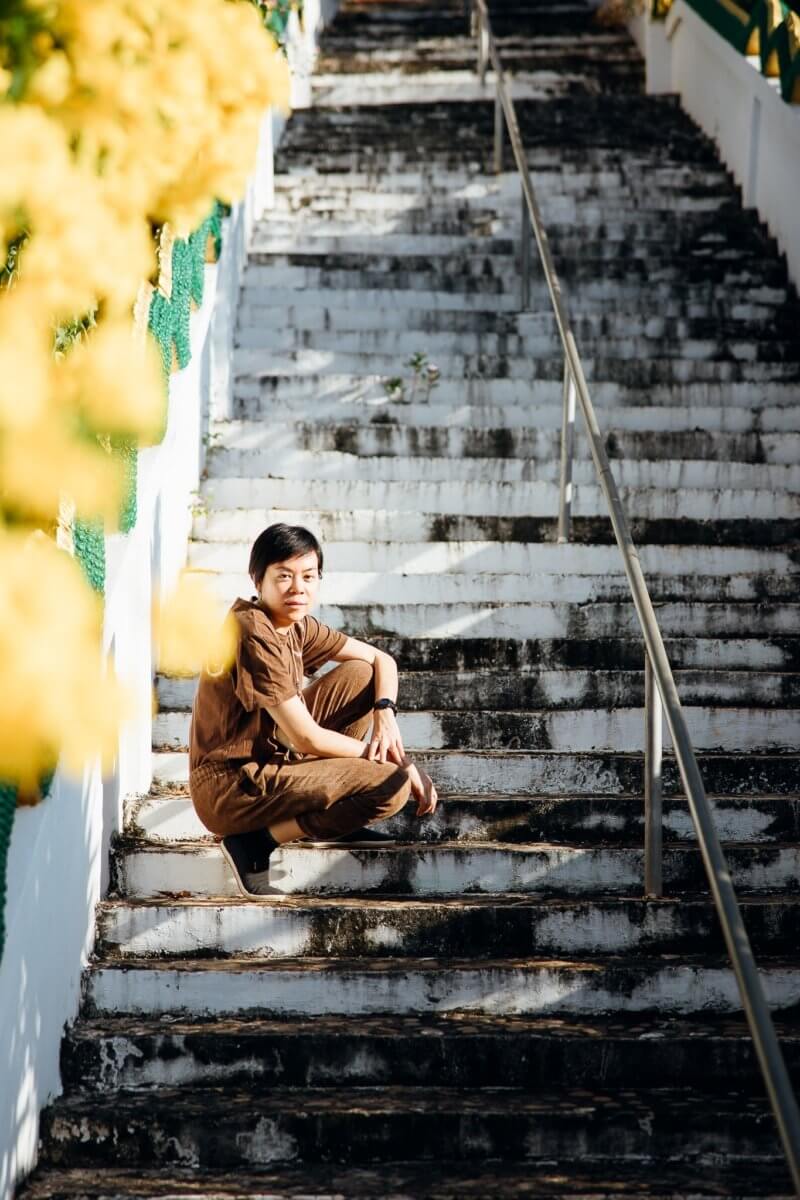
Passawee T. Kodaka, aka Patsy is the Founder and Creative Director at Folkcharm, a ‘farm-to-fashion’ brand that uses locally sourced handloom chemical -free homegrown cotton, aimed to empower rural artisans and to increase the appreciation in rural crafts (wo) manship and slow fashion. She is active in the social enterprise scene in Thailand, co-founding a movement of craft social entrepreneurs, VolksKraft Ethical Crafts Hub.
Before founding Folkcharm, she worked in international and national -level social development organisations for over 6 years. With the Royal Thai Government, ARC-MDG and UNIFEM Scholarship, she holds an MSc in Rural and Regional Development Planning and has received a scholarship and completed the ‘Trainee Programme for Asian Craft Works’ in Textiles ([Weaving and Dyeing)] from Kanazawa College of Art, Japan.
During my meeting with her, I told her that I would love to visit the sustainable cotton farm and the weavers who make the clothes for Folkcharm and I was fortunate to go with her to Loei to learn more about her social enterprise and see the work she has done at the grass roots level. I went there in November, I met with a group of people there. We were supposed to meet Patsy at the Loei airport at noon on 26th November, my flight landed early so I was at the exit gate by 11.50pm, I was 10 mins early so I casually walked towards Patsy and said,”I guess I am the first one to arrive”. She said,”No,Yyou are the last one”and we both laughed. We put our luggage in a minivan and went to visit a weaving community. We had lunch there and they showed us the process of making cotton into yarn, weaving handlooms is a beautiful and artistic process. From there we went to another community in the evening and stayed at the home stay option there.
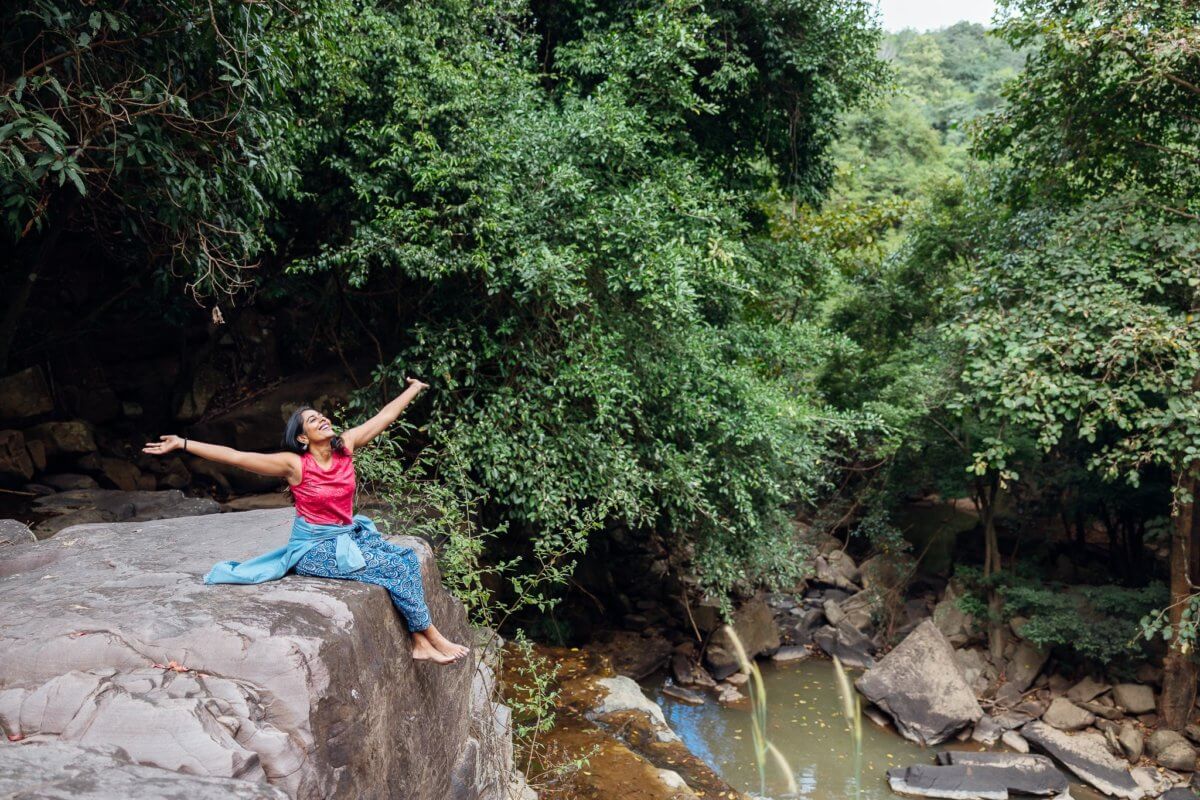
I spent two days in Loei visiting different weaving communities , having lunch near a beautiful waterfall and going on an early morning trek to view the sunrise over a beautiful mountain.There was never a dull moment because Patsy had ensured that the entire day was filled with activities. It was heartwarming to listen to so many different stories from each person I met there. A lady who believes in his excellency King Rama 9’s vision for Thailand has started her own social enterprise and she believes in the sufficiency economy model proposed by King Rama 9 which essentially focuses on developing the economy by ensuring fair paying jobs and coexisting in harmony with the environment. I met a ladyboy who told us folklores and tales about how the villagers have learnt to coexist with the wild elephants and she uses elephant poopdung for dying the cotton that she weaves. Another lady we met had led the fight against a gold mine which had made the village toxic and cancerous and they won the fight after many long years. Another story was that of a local politician who is trying many projects to ensure that the future generation can find jobs in the village community. The underlying connections between all the stories I heard from people was their passion to develop a sufficiency economy which places the planet and people over profit.
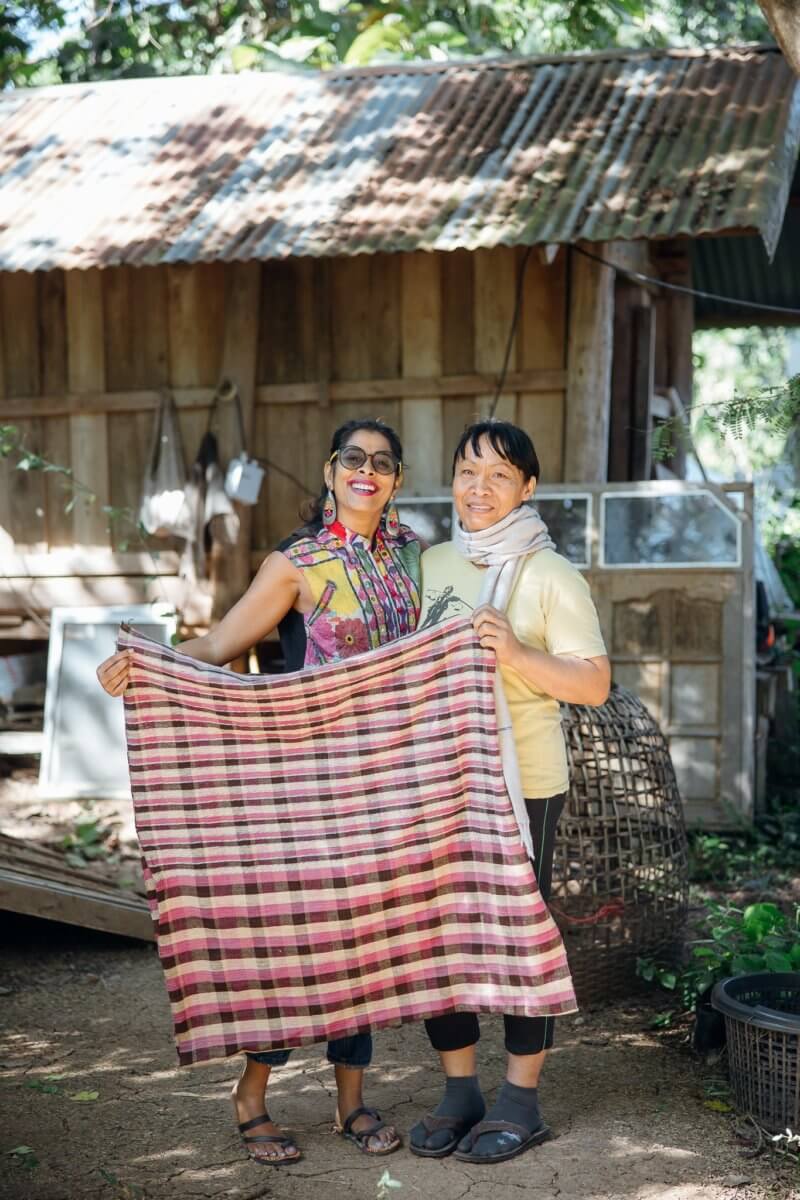
Each of their stories came from a pure and honest space , it is hard for me to pick a favoritefavourite but something about Khun Jayor, the ladyboy really struck me. I was not able to fully understand her, her eyes were a mix of joy and pain. The joy of having achieved so much in a small village and the pain of all the hurdles she had to overcome. I bought a fabric woven by her and requested to take a picture with her and she was happy to pose with me. When you buy a fabric directly from a weaver , it is not just a piece of cloth, you are supporting the artistic process of farm to fashion. 100% sustainable organic cotton costs anywhere between 350 to 700Bthb per metre , that is definitely expensive compared to fast fashion but you pay to ensure that the planet and the people working for the brand did not suffer in the process of making the fabric. Fast fashion is cheap because someone somewhere is paying the price for it so it’s better to buy less and choose well.
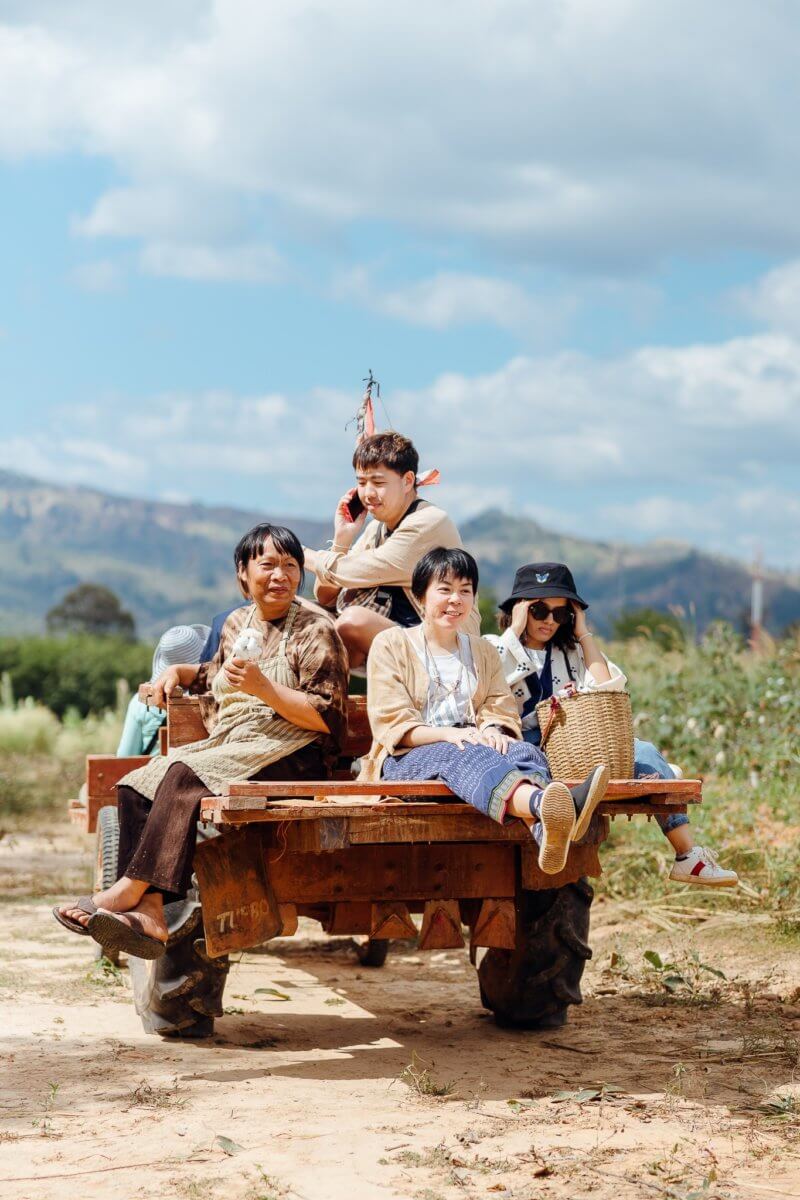
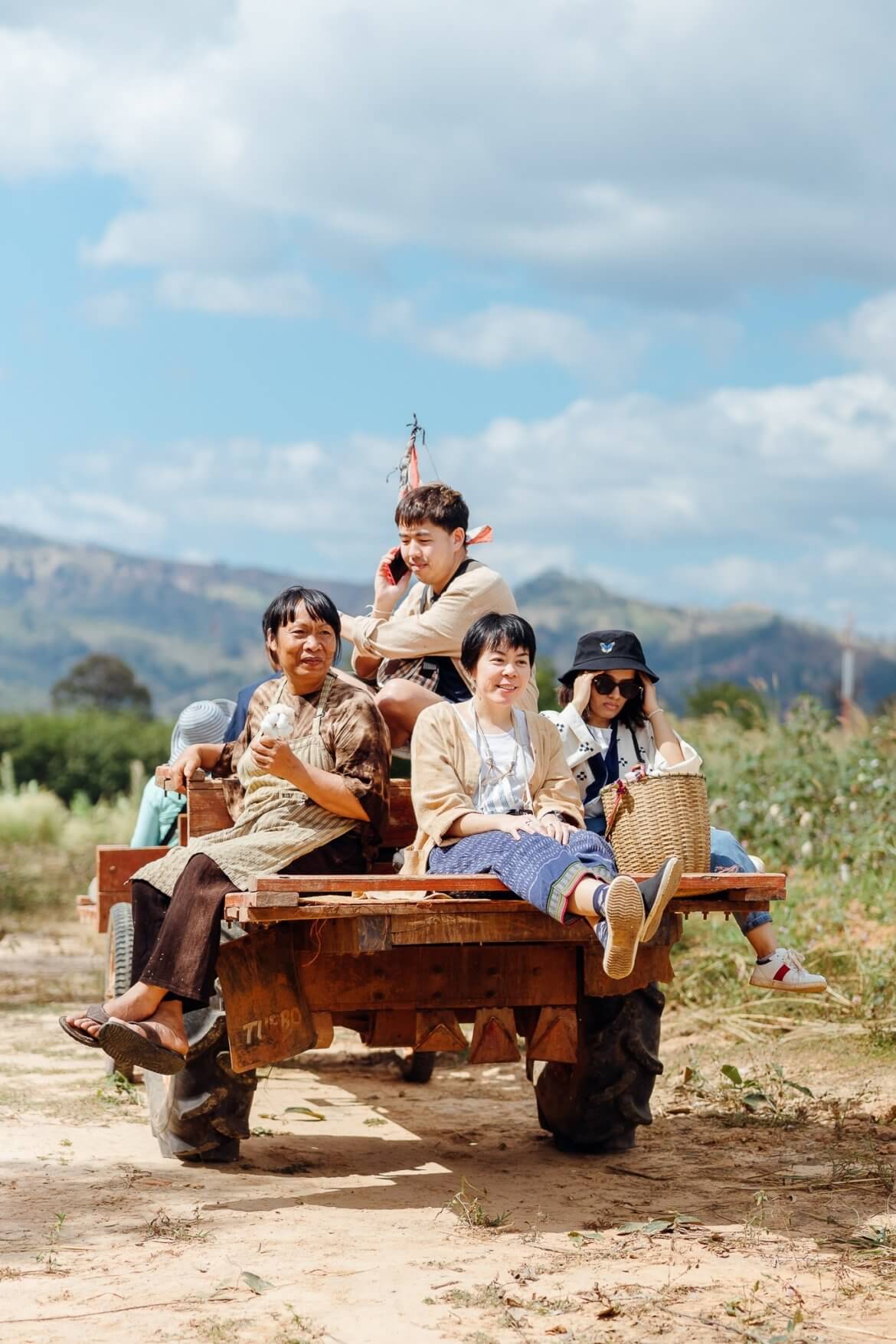
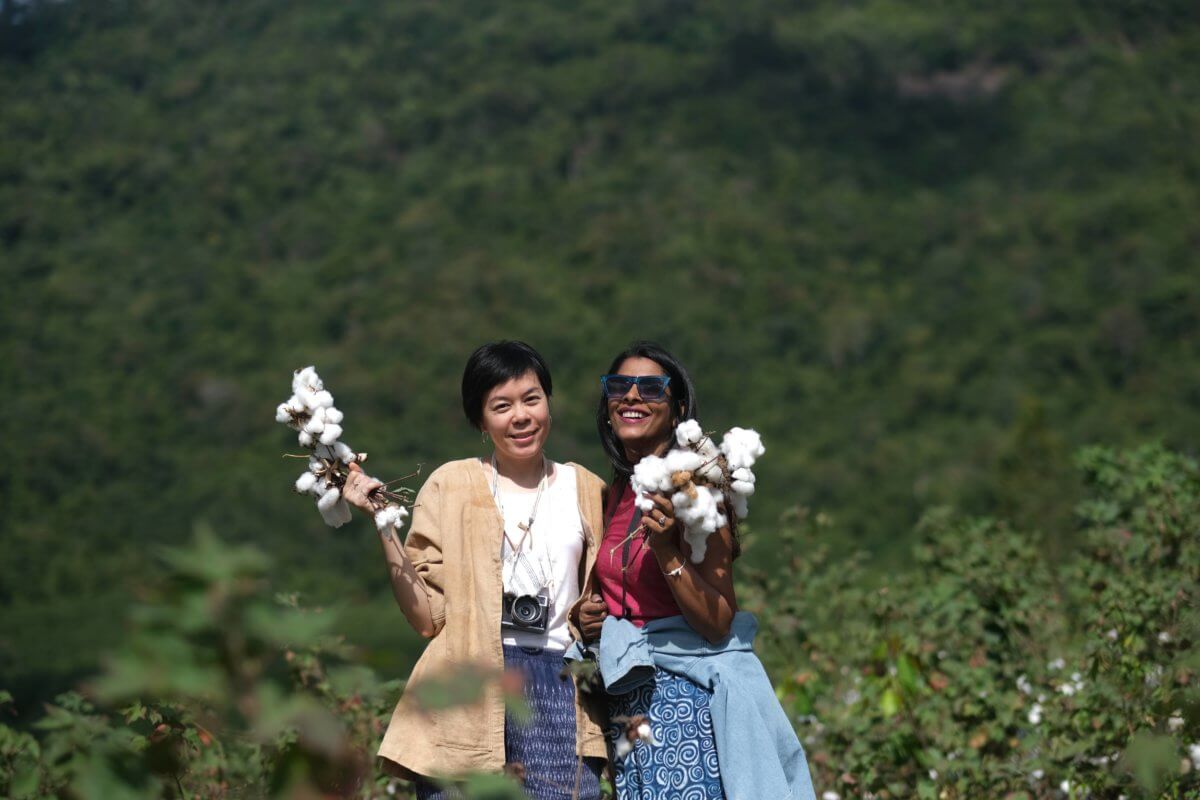
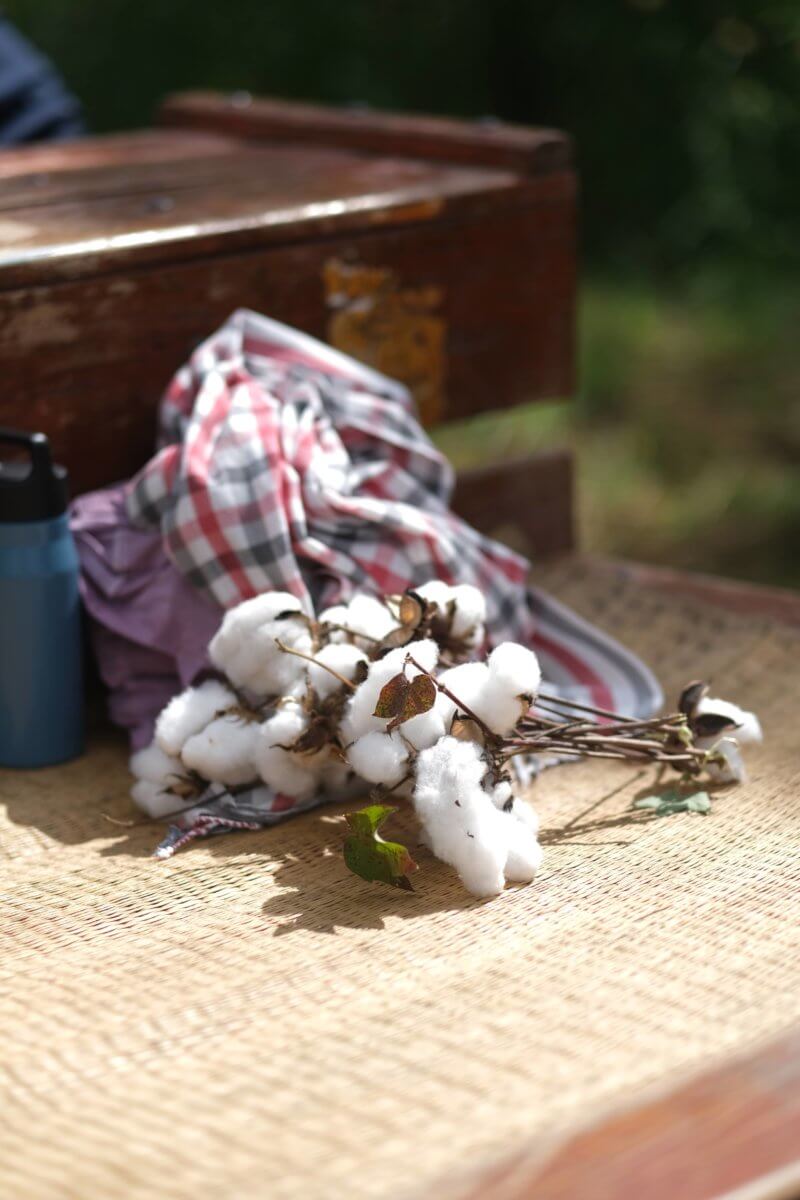
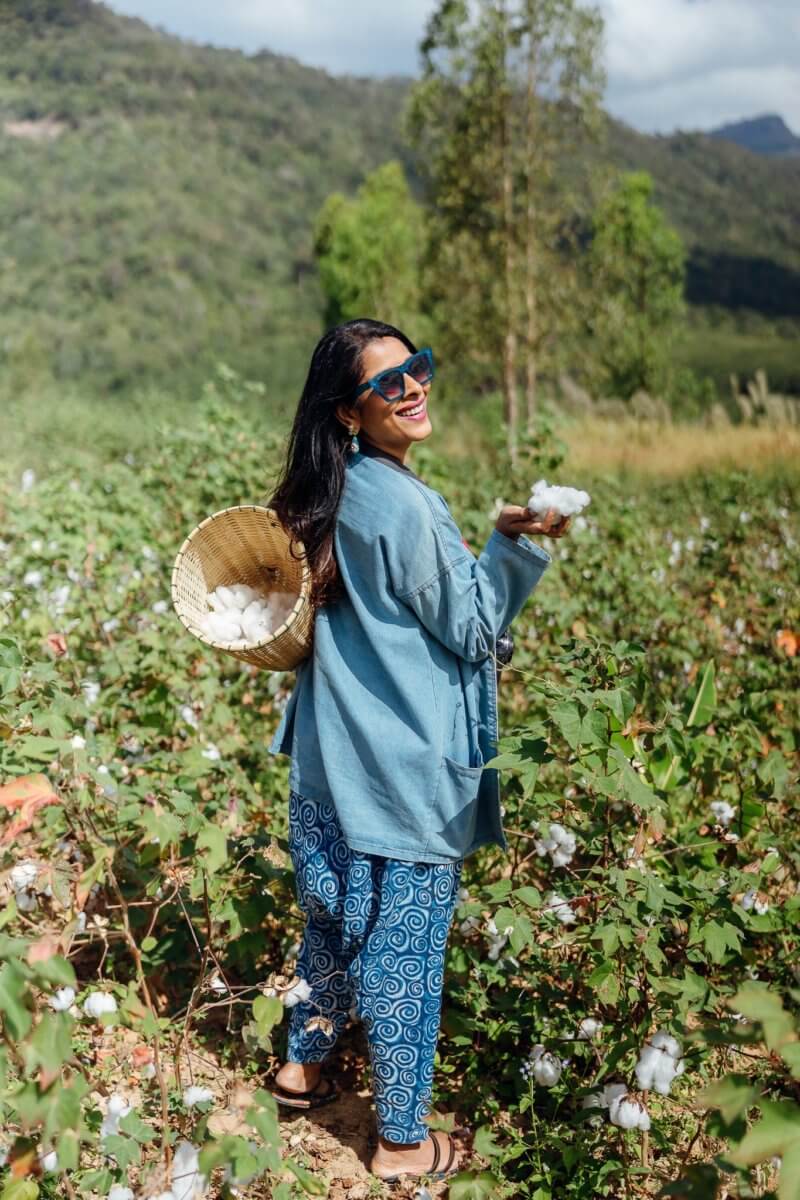
My favoritefavourite part of my two day itinerary was picking cotton, I loved the open vehicles we travelled in to go to the cotton farm. The cotton in the farm is grown in a sustainable way and it is free of pesticides, it is also known as rain fed cotton. Most people are unaware that GMO cotton is extremely unsustainable because it uses pesticides and lot of water. There were also stories on how cotton farmers commitingcommitting suicide in India a few years ago might have a connection with the process of GMO cotton. It was around that time many stories about the unsustainable nature of cotton started coming out , fortunately there are a lot of slow fashion brands which are growing sustainable cotton now. If you are a conciousconscious consumer who wants to build a sustainable wardrobe , I reccomendrecommend that you download the application GOOD ON YOUGood on you. The most important thing to remember is to support brands which give you complete transparency of their supply chain and to read the label properly , this is easier with small local brands because their supply chain is not highly fragmented.
Many people still remain in the dark, unaware that their clothes may be contributing to the climate crisis and human exploitation. I strongly believe that most people don’t want to support or encourage modern day slavery and wanted to write more on the ugly side of the fashion industry to create awareness.The Rana Plaza incident definetlydefinitely changed my relationship with fashion because fashion should be empowering. When fashion comes at the cost of social and climate injustice, it is deeply disturbing. I wanted to understand the work FASHION REVOLUTIONFashion Revolution ,Thailand is doing towards creating awareness and that is why I went to meet Patsy who is a part of the core team of FASHION REVOLUTIONFashion Revolution,Thailand. At that time , I had read briefly about her but did not know the full extent of the work she has been doing towards empowering elderly women in Loei province through her social enterprise, Folkcharm.
Passawee T. Kodaka, aka Patsy is the Founder and Creative Director at Folkcharm, a ‘farm-to-fashion’ brand that uses locally sourced handloom chemical -free homegrown cotton, aimed to empower rural artisans and to increase the appreciation in rural crafts (wo) manship and slow fashion. She is active in the social enterprise scene in Thailand, co-founding a movement of craft social entrepreneurs, VolksKraft Ethical Crafts Hub.
Before founding Folkcharm, she worked in international and national -level social development organizationsorganisations for over 6 years. With the Royal Thai Government, ARC-MDG and UNIFEM Scholarship, she holds an MSc in Rural and Regional Development Planning and has received a scholarship and completed the ‘Trainee Programme for Asian Craft Works’ in Textiles ([Weaving and Dyeing)] from Kanazawa College of Art, Japan.
Each of their stories came from a pure and honest space , it is hard for me to pick a favoritefavourite but something about Khun Jayor, the ladyboy really struck me. I was not able to fully understand her, her eyes were a mix of joy and pain. The joy of having achieved so much in a small village and the pain of all the hurdles she had to overcome. I bought a fabric woven by her and requested to take a picture with her and she was happy to pose with me. When you buy a fabric directly from a weaver , it is not just a piece of cloth, you are supporting the artistic process of farm to fashion. 100% sustainable organic cotton costs anywhere between 350 to 700Bthb per metre , that is definitely expensive compared to fast fashion but you pay to ensure that the planet and the people working for the brand did not suffer in the process of making the fabric. Fast fashion is cheap because someone somewhere is paying the price for it so it’s better to buy less and choose well.
My favourite part of my two day itinerary was picking cotton, I loved the open vehicles we travelled in to go to the cotton farm. The cotton in the farm is grown in a sustainable way and it is free of pesticides, it is also known as rain fed cotton. Most people are unaware that GMO cotton is extremely unsustainable because it uses pesticides and lot of water. There were also stories on how cotton farmers committing suicide in India a few years ago might have a connection with the process of GMO cotton. It was around that time many stories about the unsustainable nature of cotton started coming out , fortunately there are a lot of slow fashion brands which are growing sustainable cotton now. If you are a conscious consumer who wants to build a sustainable wardrobe , I recommend that you download the application Good on you. The most important thing to remember is to support brands which give you complete transparency of their supply chain and to read the label properly , this is easier with small local brands because their supply chain is not highly fragmented.
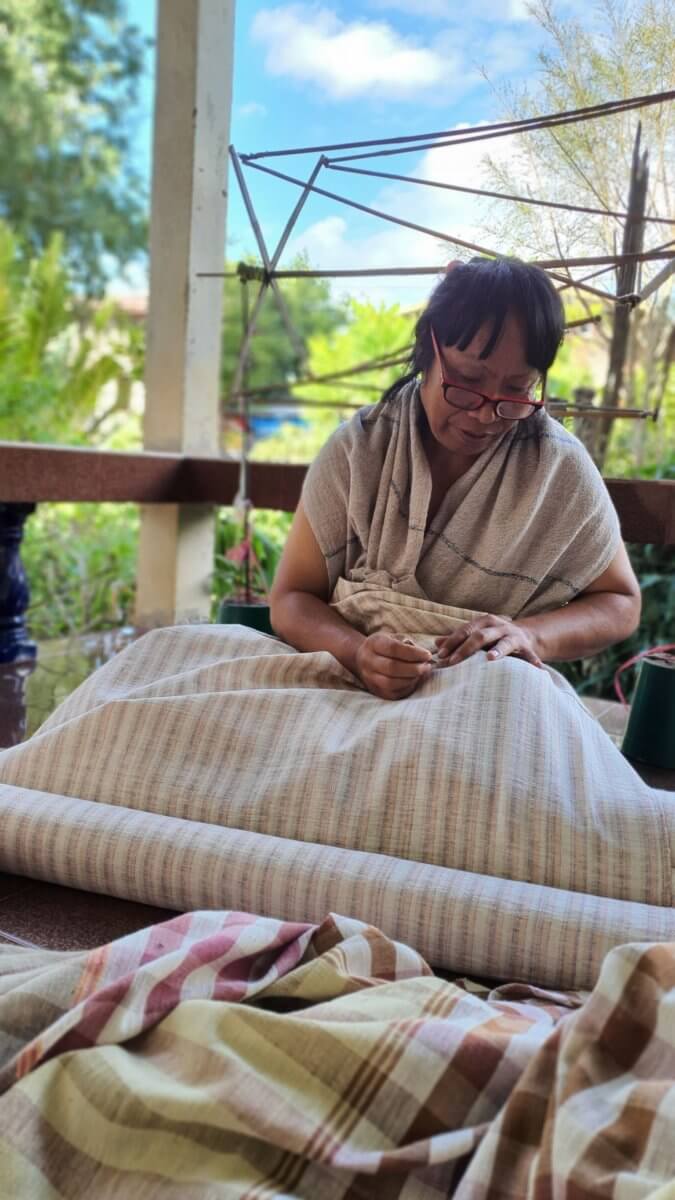
During my meeting with her, I told her that I would love to visit the sustainable cotton farm and the weavers who make the clothes for Folkcharm and I was fortunate to go with her to Loei to learn more about her social enterprise and see the work she has done at the grass roots level. I went there in November, I met with a group of people there. We were supposed to meet Patsy at the Loei airport at noon on 26th November, my flight landed early so I was at the exit gate by 11.50pm, I was 10 mins early so I casually walked towards Patsy and said,”I guess I am the first one to arrive”. She said,”No,Yyou are the last one”and we both laughed. We put our luggage in a minivan and went to visit a weaving community. We had lunch there and they showed us the process of making cotton into yarn, weaving handlooms is a beautiful and artistic process. From there we went to another community in the evening and stayed at the home stay option there.
I spent two days in Loei visiting different weaving communities , having lunch near a beautiful waterfall and going on an early morning trek to view the sunrise over a beautiful mountain.There was never a dull moment because Patsy had ensured that the entire day was filled with activities. It was heartwarming to listen to so many different stories from each person I met there. A lady who believes in his excellency King Rama 9’s vision for Thailand has started her own social enterprise and she believes in the sufficiency economy model proposed by King Rama 9 which essentially focuses on developing the economy by ensuring fair paying jobs and coexisting in harmony with the environment. I met a ladyboy who told us folklores and tales about how the villagers have learnt to coexist with the wild elephants and she uses elephant poopdung for dying the cotton that she weaves. Another lady we met had led the fight against a gold mine which had made the village toxic and cancerous and they won the fight after many long years. Another story was that of a local politician who is trying many projects to ensure that the future generation can find jobs in the village community. The underlying connections between all the stories I heard from people was their passion to develop a sufficiency economy which places the planet and people over profit.