Art and Culture

A brief introduction to the cultural background of Israeli food

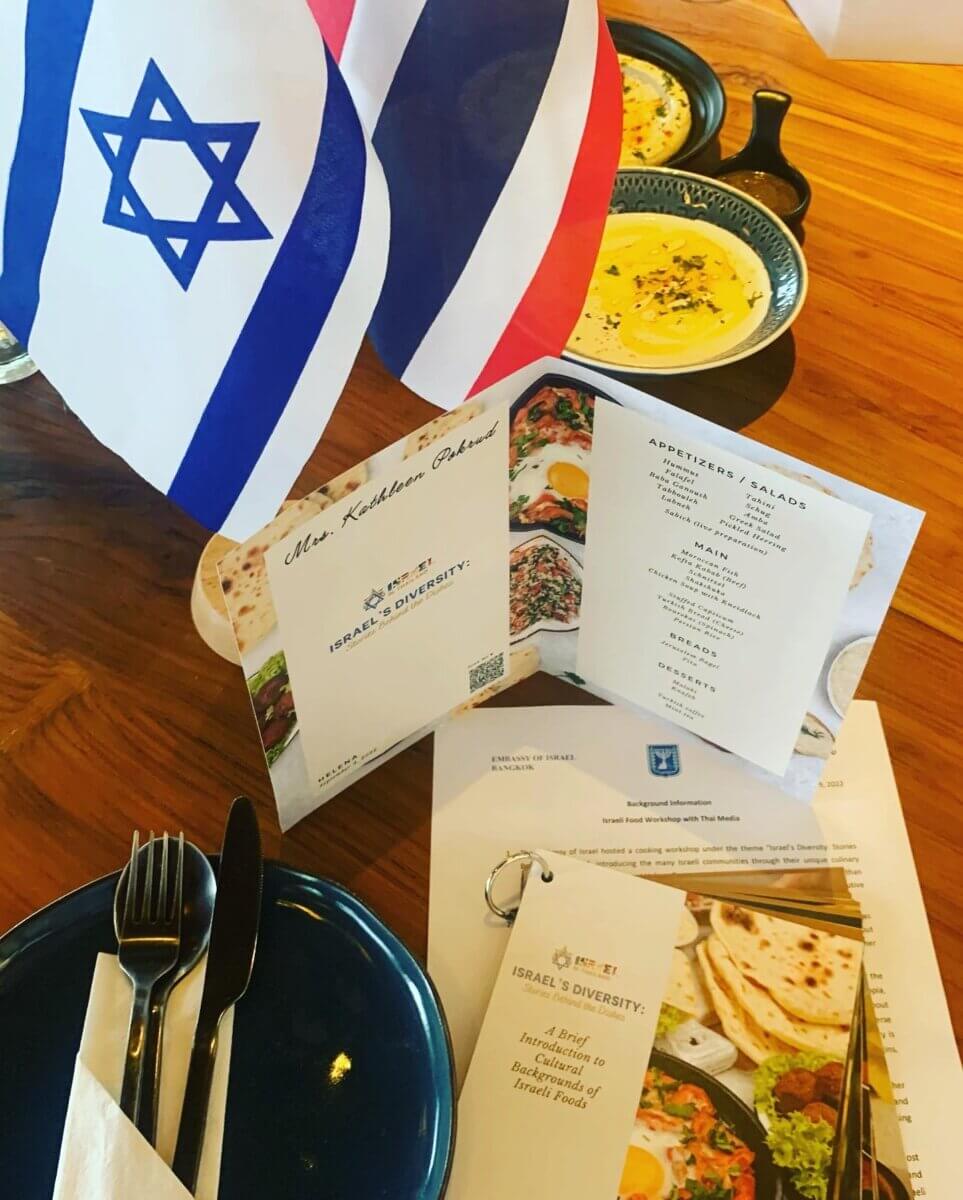
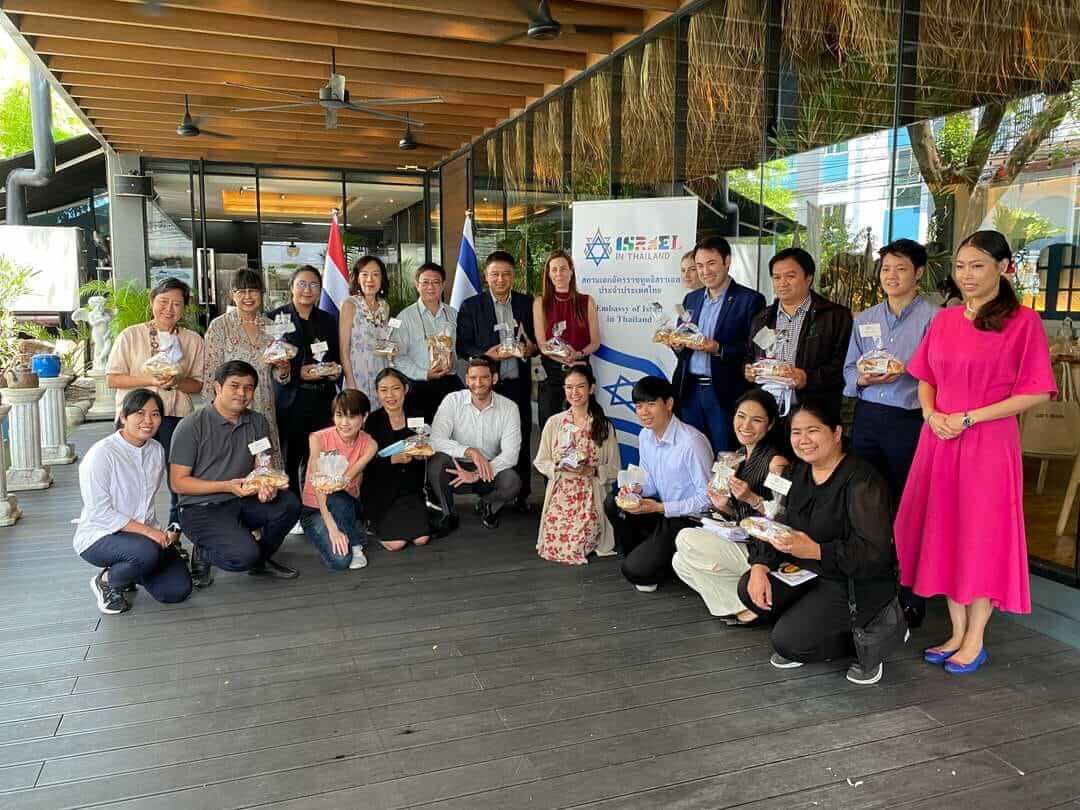
The Embassy of Israel recently hosted a cooking workshop under the theme “Israel’s diversity: Stories behind the dishes”, introducing the many Israeli communities through their unique culinary traditions. The event took place at the newly opened Helena Restaurant in Sukhumvit Soi 51. 
 
The Jewish nation has a long history of thousands of years, though the State of Israel was established only in 1948. At the establishment, the population of the young country was about 800,000 people, 650,000 of them were Jewish, and the rest were Muslims, Christians and other minorities.
 
Since the establishment of the State, waves of Jewish migrations have arrived from all over the world, the biggest waves being from Iran, Iraq, Yemen, the former USSR, Turkey, Syria, Ethiopia, Morocco, Tunisia and Europe. By 2022 the population of Israel reached 9.5 million people, about 74% of them are Jewish. The migration throughout the years has created, not only a very diverse population, but a blend of many of these cultures. That diversity is reflected very well in the Israeli cuisine, which is a mixture of various dishes from different origins, as well as new fusion dishes.
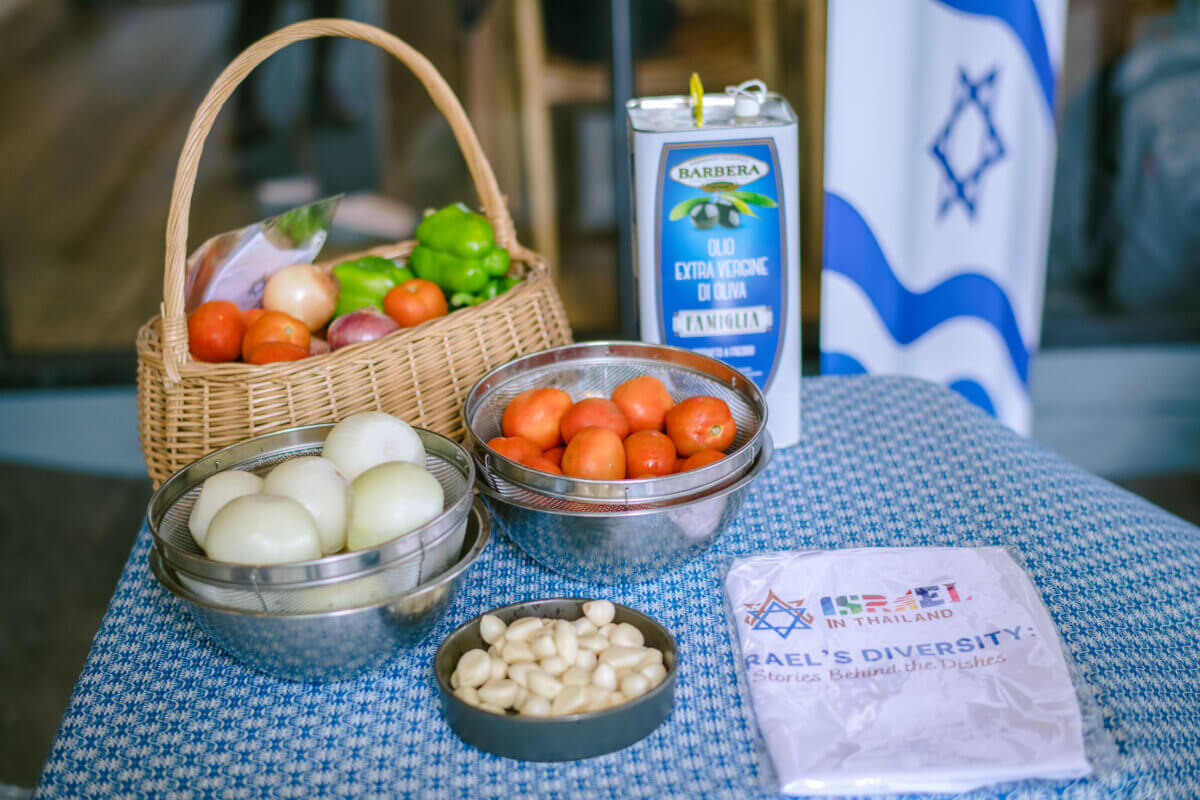
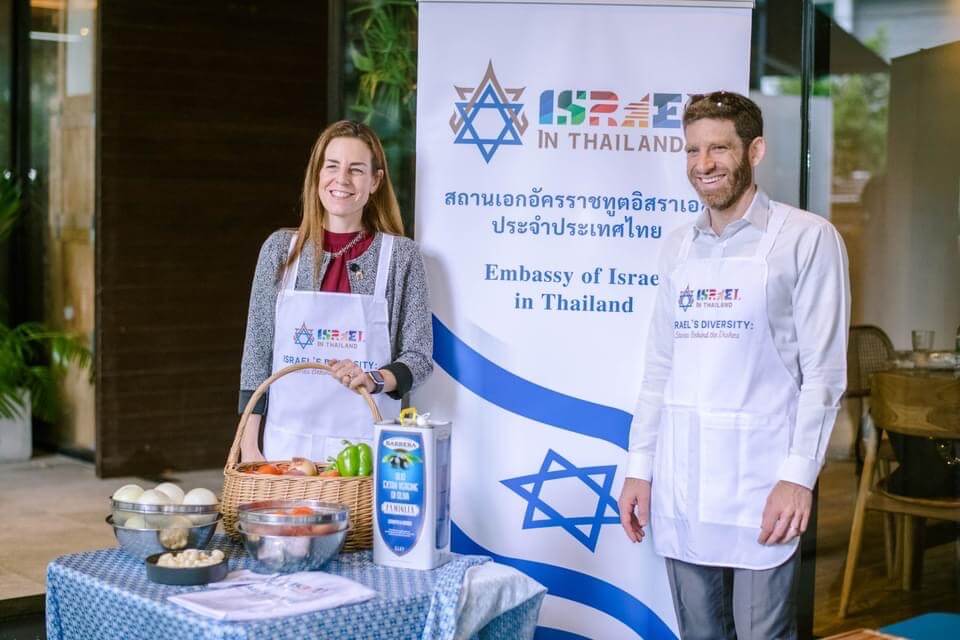
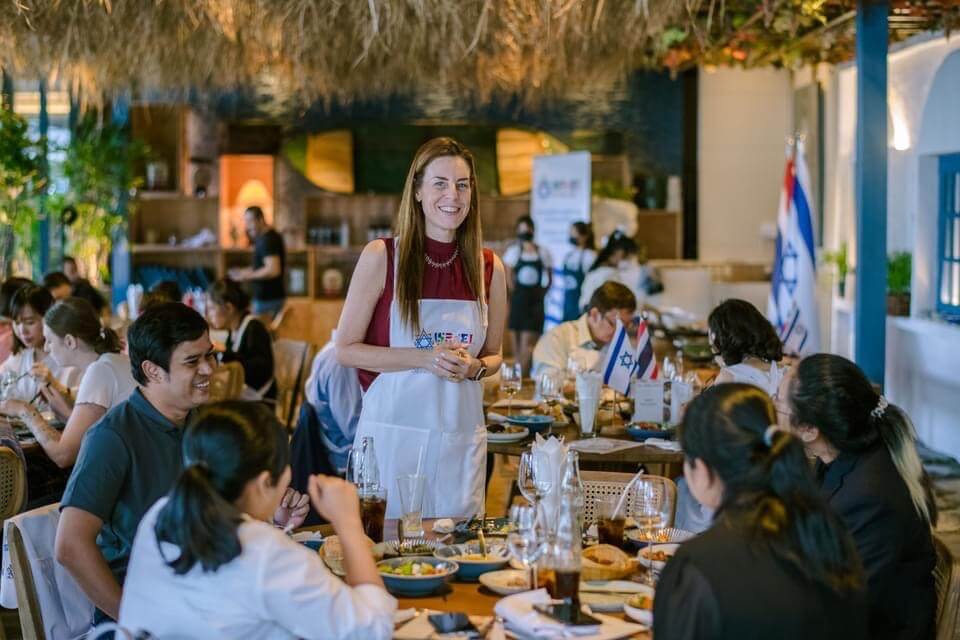
In the workshop, participants learned how to make several dishes which originated from other countries and are part of the Israeli cuisine, such as Challah, Shakshuka and Falafel. The workshop was followed by lunch comprising more than 25 Israeli dishes, showcasing the various flavours and colours of Israeli cuisine.
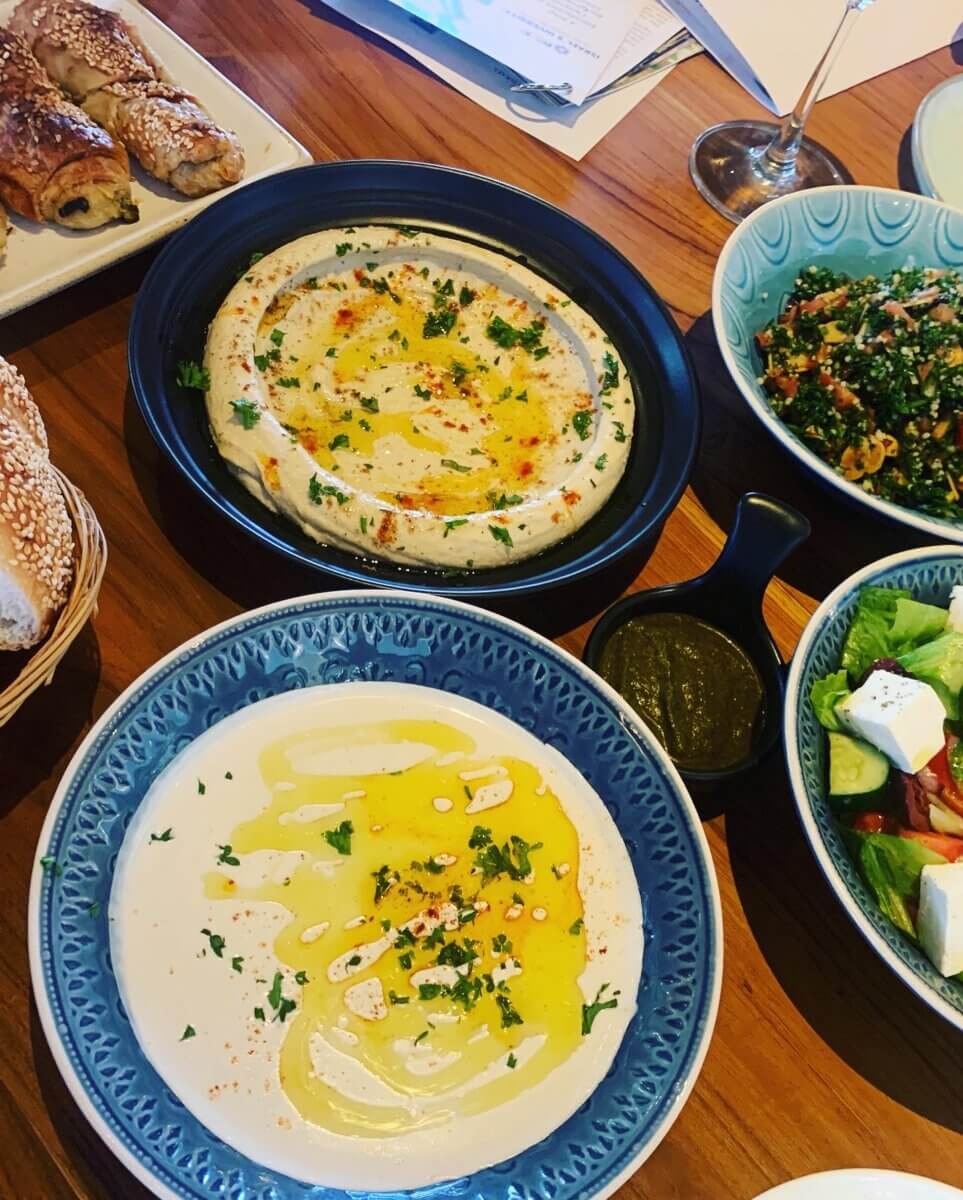
Ambassador Orna Sagiv explained to the audience, “The diversity of Israel’s population is quite unique, compared to most countries which tends to be more homogeneous. This diversity presents many opportunities and plays a major role in the development of the young country. The various flavours of the Israeli cuisine, as well as the new fusion food, combining the different ingredients, is a manifest of the “melting pot” Israel became for these various cultural groups. In today’s workshop we tried to share this aspect of our culture with the Thai media, in a fun and delicious way.

Hopefully, through a better understanding of the Israeli culture this will be another bridge for stronger Thai-Israeli relations.”
0 comment
0 FacebookTwitterPinterestEmail

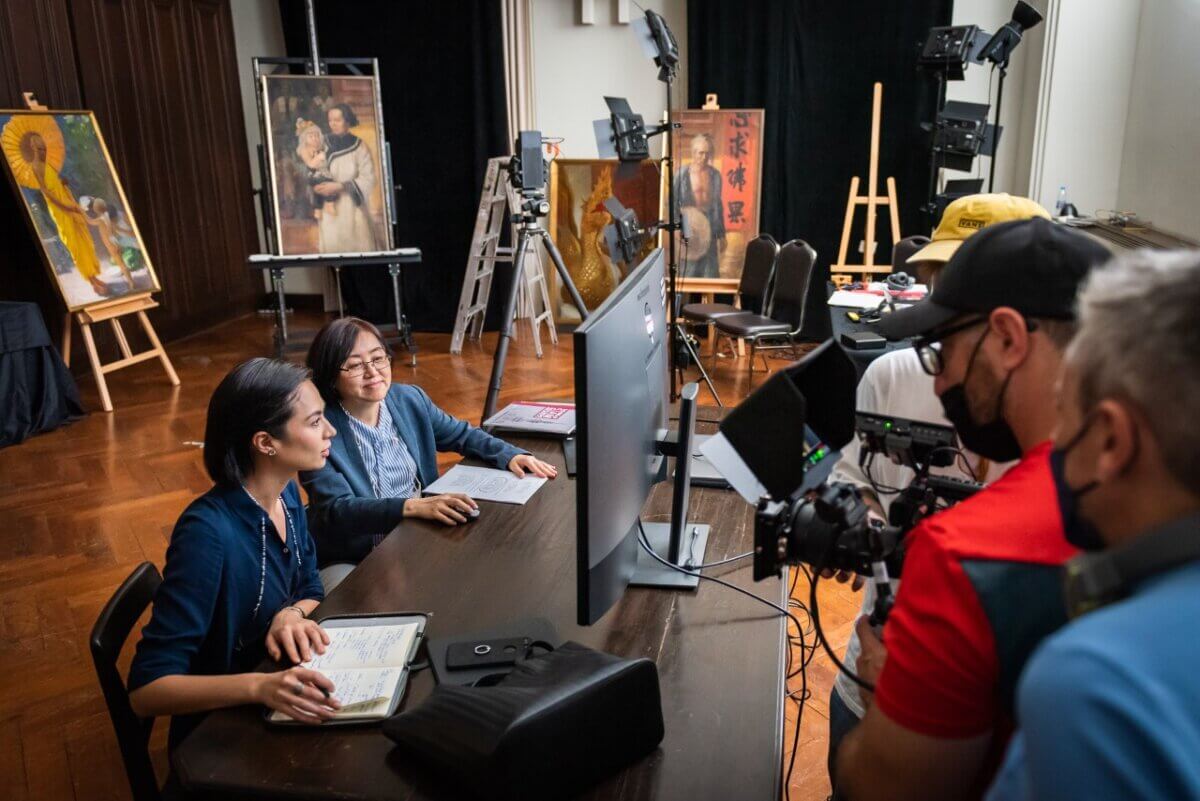
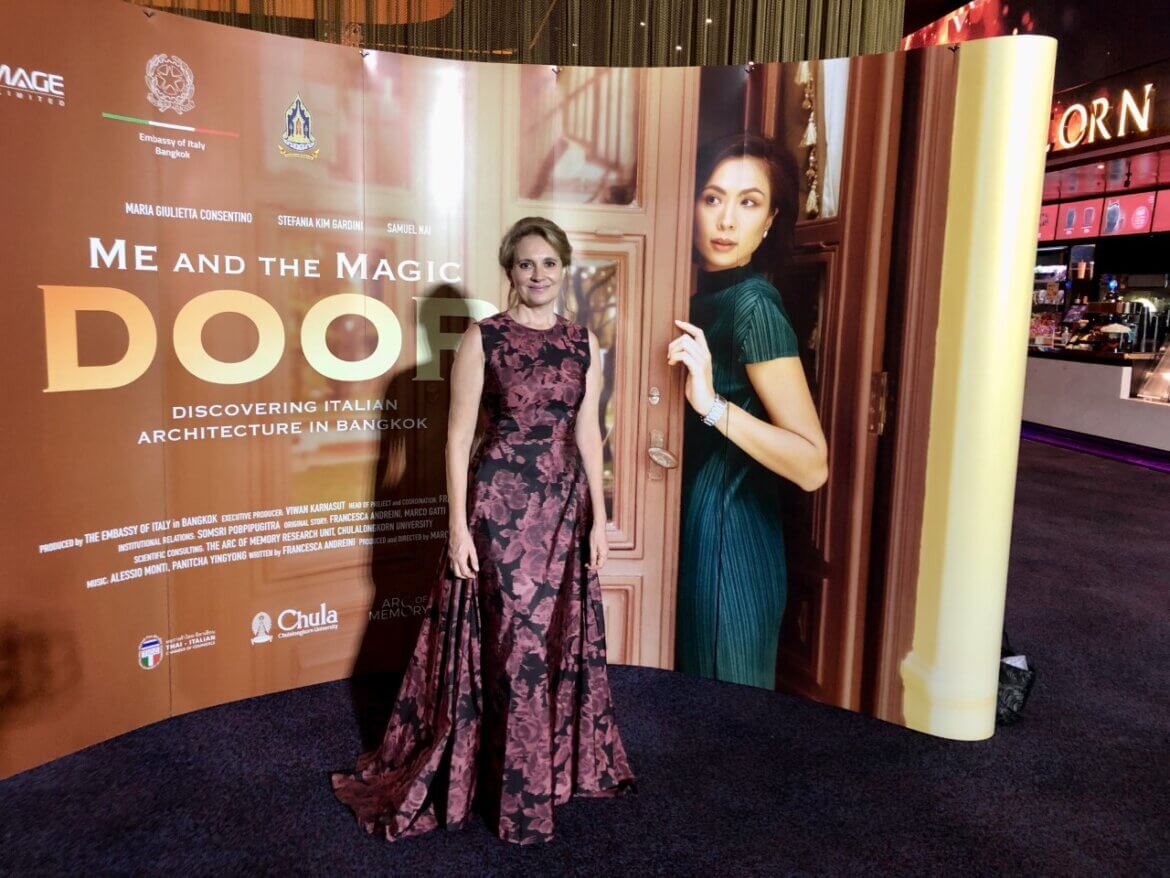
“ME AND THE MAGIC DOOR - Discovering Italian Architecture in Bangkok”, a documentary film, was recently released by The Embassy of Italy in Thailand, together with the Thai-Italian Chamber of Commerce and Max Image Co., Ltd., with the aim of promoting artistic and cultural cooperation among Italy and Thailand.

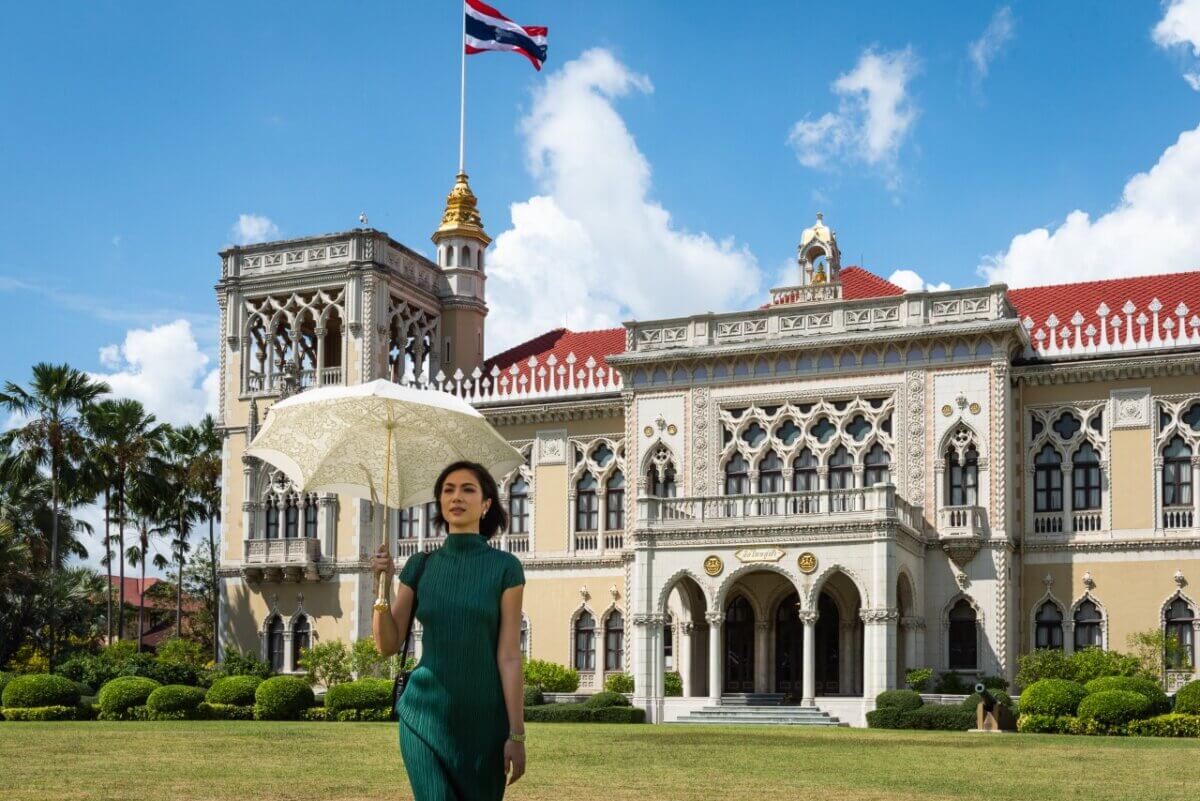
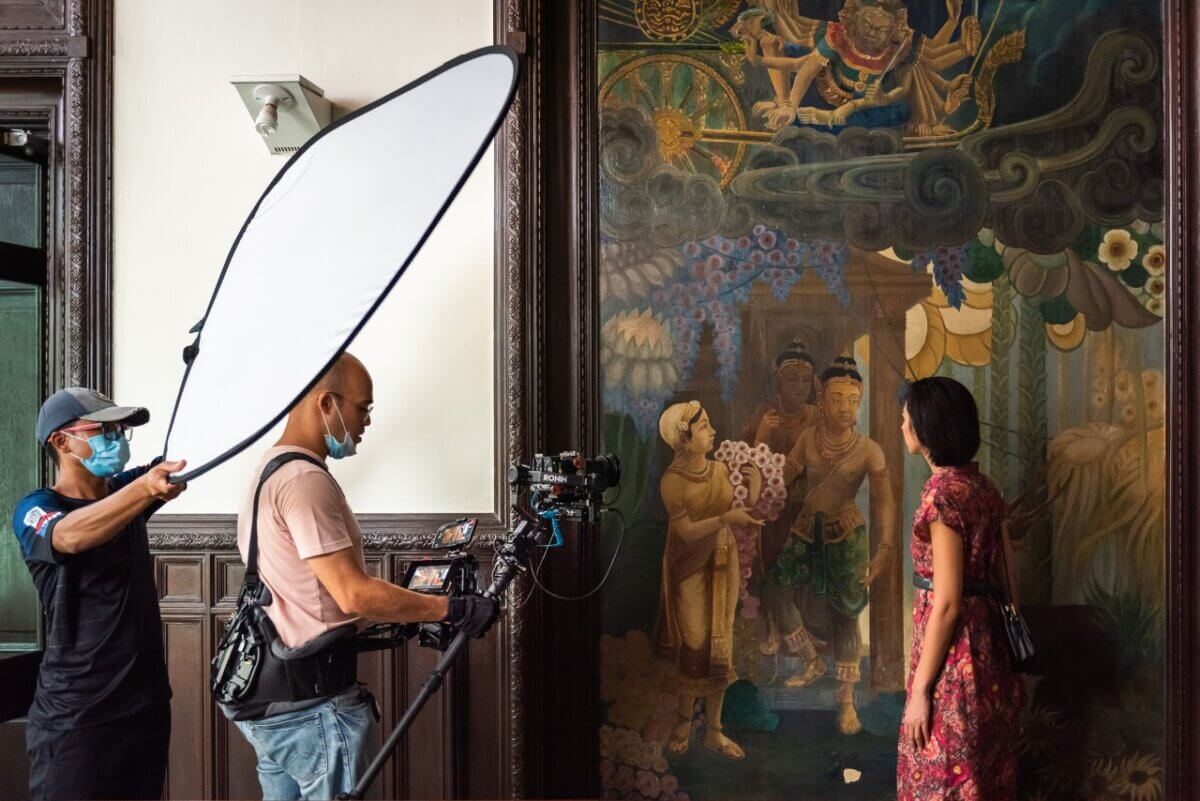
The documentary unfolds from the perspective of Fai, a Thai-Italian character who travels to Thailand to write an article about the Italian cultural heritage in Siam. The audience can follow Fai’s journey and her discovery of many iconic places such as Ananta Samakhom Throne Hall, inside Dusit Palace, Baan Norasing (Government House), Baan Phitsanulok and several other impressive buildings created by Italian architects and decorated by Italian artists, under the guidance of Thai personalities of the time, during the late 19th and early 20th Centuries.

H.E. Mr. Lorenzo Galanti, Italian Ambassador to Thailand explained, “After the reunification of Italy in 1861 the Kingdom of Siam established friendly relations with Italy. His Majesty King Chulalongkorn (Rama V) and King Vajiravudh (Rama VI) were profound connoisseurs and admirers of Italian art and culture. Therefore, several construction projects in Bangkok were assigned to a group of Italian experts, creating the conditions for a highly successful artistic cross-fertilisation.”

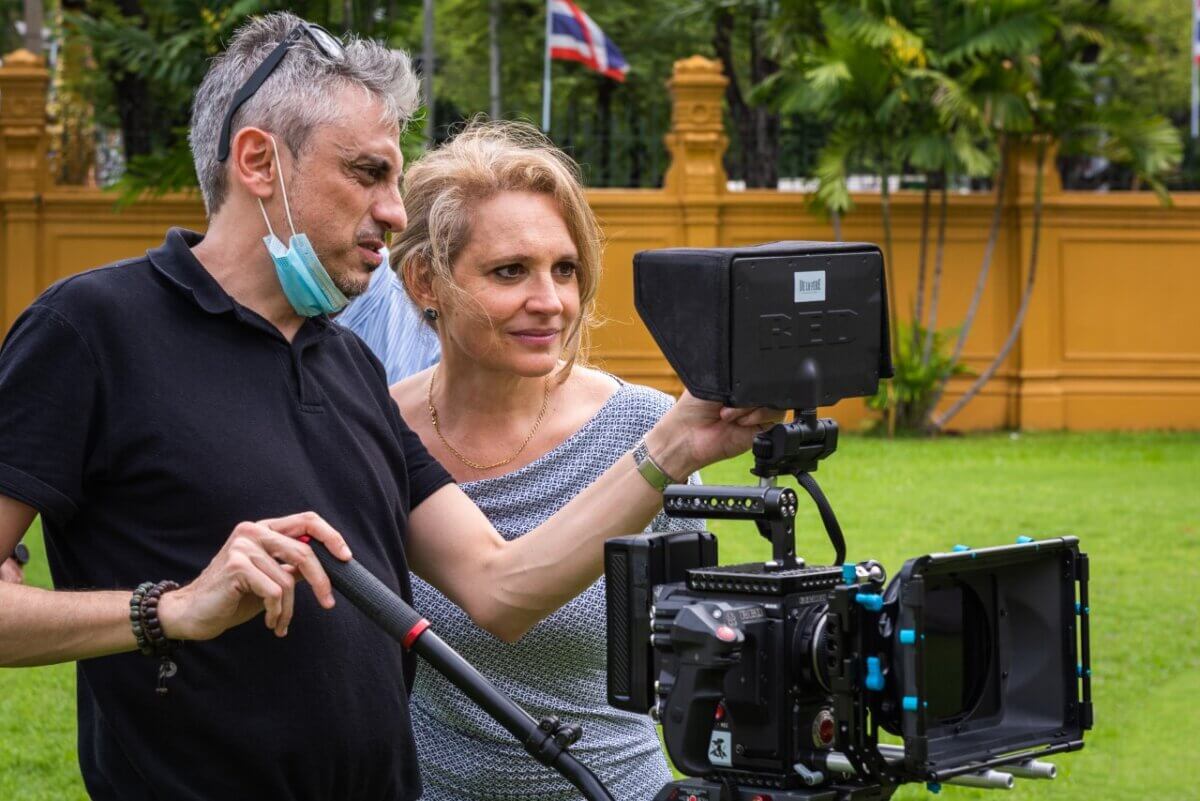
Directed by Marco Gatti, written by Francesca Andreini and starring Stefania Kim Gardini, Giulietta Consentino and Samuel Nai. Expat Life sat down with Madame Francesca, spouse of the Ambassador of Italy to Thailand to learn more about this inspirational story.

What inspired this film project?

Unlike other countries, where European architecture is present as a result of a history of colonialism, here in Thailand it was the result of an Italian immigration of high professional quality. Under King Mongkut (Rama IV) some Italian entrepreneurs had already opened flourishing constructions and import businesses in Bangkok, but the real blossoming of Italian architecture came under King Chulalongkorn (Rama V) and his son, King Vajiravudh (Rama VI). The two monarchs had great admiration for the culture and art of our country and encouraged the arrival of young professionals, as well as established figures, from Italy to work on the modernisation of Bangkok.

These Italian professionals were contracted to build palaces that were ambitious and innovative at the time. Their quality and aesthetic value are such that today these buildings are still perfectly preserved and several among them host Royal or governmental institutions. Italian engineers, architects and artists found in what was then called Siam a welcoming, friendly country that granted them an opportunity for professional and artistic expression. Many of them spent their entire professional lives in Siam, and some became relevant in the Kingdom’s cultural scene.

It was a very beautiful story, and the Italian Embassy decided to tell it, as a tribute to the extraordinary professional and artistic skills of our compatriots, as well as a testimony to the excellent and long-standing relations between Italy and Thailand.

With this documentary project, you received a lot of support from many organizations, who are the key ones that made it happen?

We are very grateful to the Thai institutions, which not only allowed us to shoot the documentary, but accompanied us through all stages of the filmmaking process. I would like to express my deep gratitude to the Royal Household Bureau, which graciously provided us with permission to show some Royal palaces, such as Anantha Samakon and Saranrom Palace. We are also very grateful to the Office of the Prime Minister for allowing us to film some beautiful scenes outside and in the main lobby of the Government House and Baan Pitsanulok, the official Prime Minister’s residence. The Ministry of Foreign Affairs followed us all the way through the preparation of the documentary, helping us to understand what bureaucratic processes we needed to follow.

The contribution of Chulalongkorn University, and in particular of Professor Neungredee Lohapon, who formed the scientific committee for the documentary, was also invaluable, as she verified through original documentation the accuracy of the data we provided. Professor Neungreudee, and the Arc of Memory research Unit, led by her, also made available the paintings we showed in the film. The Ministry of Culture kindly granted its patronage and provided a valuable final check on the contents of the documentary. Last but not least, I would like to mention the contribution of the Thai film Bureau, which supervised all the filming, allowing us to work in a peaceful and fully cooperative atmosphere.

What obstacles did your team encounter and how were they overcome?

The main obstacle was working during a pandemic.The various preventive measures obviously complicated our work and increased the costs. Due to Covid we had to give up filming at a location that was very important to us: Museum Siam. It was closed for a few days due to a case in their staff, and, being on a tight budget, we could not reschedule the filming on an extra work day.

The shooting was a race against time: we had an extremely tight schedule! The film is smooth, entertaining, it is not a classic documentary as it combines the educational part and a fictional story. It is particularly exciting and yet, it is extremely rich in information. I am sure that while the audience watches it, they cannot imagine that it was shot in only two weeks!

The other big obstacle was the heat. The shooting was almost entirely outdoors, and you can easily imagine how much effort it cost to be outdoors for a whole day (from sunrise until sunset). Last but not least, there was the problem of the actors’ makeup, which was flaking off because of the heat!

Different from writing a book, what lessons have you learnt in terms of experience with this adventure?

Writing fiction and writing screenplays are two completely different jobs. When you write a screenplay you can only use images, you cannot describe anything you cannot see on the screen, so you have to create images that can also reveal what is not said, such as people’s moods, or their past history. For a fiction writer like me, it can be a real challenge!

It was not the first time I had tackled this terrain though, because I had already written several screenplays many years ago. A screenplay that I co-wrote, Senza me, received state recognition of cultural interest in 2010!

I enjoyed reacquainting myself with an old passion of mine.

Any fun or heartwarming moments you recall during the filming?

There were countless hilarious episodes that made us laugh so much during the shooting. For example, when the actors could not remember their lines and made funny expressions. In general, I cherish the memory of the very special atmosphere on the set: we all were working under a lot of pressure but with extreme passion and the collaborations between us was total. There were countless problems to solve on the spot: the light not being the right one, a sudden rainfall, a location that was supposed to be free being suddenly occupied… but these difficulties made our collaboration even more intense!

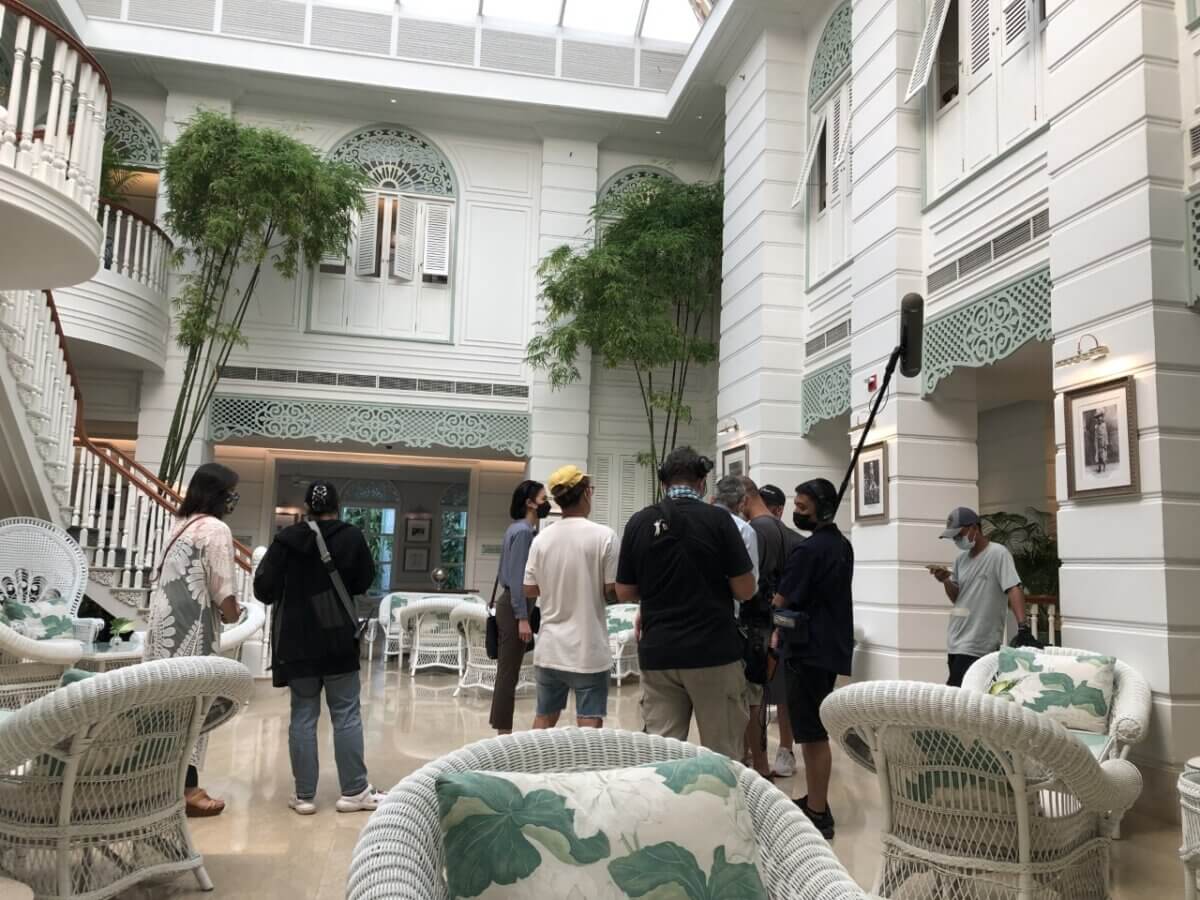
A particularly funny situation was our shooting at Mandarin Oriental: there were guests in the rooms above the halls where we were shooting so we had to whisper the directions while we were working, and that created very funny moments. Imagine a typical set, where everybody shouts instructions, but having to work in a whisper or using mimics: what a comic scene!

The most intense moments were perhaps when we looked at each other, at the end of the day, tired, but with satisfied faces for the work we had done.

What message do you want the audience to take home after seeing the movie?

The first two screenings, organized by the Embassy, were very well received. Various institutions from both Thailand and Italy have asked us to screen Me and the Magic Door, and at the moment there are already nine events scheduled between August and September. I think the success is due to both the formal pleasantness of the film and the idea behind the project, which is to highlight how important cross-cultural exchange and collaboration are. In times like these, of conflict and serious tensions between countries, it is very nice to be able to get this message across to so many people.

As you will be leaving Thailand soon, any last words you would like to share to our readers and the Thai communities?

When my husband and I arrived in this beautiful country, four years ago, we noticed the mutual sympathy and respect that unite Italians and Thais. In making this documentary, I understood where these deep and ancient feelings came from. I am very happy and proud to be able to convey this “discovery” of mine to a wider audience. I therefore leave Thailand with the pride of being able to contribute in a very small way to this beautiful story of friendship, and hoping that it will bear many more wonderful fruits in the future.

As our interview drew to a close, Madame Francesca reminded that this documentary film is a non-profit cultural project to be screened for educational purposes and to stimulate cultural tourism. Whoever is interested can request permission to arrange the screening by contacting the Embassy of Italy in Thailand.

0 comment
0 FacebookTwitterPinterestEmail

It is not inaccurate to say that I’ve always considered myself a lover of knowledge and have taken great enjoyment in adventures and new experiences in the hope of finding some wisdom and a greater meaning to life. So, it wasn’t a great surprise for me to take pleasure in a label that a treasured being bestowed upon me, declaring that I am a ‘researcher by nature’, which I took to heart, and even after many years, still feel proud of.

Therefore, when invited, I naturally agreed to an invitation to attend a Thai boxing event, a domain which was completely new and unfamiliar to me. I have to admit I’ve always considered this whole business of fighting very confusing and appalling; I never could comprehend why someone would want to deliberately hurt another, let alone put themselves in a position so exposed to be hurt badly as well. It was just beyond my comprehension. Sure, I’ve watched the movie ‘Fight Club’, and enjoyed it too, but only to the extent that the characters were unusual - a trait I found most appealing in humans - and the plot intriguing. So, I rushed at the opportunity to witness such a foreign experience, and I prepared myself to observe what all the commotion was about.

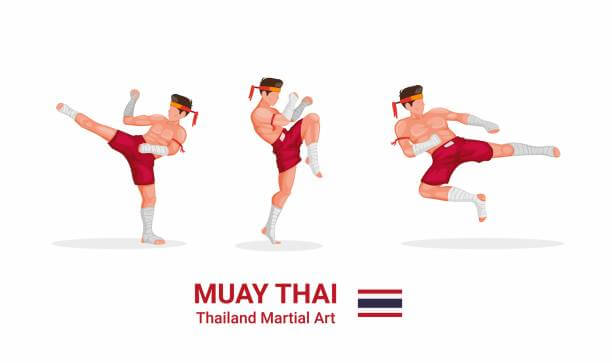
Muay Thai is very big in Thailand, and some people dedicate - or are obliged to dedicate - their lives to fighting, starting at an early age and making it a primary source of income and pride for themselves and their families. They see it as an art form, and the business of teaching it to foreigners has grown exponentially over the years, attracting interested candidates from all over the world to train and fight, or just to witness it as spectators. Now, I was about to partake as the latter, a leisurely activity on the island of Phuket, where thousands of the local Baht currency are spent to witness these events.

We arrived at the stadium on the night of the fights, and I was privileged to be led backstage by the boxing gym manager. This gym had two of their trainees fight, and the manager of the gym, my friend, was there to support his fighters. The fighters were getting ready; their coaches massaging them, speaking encouraging words into their half-focused faces, and dressing them with the appropriate gear. 

To my surprise, I saw one of them taking the liberty to pull down his fighter’s shorts, appearing to mess with his private parts. I couldn’t see what was happening so I curiously asked my companion to explain. He said that the fighters all wore a ‘cock-blocker’ made of steel, which was fastened to their bodies with a shoelace in the shape of a T-string. I noticed how tightly the string held on over the fighter’s underwear, between his buttcheeks, and mentioned that it looked like a very uncomfortable thing to have clutched to such a sensitive area of the body. The response came that “it was super uncomfortable, but much more comfortable than knowing that your genitals were exposed during the fight, not to mention the damage that would be sustained, lest the fighter actually received a blow.” I laughed in agreement, partly because I despised the idea of bodily pain and partly because of all the feedback from all the men I’ve met or seen on TV commenting on or reacting to how terrible the pain is when being punched in the testicles.

Then came the actual fights. ‘Great,’ I thought, ‘time for some research’. It started softly with two six-year-old kids. The strange music started playing, which I found fascinating, reminding me of my favourite celebration in Phuket, the Vegetarian Festival. The strangeness of this celebration is attractive and highly intriguing to me. As soon as I heard about it for the first time, I wanted to see what it was all about. I was told that it was like no other festival, and unlike the Buddhist water festivals, which were peaceful and fun, this Chinese festival was far from being anything like those. Apparently, people mutilated themselves in all sorts of violent ways, piercing their flesh, torturing themselves, and spilling blood. Ah, so it is not only in Islam that people shed blood as a means of religious resurrection: a familiar idea to me from the Middle East. Moreover, women didn’t take part in such festivities, “hitting Haidar” as they call it in Arabic, reenacting the martyrdom of their prophet Hussein, where participants would repeatedly slap their foreheads with blades and spill buckets of blood on the streets. I brought my thoughts back to the boxing ring and saw the two 6-year-olds moving in unexpected circles around the ring, touching the ropes, doing some sort of dance before the actual fight. The questions in my head were multiplying by the second and I curiously started asking about the meaning of what they were doing, and I was told that it was part of the opening traditions: they were dancing to show respect to their teacher, and to create protection for themselves and the other fighter. 

The fight didn’t last long; the kids punched, the crowds cheered, the bells rang, and finally the parents came to congratulate the children and take endless photos on their smartphones with them, bragging and boasting about the children’s victory to the audiences. Next, it was a couple of girl fighters. “Interesting”, I thought. Being a woman myself, I wanted to study their faces and try to understand why they would want to engage in such masculine activities. Their fighting seemed different than the children’s and it looked like they were dancing together for a while. 

I was struck by the smile that one of them had on her face the whole time even while she was the one receiving most of the blows. The other girl had such an aggressive expression on her face, that I couldn’t help but blurt out “I never want to come across that person on the street” to my friend. My friend agreed with a, ‘she’s pretty tough, isn’t she?’ She finished her opponent with a ruthless blow, and I was brought back by my memories to a time when I was a teenager, playing ‘Mortal Combat’ on my desktop at home. ‘Finish him,’ the voice ordered, as I pressed a few buttons on my keyboard, sending a last kick to my digital opponent, and thereby concluding the round. A brief hit of inner satisfaction would come over me, slightly intensified when it was followed by a recorded “Flawless victory” playing through my speakers, as the female character I always chose to play raised her fists in triumph. “Maybe I do actually understand some of this fighting art after all?” I silently investigated my thoughts. But there wasn’t any time for contemplation just yet, for the energy in the boxing stadium was hectic, the noises amplified, and the events were happening at turbo speed.

A few fights followed and I got to learn more about the art of Muay Thai; how the fighters prepare for the fights, their diets and weight control, their methods of training, their postures, etc. Soon, it was time for one of the trainees from my friend’s gym to fight. I was left there to sit alone, as he headed towards the ring, joining the trainers, in case anyone needed his support. I didn’t get to watch much and in an instant, the bell had rung and the fight concluded. I saw everyone moving backstage and I rushed to join them. It had all happened so quickly that I still hadn’t understood what had taken place, and as I approached, my friend informed me that the fighter had been knocked down by his opponent, concluding the fight. But the sweaty fighter was moving around, ignoring people as they asked him to take a moment to relax after his fight, to which he replied that he thought he had spotted his father. No one believed him (his father had not said he would be in the country) and thought that stars and chirping birds were still circling around his head from the blow, that he was only hallucinating. But, to everyone’s surprise, the father actually appeared, having travelled thousands of kilometres, to come and witness the fight that his son had so proudly wanted to take part of, which to his ill-fortune, had only lasted a few minutes. I witnessed all these events and thought to myself how everything was so raw, so real that it left no space for pretence. What I mean to say is that these fights actually show how refined one’s skills are, how intense the training and how high or warranted their confidence. There was no hiding, no faking of strength through bragging; everything was so obvious and clear during the actual fight.

We rushed back to the front of the house to watch the other trainee’s fight. I was informed that it was this guy’s first fight ever, and that at the last minute, the promoters had matched him with someone more experienced than him. There was worry that this new fighter would be outmatched, and that he might be beaten up by his opponent. The fight started and this guy, as new to all this as he was, showed real courage and heart, and fought mercilessly. The other fighter was surprised, and quickly showed courage himself, in trying to bring him down and win the fight. The blows kept coming from both sides, but the resistance from both sides was so strong that neither of them was able to make much progress over the other. They were both being hurt badly, but they were both inflicting much pain on the other too. It was getting more intense. The crowd started cheering: the ones on the left were supporting the red fighter, and the ones on the right were supporting the blue. Soon, the crowd became more excited, the bangs on the metal seats were getting louder and louder. The people were out of their seats, shouting, screaming, the music was barely audible, and the fighters were getting more bruised, more sweaty, more tired by the second. Soon, it was pandemonium, and everything got so immersed in the action, so mingled all together, like buckets of paint of different colours being poured into one giant container. I sat there, not believing what I was witnessing: how could all these people be so worked up over this performance, so taken with the energy of the fighters that it seemed that everyone was taking it so personally. It was as if the audience had a large stake in the outcome - in fact they probably did, an idea still foreign to me at the time -  that could directly influence them on the personal level.

And then it hit me: weren’t these spectators behaving in the same way that audiences did during the ancient Roman empire, when gladiators were put in the middle of colossal stadiums to fight criminals, fierce animals, or other gladiators? How much had humanity actually progressed over the last 2000 years? And weren’t the people in this particular stadium being aroused by watching aggression, violence and bloodshed? I couldn’t understand all this, and yet again I thought of the vegetarian festival that takes place in Phuket every October, the violence displayed there and the bloodshed and self-mutilation. All in the name of shifting ill-luck and evil from other worshipers unto themselves, so as to bring good luck to the whole community. 

I had stood there, mesmerised by the performances during the vegetarian festival myself, taking in the rituals and festivities, soaking in the strangest music, interested, strangely horrified and bewildered, trying to make sense of it all. I began to question myself: “What was so appealing to me about that ceremony?” and the answer came: “It is my own outlet for aggressive expression through watching others perform it, for the pleasure of my visual and auditory senses.” It’s what Carl Jung referred to as the personality’s shadow; that one has a dark as well as a good side, like the 2 colours of yin and yang, intermingling together, to form one whole entity. “Ah, so you’re not so different from those participating in these types of events after all!” I replied to myself. And then the whole business of martial arts began to make sense to me. An epiphany, like an unwanted lightning bolt crashing into my consciousness. A loud revelation that reverberated in the echoic halls of my mind.

0 comment
1 FacebookTwitterPinterestEmail

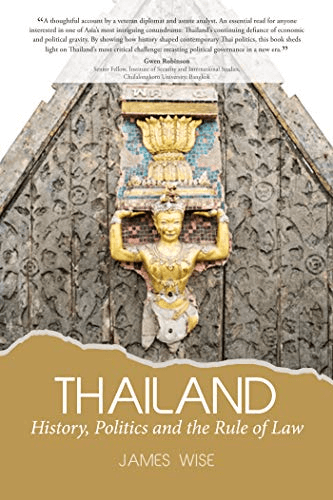
Marshall Cavendish Editions, 2019, 296 pages, www.marshallcavendish.com/genref

In my opinion, political scientists in the west have it so easy. Only three branches of government, two main political parties, the rest is just intramural spectator sports. But here in Thailand, political scientists are always completely exhausted - five branches of government (monarchy, military, legislative, judicial, and executive), an ever-changing kaleidoscope of multiple political parties, new-and-improved constitutions and laws, all combined with professional political contact sports including sharp elbows thrown (and always ready smiles). A winner-take-all view prevails on obtaining power.

James Wise has done all of us a great service in dissecting Thai politics with a highly readable, scholarly, and intelligently presented work. He has a lot of ground to cover but adroitly manages it by possessing an expert’s eye, an astute insider’s take on all things political here and a wheelbarrow-load of academic and scholarly research.

The author makes seemingly impenetrable, always confusing Thai politics clear and understandable. His book should be widely read, and he should be commended for it.

0 comment
0 FacebookTwitterPinterestEmail

Art and one’s appreciation of it must be one of the most subjective things around… I can remember when I was first introduced to painting. My father – who had been to art school, had finished a portrait of my mother, which was stunning. I, as a five-year old said, “Who is that beautiful lady?” Which goes to prove just how subjective art is. My father had painted my mother from his heart, with all the love he had for her transferred onto the canvas by his elaborate brushstrokes. But a five-year-old boy could not equate his father’s vision with his own perception. He only saw his mother as… his mother.

When I was older I was reacquainted with this painting, and was able to see it in a different light. Yes, my mother was indeed beautiful, and had been made even more so by the portrayal of her as seen through my father’s eyes.

So, from an early age I had been introduced to art, and my love and appreciation of it has endured throughout my life. In Thailand for over three decades, as a writer or editor for several magazines, I am fortunate to have been able to follow my passion for art in the Kingdom, through having been invited to many exhibitions and galleries, and even becoming friends with some of the artists. Today I would like to introduce you to two of these souls. Two people coming from very different backgrounds, and giving us very different artistic creations to enjoy, when we visit their exhibitions or showings in galleries around town. Or even to purchase one of their pieces, to appreciate in the comfort of our own homes.

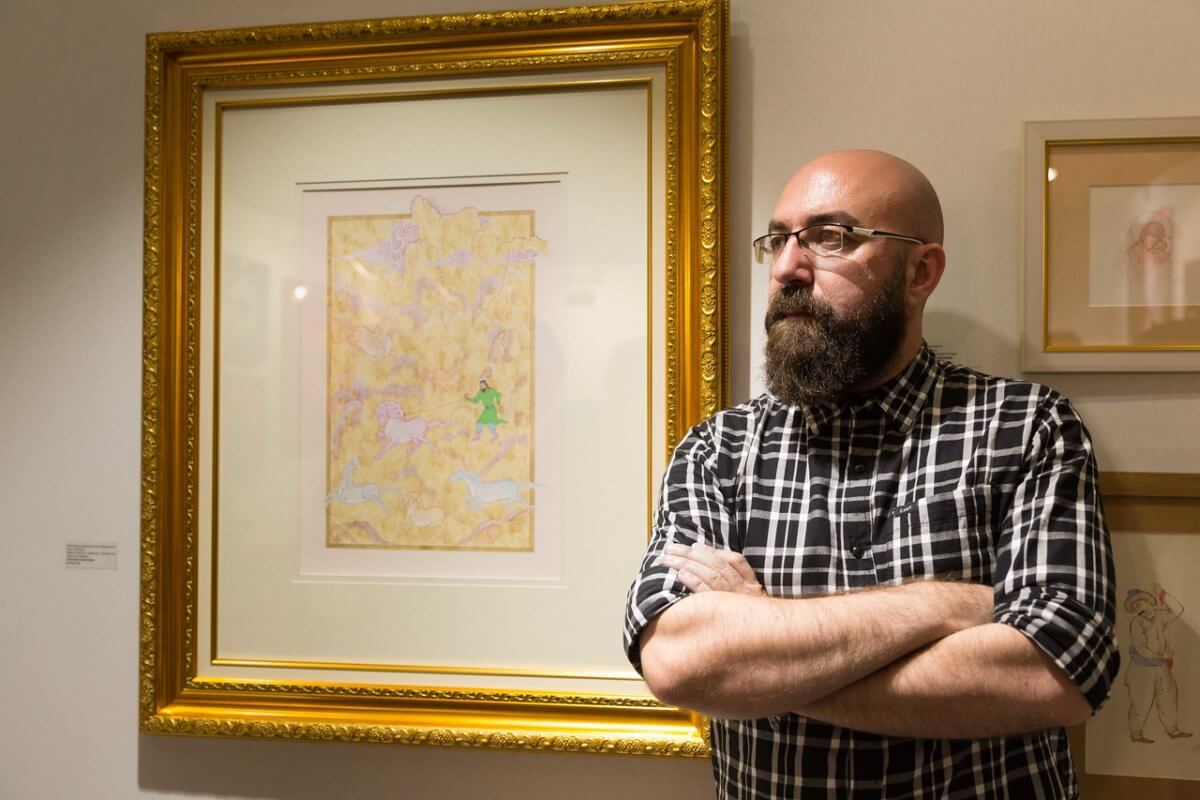
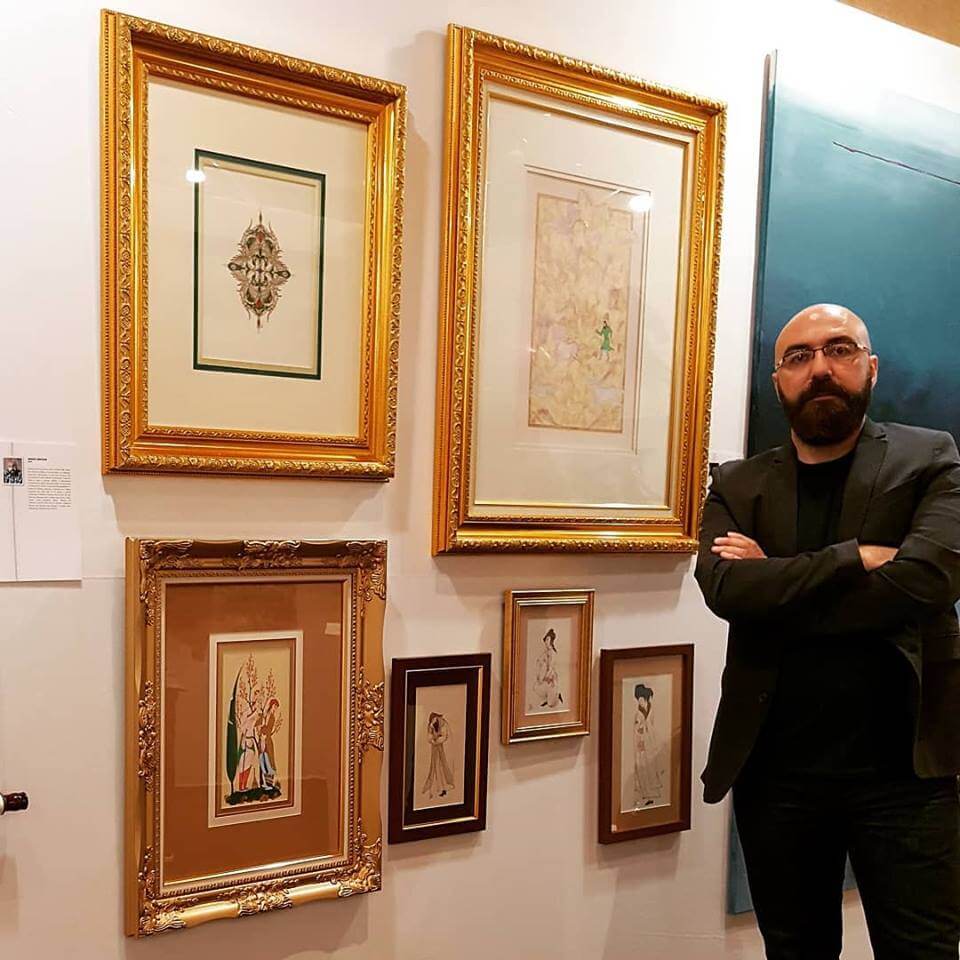
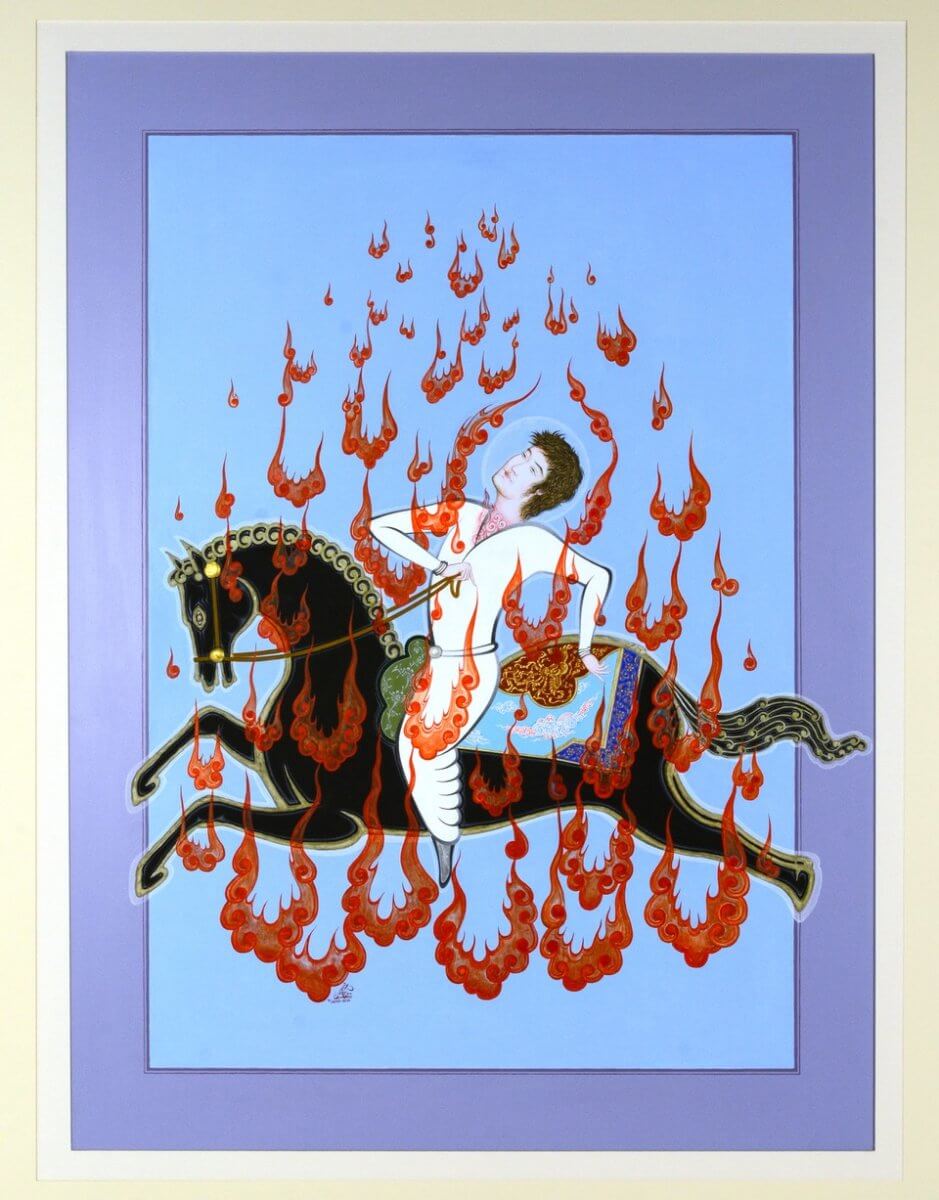
First up I would like to introduce you to Arash Groyan. Arash was born in Iran – known as Persia in ancient days in Teheran, where he studied art at university, gaining a B.A. and a Master’s. Arash told me that from a young age he had been inspired by ancient Persian mythology, which continues to stimulate him to this day, in particular from the poem Shahnameh.

Shahnameh is an epic poem by Persian poet Ferdowsi, and can be likened to Homer’s Odyssey or Iliad, although it is considerably longer, comprising some 50,000 couplets. The influence this literary masterpiece has had on Arash can be seen in many of his paintings.

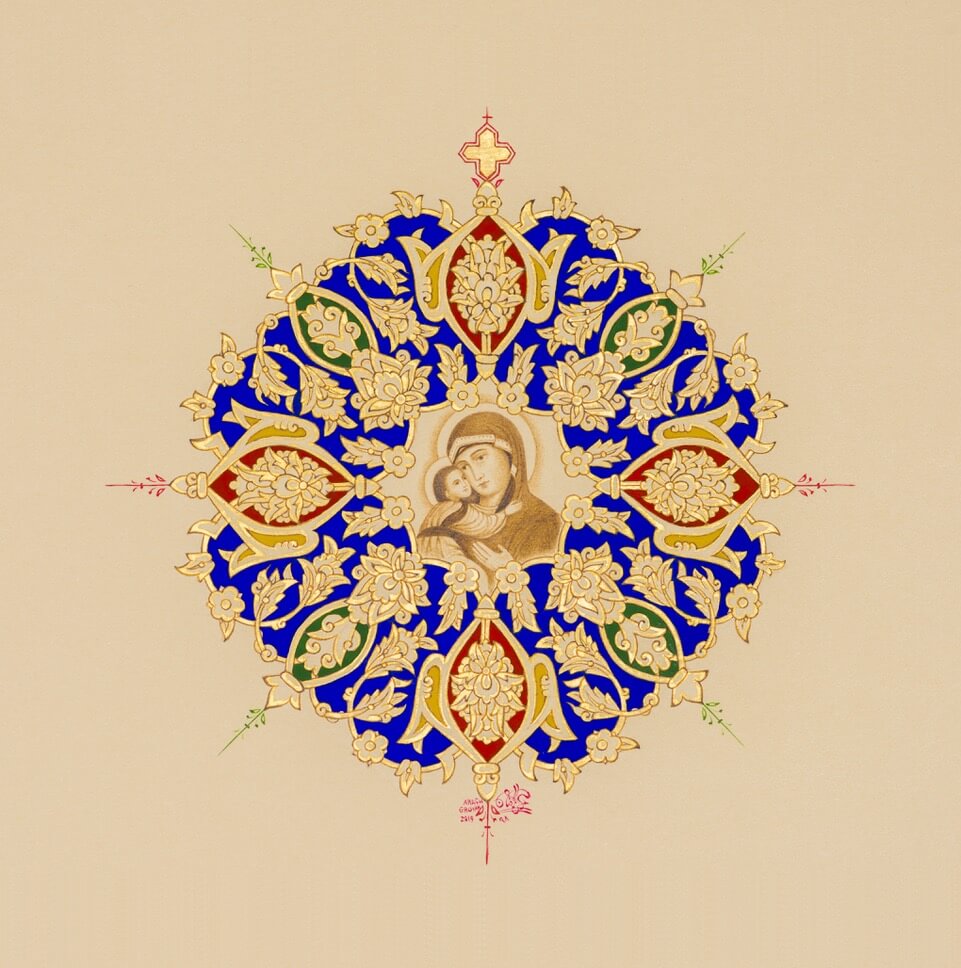
Arash Groyan is one of the best exponents in the world of painting Persian ‘miniatures’. He has, though, made Thailand his home since 2009 and says said he feels comfortable living here, he likes the feeling of freedom and easy pace of life, and has made many friends… Thai, foreign, and those from both within and outside of the arts community. It is important, he told me, for an artist to feel comfortable in his or her surroundings, in order to encourage the creative juices to flow.

Arash said, “As an artist, I’m always active. 2020 was difficult, because of restrictions on travel and a lack of exhibitions due to the worldwide pandemic. But over the past three or four years I have participated in a number of exhibitions, both in Thailand and around the world. The highlight for me, though, has to be an exhibition in 2018, at the Louvre, Paris, that I was shown in. I sold some of my art there, too. An unforgettable moment for me to find acceptance in one of the most iconic and prestigious art museums in the world.”

I have been to several well attended exhibitions and gallery showings featuring the work of Arash and other foreign artists in Thailand. His quiet spoken demeanour as he explains about his latest pieces of artwork to the interested visitors is absorbing… he draws you into his world. But I have seen more to Arash, firsthand. Whilst being an undoubted expert at his own chosen field, Arash is also an erudite scholar. His knowledge of art surpasses all boundaries, and he surprised me, as I heard him answering questions about one of the pieces of art being shown in the gallery. The piece was not his own work, or had not even been created by one of his many friends from the arts community in Thailand. This was a painting new to him. Yet Arash was able to explain in detail about it. From the medium used, the brushstroke work, the technique, the lighting, et al. I don’t think the actual artist could have done a better job of explaining about the piece had they done it by themselves.

Arash’ talents focus not only on miniature painting, but also include other areas such as Middle Eastern rug and carpet design, stage and set decoration, and jewellery design. Arash has also acted in several films and television series in Iran.

The arts community in Thailand is a close knit one, that I feel rewarded to have been accepted into. A friend of both myself and Arash from this eclectic grouping of talented people, is Leyla Sandshiko, hailing from Elista, not far from Moscow. She has been ferrying back and forth between Bangkok and Russia for the past eight years or so.

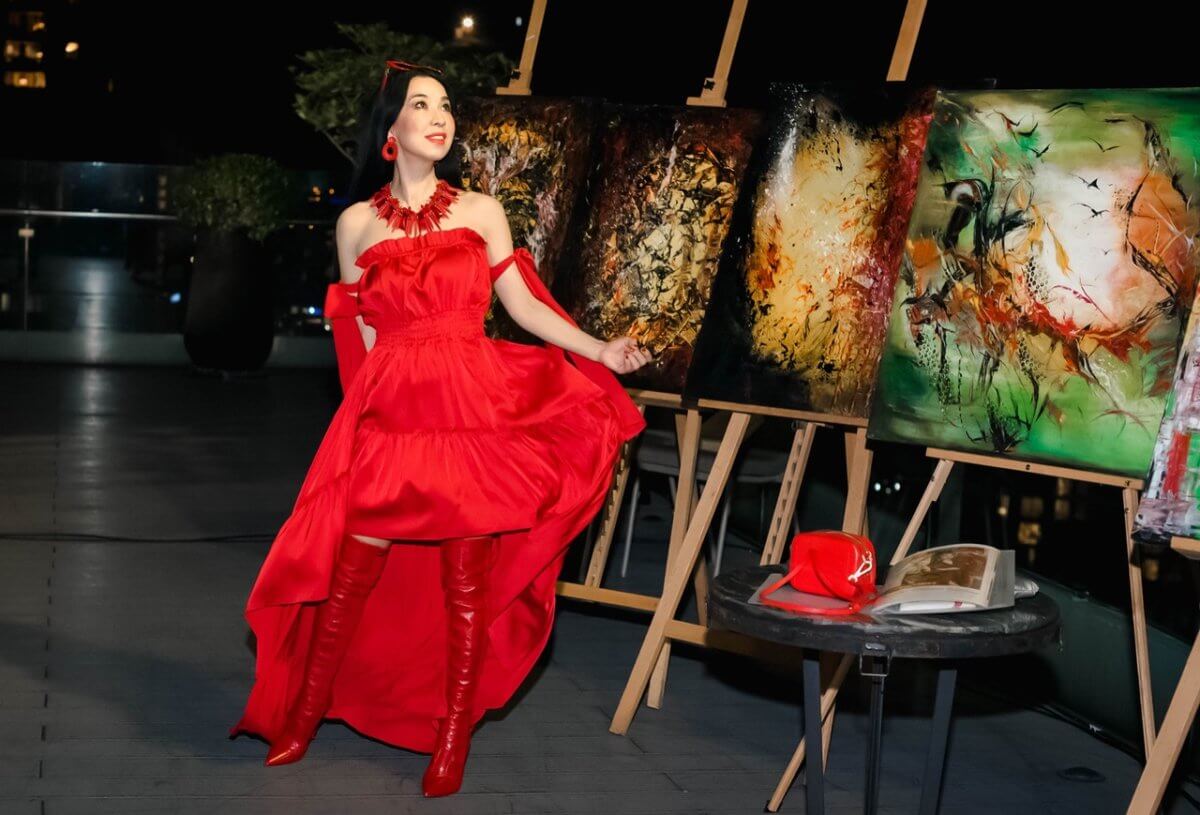
Leyla is a rather different kettle-of-fish to the softly spoken (yet passionate) Arash. This is a girl that stands out in a crowd! Diminutive she may be, but her colourful clothing with matching accessories, energetic selfie-taking, and seeming ability to be in two or three places at the same time make her an unmissable focal point of whichever gathering you see her at.

Leyla told me her academic background is very different from that of Arash, studying finance and accounting, following in the footsteps of her mother and father, and other family members who worked in the financial sector for the government, However, it was also her parents who infused her with a love of art. They took her along with them to art museums and galleries, which she loved, and never missed an opportunity to go to. Her mother and father also bought works of art for their home, so Leyla grew up surrounded by paintings, sculptures and other artistic ephemera. After a few years of working in the business sector as an accountant Leyla decided that the rather sombre world of account ledgers and numbers was not really for her. Which comes as no surprise to anyone who knows her.

Leyla is a bundle of energy, and always stands out in her apparel wherever she goes. After leaving the financial world, she embraced her creative energies and entered the world of exhibition management. She put on events in Moscow and its surrounds that were memorable for their inventiveness, Being at the forefront of these exhibitions gave Leyla another opportunity to showcase her creative skills, Most of the clothes she wore to the opening parties were her own design. They were loud, colourful, wild, and original… as is their designer. The influential people attending the exhibitions put on by Leyla took notice of her clothing designs, and it was not long before Leyla was making money from sales of her clothing, her designs, and accessories to go with them. She had also found time to create her own art. Unsurprisingly she favours the abstract genre. She told me that when she is in the throes of creating her artwork (usually in the hours of darkness) she goes into another zone, and does not really know what she is doing. In the morning, when she wakes up, she is often surprised at what she sees on the canvases. ‘Bloody hell… where did that come from,’ she thinks.

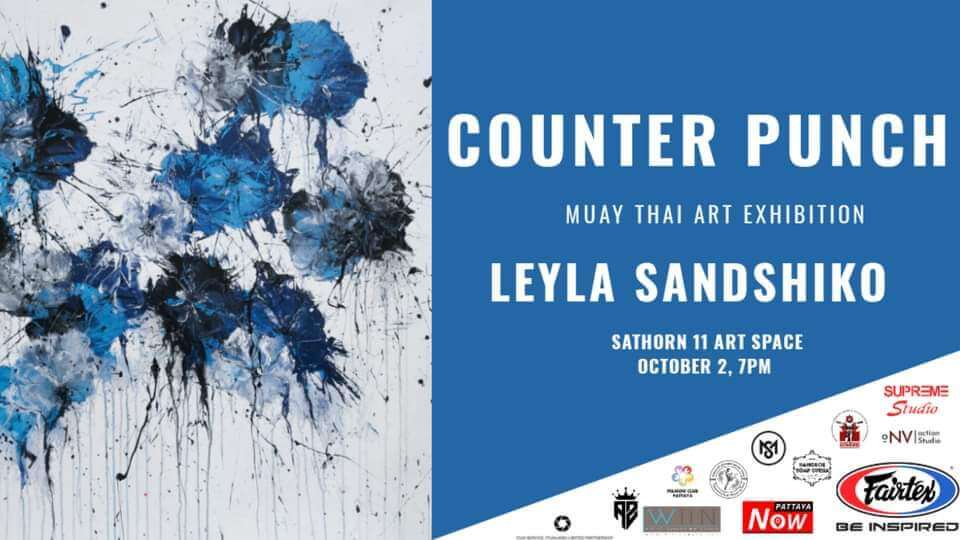
When she came to Thailand eight years ago she naturally gravitated towards the arts community in Bangkok, and was soon a regular at art show openings, where she quickly made friends, and was soon being invited to more and more openings. She has also had several solo and group exhibitions of her own at galleries around Bangkok. The latest exhibition was in Bangkok in January, called ‘Counterpunch 2’. Leyla became interested in Muay Thai, after coming to live in Thailand and she says that studying and training in the Thai martial art has given her a new lease of life, and even more energy.

Leyla explained, “The main message of this series of artworks is to never give up! Be strong! Find your passion and follow it. Be free and do what you love and what brings you joy. Never worry what others might think about you. Even if you feel completely broken, stand up over and over again and follow your dreams. Create instead of destroying. Remember that there is always a way out of any problem, always!”

In the annus horribilis of 2020 the art world, the leisure sector, and even the business sectors were sent reeling, thanks to the global spread of Covid-19. Hopefully in 2021 we will start to see a recovery. Things will not be back to normal anytime soon, but there are a few things to look forward to.

Arash did not let the extra free time he found himself with in 2020 go to waste. He worked on his art, and this year he will be having two group exhibitions in Bangkok, and another exhibition in October at the Louvre. He is also developing teaching courses in Bangkok, working on his jewellery designs, and completing the production of his painting training video courses.

But the thing I am most looking forward to is the collaboration between these people of two very different personalities and artistic styles.

Leyla and Arash have become firm friends. Leyla is going to unleash her wild spirit onto a few canvases, and no one knows what will come out of that, leastwise herself. She will then give her canvases to Arash, who will interpose his own Persian miniature artwork within the free spaces of Leyla’s abstract designs. Arash and Leyla (and myself) are both excited to see what comes out of this idea of Arash’s, as it’s a juxtaposition of styles that has never been tried before. Look out for it in early April, at a gallery near you. Check out Arash’ website, or the Facebook page of Leyla for showtime. Hope to see you there!

https://arashgroyan.com/:

[email protected], @Lolis2001
FB: Leyla Sandshiko

0 comment
0 FacebookTwitterPinterestEmail

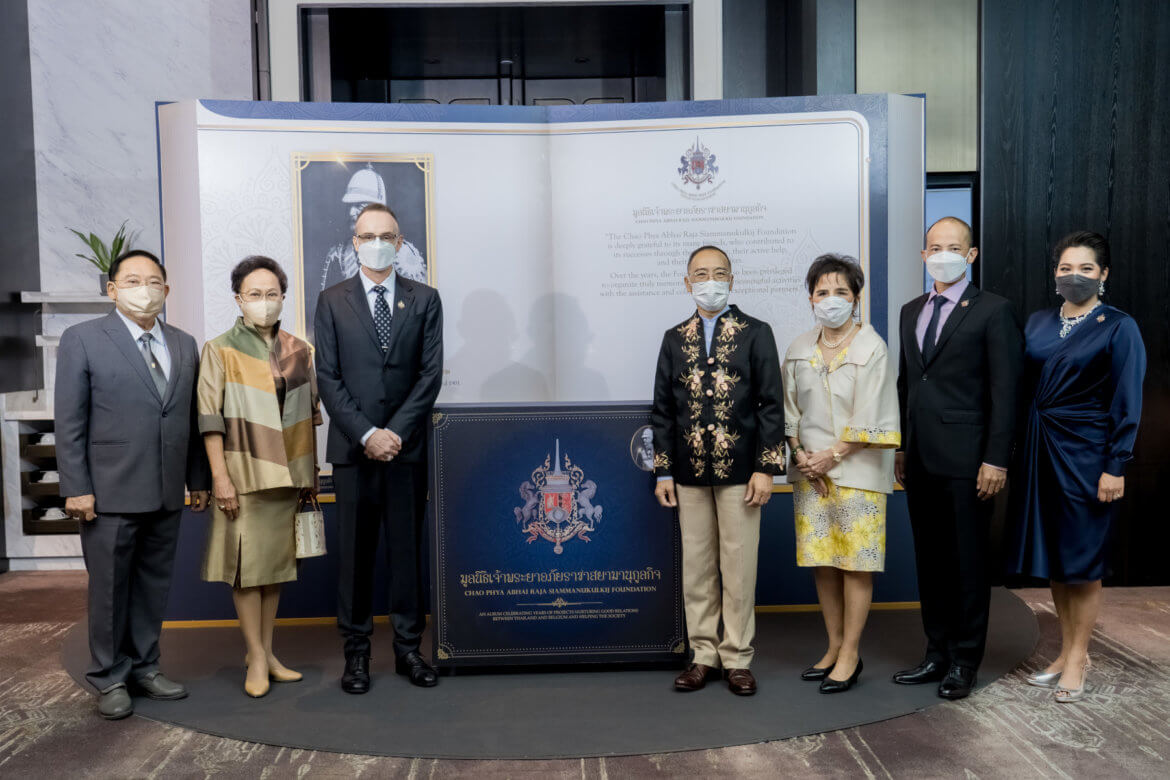
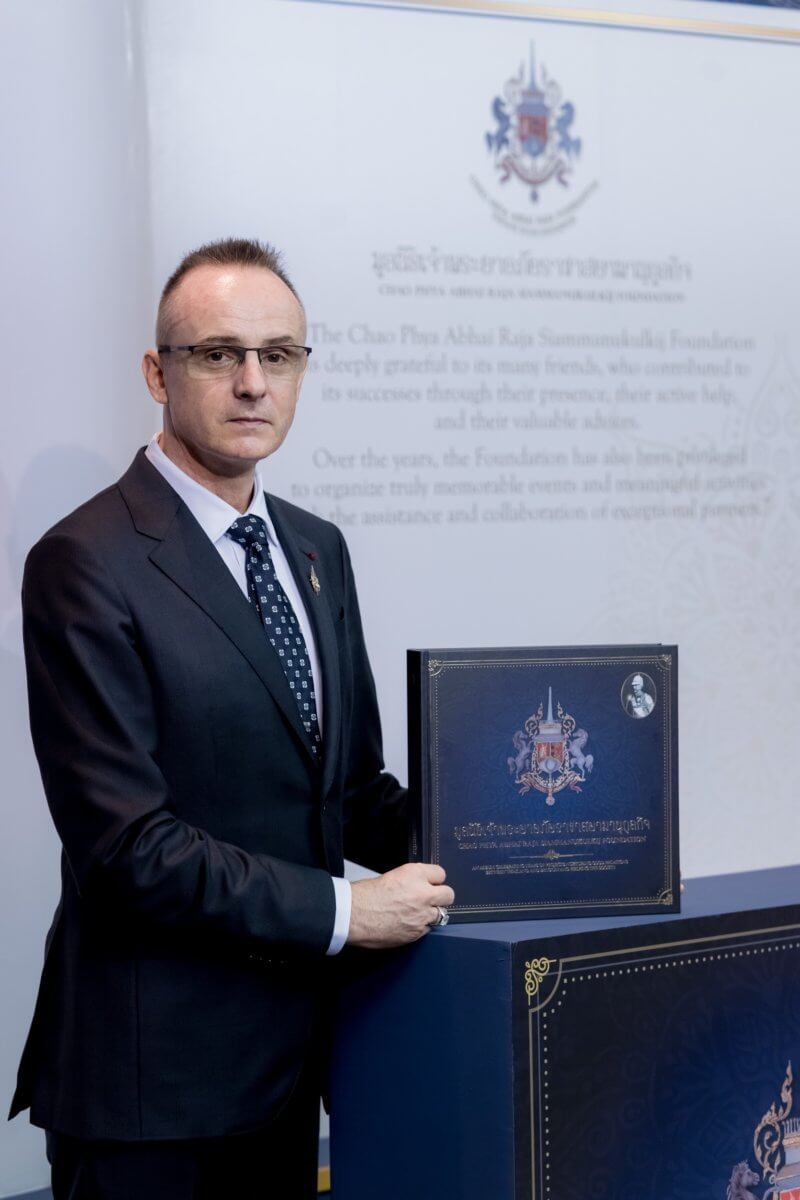
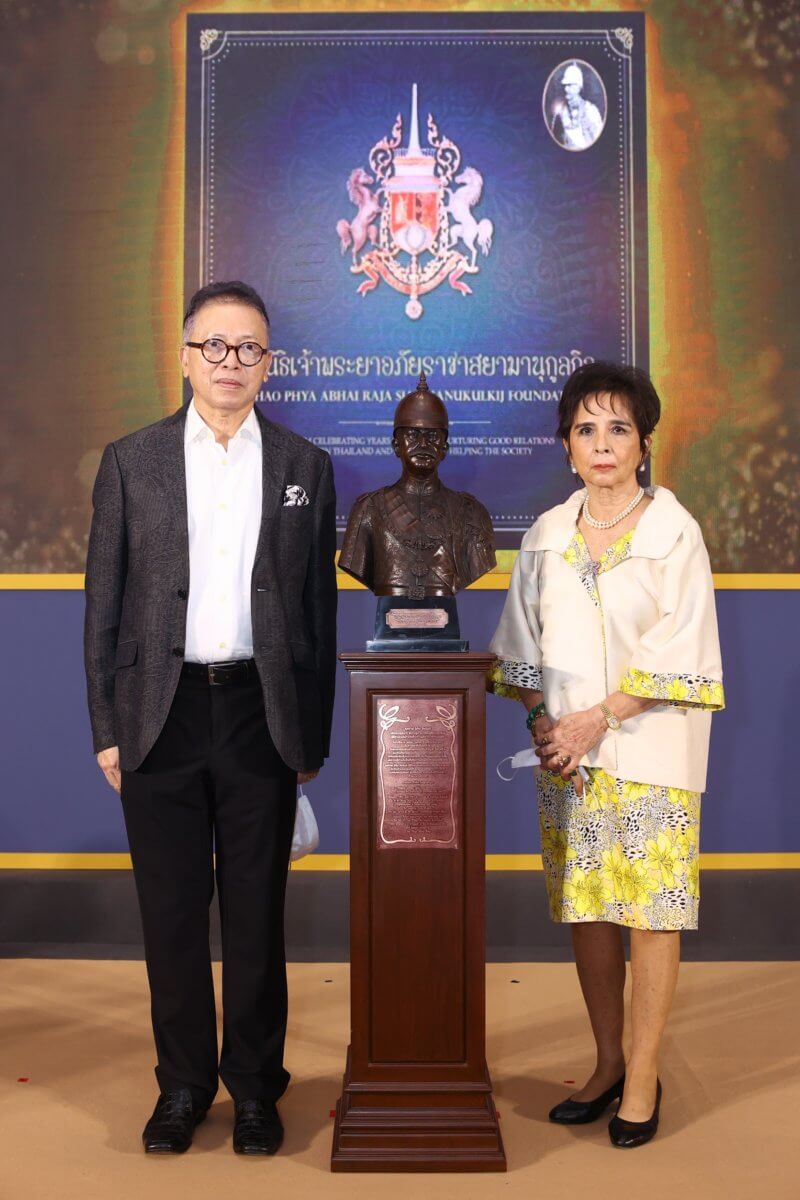
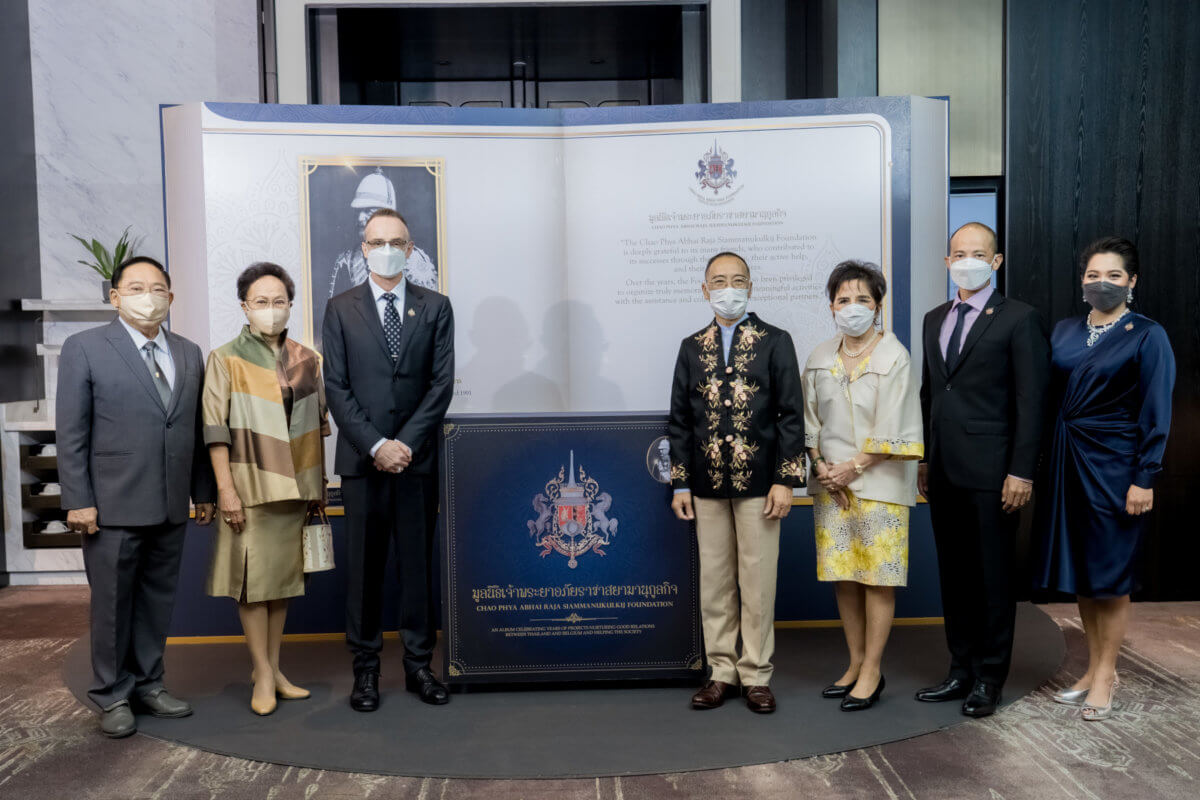
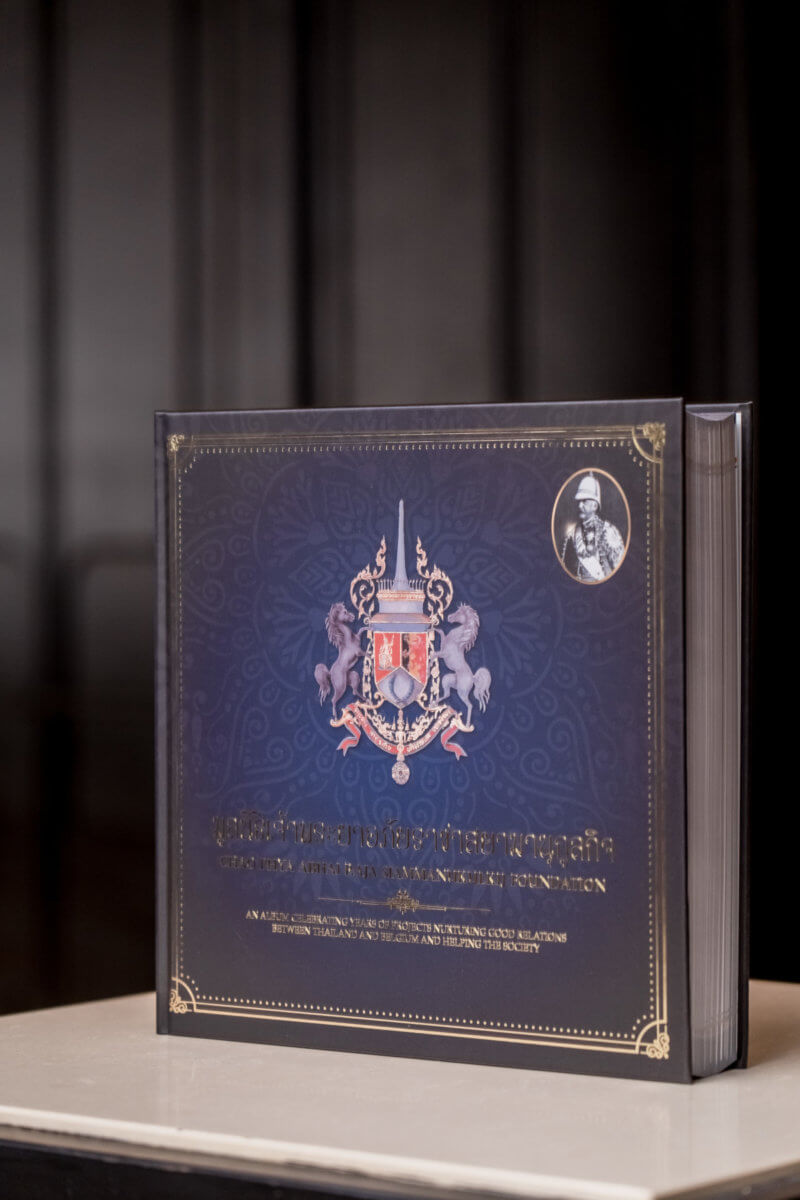
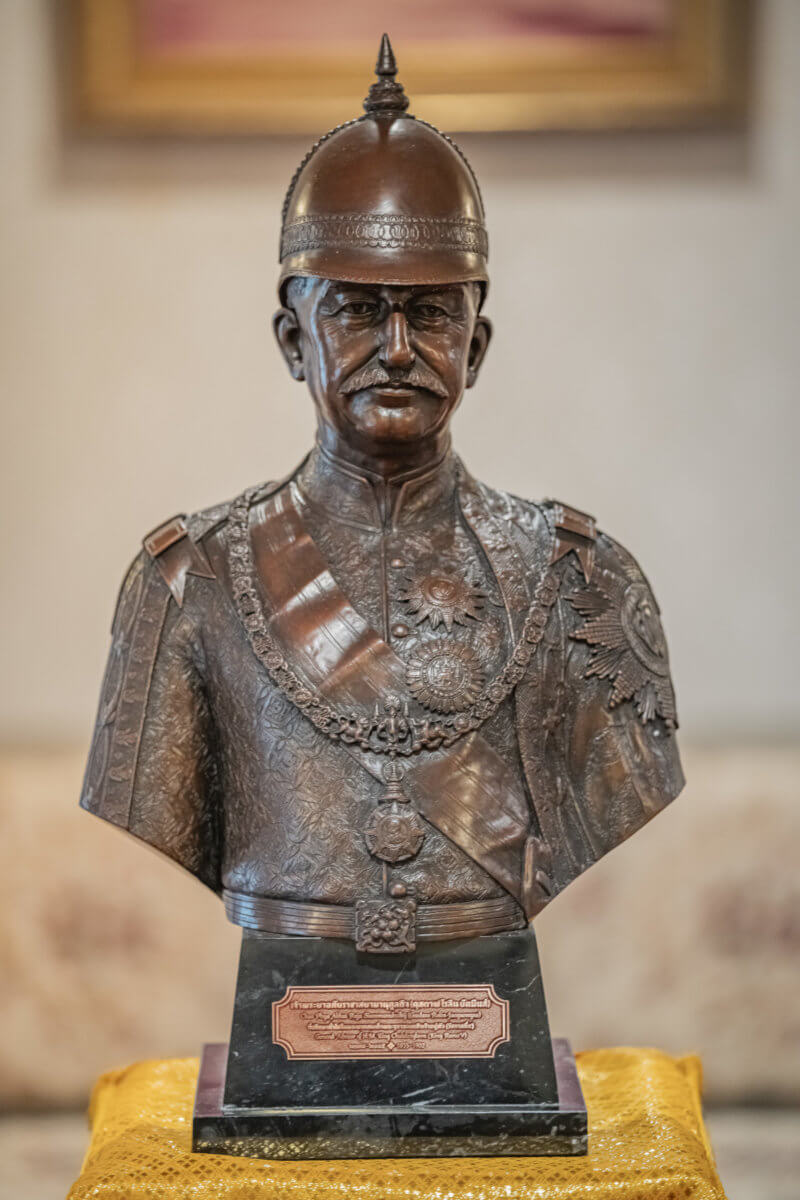
The Chao Phya Abhai Raja Siammanukulkij Foundation recently presented its new book: Chao Phya Abhai Raja Siammanukulkij Foundation, an album celebrating years of projects nurturing good relations between Thailand and Belgium and helping the society. The new statue of Chao Phya Abhai Raja Gustave Rolin-Jaequemyns, General Advisor of H.M. King Rama V was unveiled.

Count Gerald van der Straten Ponthoz, Chairman, M.R. Priyanandana Rangsit, Vice Chairman, and other board members of the foundation presented the book. The luxury book of over 700 pages retraces 15 years of activities since the origins, with hundreds of pictures of many events and their distinguished guests.

An important chapter, written by M.R. Thepkamol Devakula, retraces the story of the work and achievements of Chao Phya Phya Abhai Raja Gustave Rolin-Jaequemyns between 1892 and 1901, when he was a trusted advisor to the King and the Government of Siam, not only in the field of Law but also most other aspects related to the modernisation of the administration. Chao Phya Abhai Raja Gustave Rolin-Jaequemyns is the only foreigner to have been bestowed upon the title of Chao Phya in the Rattanakosin era.

Besides preserving the memory of Chao Phya Abhai Raja Gustave Rolin-Jaequemyns, the foundation also aims at helping the society and contributing to the good relations between Thailand and Belgium. Since its creation, the Chao Phya Abhai Raja Siammanukulkij Foundation has organised many projects and activities to help disadvantaged youngsters. These projects are all detailed in the book, such as the “People of the World Ceramic Project”, done in collaboration with a French sculptor, the “Hill tribe Violin Band”, organised together with a Belgian professional violinist, or even the construction of a whole football stadium to open opportunities to youngsters in the field of sports: the Chiang Rai Hills Stadium.

The Chao Phya Abhai Raja Siammanukulkij Foundation has also organised numerous activities to contribute in strengthening the good relations between Thailand and Belgium. In this regard, the foundation has hosted members of the royal families of Thailand, Belgium, and other countries, in its events.

An important chapter of the book retraces the visit of H.R.H. Princess Maria-Esmeralda of Belgium, who came to Thailand in 2015. The Princess was invited by the foundation to participate in the Thai-Belgian Friendship Celebrations. Several events were organised, including an exhibition, which was presided over by H.R.H. Princess Maha Chakri Sirindhorn. A charity gala dinner was also hosted and was honoured by the presence of H.R.H. Princess Soamsawali Krom Muen Suddhanarithana, as well as numerous important guests of the Thai society.

The first visit of H.R.H. Princess Lea of Belgium to Thailand, in 2018, is also covered in this book. The Belgian princess was invited to attend the events celebrating the 150th anniversary of the bilateral relations. The chapter also includes countless pictures of the other activities, which the foundation organised for the Princess on that year. H.R.H. Princess Lea of Belgium made a second visit to Thailand in 2019. This time she attended the Simply Exceptional Gala Dinner, a glamorous event that celebrated Thailand, Belgium, and Lesotho, through their diamond and jewellery industries. Royals of no less than six countries, including the King and the Queen of Lesotho, as well as Princes and Princesses of Malaysia, Bhutan, and Russia, attended this event. On this occasion, M.L. Sarali Kitiyakara represented Princess Soamsawali Krom Muen Suddhanarinatha. Besides the gala dinner, H.R.H. Princess Lea also visited the provinces of Chiang Rai and Nan.

One of the greatest symbols of the Thai-Belgian friendship is the friendship between the two royal families, and especially between late King Bhumibol Adulyadej and late King Baudouin of Belgium. This historical symbol is also present in the book, with articles and many pictures of the commemorative events organised by the foundation. The new book about the activities of the Chao Phya Abhai Raja Siammanukulkij Foundation is very unique in more than one aspect. It is a non-commercial commemorative luxury book, which will be distributed as a gift only. But a particularity of this edition is that over one hundred personalities of the Thai and foreign societies have contributed to its publishing, by writing short or longer texts. These include quotes, memories or feelings, but also texts about the Thai-Belgian relations or the very diverse projects of the Foundation.

All of the contributors have been part of the history of the Chao Phya Abhai Raja Siammanukulkij Foundation, be it through their presence at the foundation’s events, or their direct participation in their organisation. This makes so that, as Count Gerald van der Straten Ponthoz likes to say, this book is “for everyone who has been part of the foundation’s story”, or for those who would like to know more about its activities.

0 comment
0 FacebookTwitterPinterestEmail

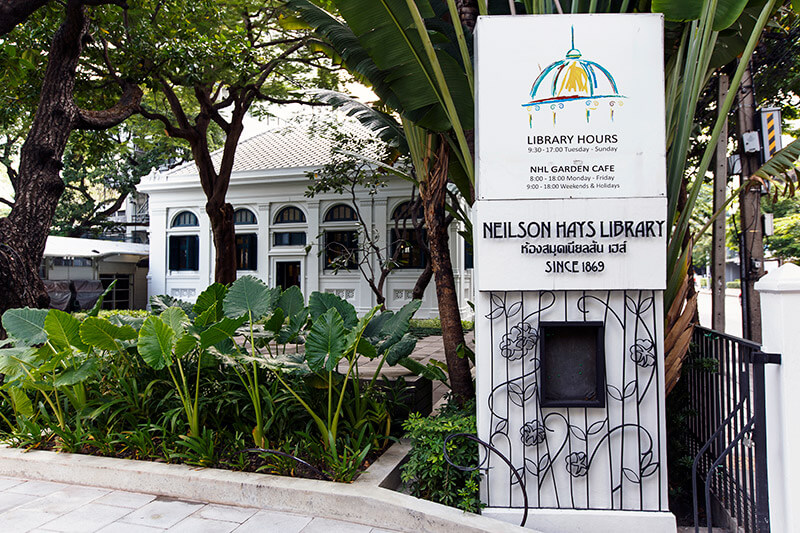
The world’s largest monument to love is undoubtedly the Taj Mahal in India. But Bangkok also can claim its own monument to love, if somewhat smaller, but no less in deep affection: the Neilsen-Hays Library.

The origins of the Neilsen-Hays Library can be directly traced to the Ladies’ Bazaar Association, a charitable organisation. In 1869, thirteen American and British women, who were members of the Ladies’ Bazaar Association, established the Bangkok Ladies’ Library Association, also called the Ladies Circulating Library. Due to the Bowring Treaty being signed in 1855, and the opening of the Suez Canal in 1869, expats started to pour into Siam in ever increasing numbers as trade agents, missionaries, consulate and legation officials, businessmen and their families. Life in Bangkok at the time could be harsh. With frequent epidemics and little to do outside of home and office, books and other reading materials were scarce and highly sought after.

The aim was to circulate and share books. Initially the books were housed rent-free in various personal homes and in 1871 moved to the Protestant Union Chapel. Initially staffed by volunteers, the ‘library’ was only open one day a week. A young woman, Jennie Neilsen, joined the association and became one of its most active board members and the future namesake of the Neilsen-Hays Library.

Jennie Neilson Hays was born in Aalborg, Denmark in 1859. First she lived in America then came to Siam as a protestant missionary in the early 1880s. In an anecdotal tale, while on her way to Bangkok on a ship, she and a friend supposedly heard that two suitable young American doctors were also onboard going to Bangkok. Jennie and a friend were said to have selected their respective future husbands prior to them all disembarking. She began her relationship with the association in 1885. She conducted benefits to raise funds and assisted in the library.

Eventually she married Dr. Thomas Heyward Hayes. An American doctor, he was born in South Carolina, USA in 1854. He arrived in 1885, becoming the Chief of the Royal Thai Navy Hospital and later Consulting Physician to the Royal Court. Jennie remained a mainstay of the organisation for twenty years, serving as President of the Library three times. By 1897 the ‘library’ was open every day of the week except Sunday with a paid librarian. In 1900, Jenny arranged for the books to be all moved to Charoen Krung Road home of Mr. T. C. Taylor of the Gold Mines of Siam Company. The Library continued its peripatetic journey, finding a new home in 1903 on Chartered Bank Lane. The Library was moved several times after.

The Library’s name changed to Bangkok Library Association in October 1911. But by 1914 it was clear that a dedicated building was required. To this end, Dr. Hays bought a plot of land on Suriwongse Road.

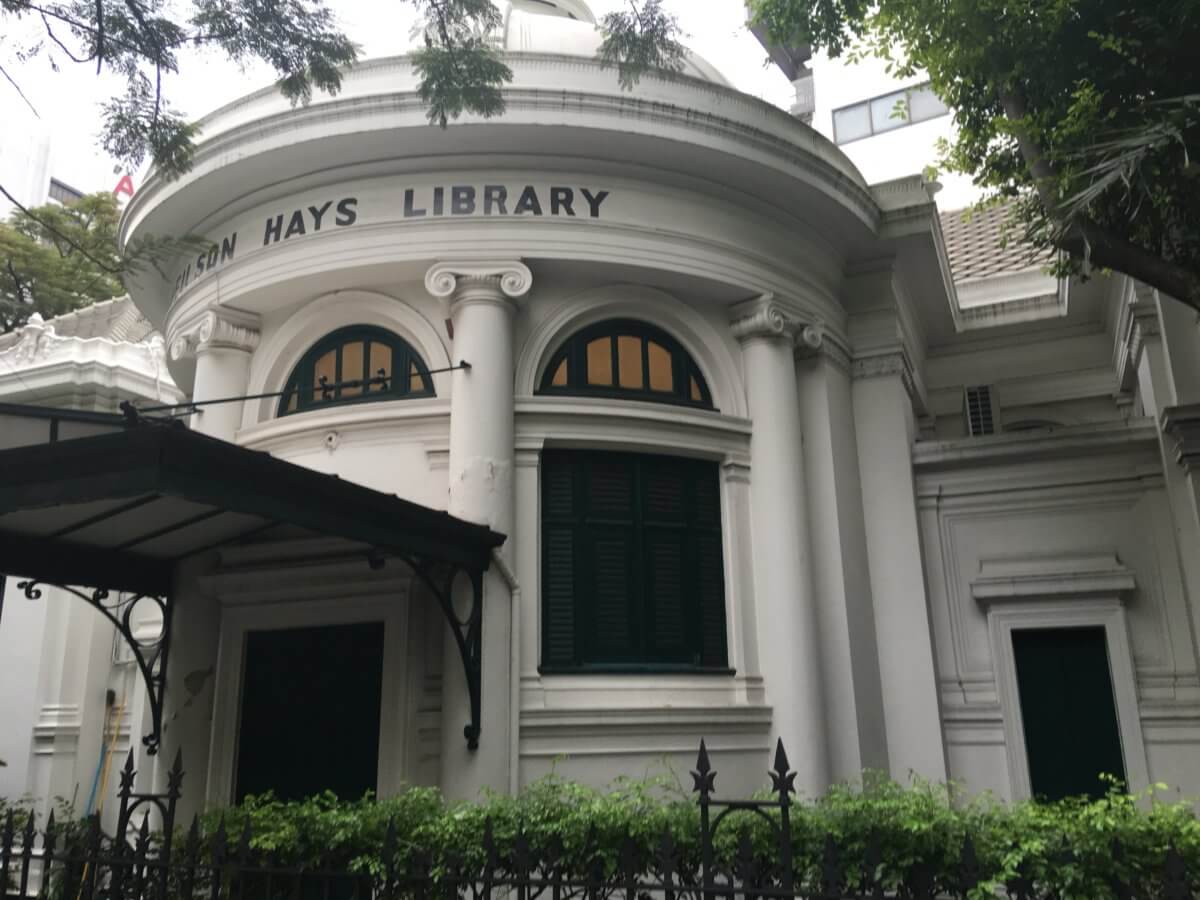
Sadly, Jennie died suddenly in 1920 of cholera. Dr. Hays chose to honour his late wife by commissioning a new library to be built in her memory using the plot of land he purchased earlier. It was also a gift of love. Designed by the Italian architect Mario Tamagno, who also designed the Ananta Samakhom Throne Hall, the Parutsakawan Palace, the Thai Khu Fah Building (the Government House of Thailand), Hualamphong Railway station and other important buildings. The result was an elegant neo-classical building. Dr. Hayes died in 1924. He and his wife are buried in the Protestant Cemetery on Charoen Krung Road.

The Library flourished in its new and permanent home for several decades. However the Library received a grave a setback in 1941. When Japanese forces invaded Thailand they used the building for billeting military troops. More than 1,000 rare volumes were shipped to Japan along with many precious architectural blueprints. Many books were eventually returned after World War II ended. But some of the Library’s rarest books and blueprints are still missing.

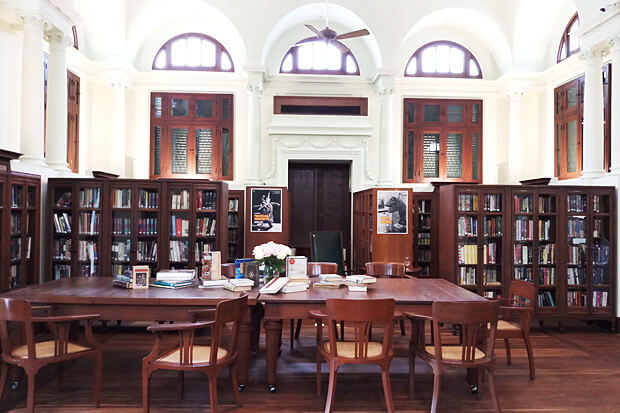
In 1986 the Neilsen-Hayes Library was granted “Historic Landmark” status by the Association of Siamese Architects. Apart from the elegant wooden clad 20,000 book Library, there’s also a children’s corner and a Gallery Rotunda. Meanwhile, the spacious garden contains the Garden Gallery and Café. The Library looks almost exactly the same after a century of use. It houses tens of thousands of foreign books, some of them very rare and valuable. It is a regular venue for a variety of art and photography exhibitions. It remains a Bangkok landmark.

0 comment
0 FacebookTwitterPinterestEmail

There is only one road mentioned in the Christian Bible. “Via Recta” or “Straight Street” (Acts of the Apostles, 9:11). It is located Damascus, Syria where St. Paul was said to have stayed on a visit. That street still exists, although a far cry from two millenniums ago when the Romans constructed it. Bangkok had its own Straight Street in the 19th century, but no one wanted to use it after the road as constructed.

It is commonly known that “Charoen Krung” (“Prosperity of the City”) or New Road (as the foreigners at the time named it) was the first road in Bangkok built using modern construction techniques. It is also widely considered as Bangkok’s first road opening in 1864. But actually “Thanon Trong” (or “Straight Street” later to be called Rama IV Road) is older.

In 1856, a year after the Bowring Treaty was signed, western merchants were pouring into Bangkok. They proposed a trading community be established some distance away from the city proper at what is now called Phrakanong. They requested a canal be dug that would lead to a new warehouse site since everything in Bangkok had to move by water. They wanted a shorter water route from these proposed new warehouses to the city’s centre that would bypass the 20 kilometre sinuous journey up the Chao Phraya River to the wharfs at Songwat Road. In 1857 a 5.18 kilometre canal was dug from Klong Padung Krung Kasem to Phrakanong. It was called “Klong Thanon Trong” (or “Straight Street Canal”) by the locals since it did not have an official name. It was also called Hua Lamphong canal. The soil from the excavated khlong was piled up along the side it and a roadway was created at the same time. Some of the excess soil was later used to construct Charoen Krung Road.

But when the canal was completed the merchants refused to move to Phrakanong. They claimed it was too far away to do business at the city centre. So the roadway and canal remained unused for quite some time until the city extended eastwards. In 1893 a small railway line, Thailand’s first railroad, was constructed from what was the original Hua Lamphong railway station Southeast to Paknam. In 1900 the Hua Lamphong canal was still bordered by the roadway, but now it was paved. In 1919, King Vajiravudh (King Rama VI) renamed the road King Rama IV Road. In 1947 the canal was drained and paved over to extend the roadway’s width. The train line was discontinued in 1960 due to falling ridership and increased roadway traffic. There was also a tramline that started in the 19th century along Rama IV Road and other routes, but all the tramlines were discontinued in 1965. The tram rails were all paved over with concrete. In the 1980s and 1990s several flyover were added to increase the traffic flow including the Thai-Belgian bridge flyover and the Thai-Japanese friendship flyover. This explains why Rama IV Road is much wider than all the other streets in Bangkok having a canal, a roadway, a train route and a tram line simultaneously.

Rama IV Road (Thai: ถนนพระรามที่ 4) starts at the Mo Mi intersection in the Samphanthawong District of Bangkok’s Chinatown. The roadway then terminates at the junction of Sukhumvit Road in Khlong Toei District close to Khlong Toei Port. Rama IV Road is one of the most important city arteries. The road is always bustling and busy with heavy traffic. Rama IV Road is an important connector to all three parts of Bangkok’s central Business District, Wireless/Ploenchit Roads, Silom/Sathorn Roads and Sukhumvit Road. Along the way are Hua Lamphong Railway Station, Wat Hua Lamphong, the Royal Thai Red Cross. Lumpini Park with Rama VI Memorial Plaza, the New Sam Yan Market, 3HD and King Chulalongkorn Memorial Hospital. Although Rama IV Road is in a very geographical advantageous position, it has seen uneven urban development through the decades.

The Western section boasts many luxury commercial and residential developments including The PARQ, One Bangkok, Dusit Central Park and Samyan Mitrtown are close to to four MRT stations, while the Eastern section has seen less upscale development. This is due to the proximity to Klong Toey port, a loading bay for container ships. However, the whole road is expected to see major new developments over the next few years.

0 comment
0 FacebookTwitterPinterestEmail

The fourth highest number of expats living in Thailand after the Americans, Chinese and Australians are the Japanese. The Japanese expat community have chosen Thailand for the following reasons: 1. No worries for language 2. Family can live together 3. Good weather - no winter 4. Golfer’s heaven 5. Japanese friendly 6. Good food 7 Low cost of living 8. Japanese senior citizens select Thailand as their second home 9. Buddhist country.

  1. 1.No worries for language

Most Japanese restaurants, cafés, and supermarkets have Japanese language support in writing and/or with translator service.

  1. 2. Family can live together

There are Japanese kindergartens and schools and international schools. Parents have many choices where to send their children. At all major private hospitals, there are Japanese doctors, translators and Japanese national insurance support desk.

  1. 3. Good weather -no winter

Every day is summer in Thailand, there is no winter. The average temperature is around 29 degrees. Japanese people love going to the beach to swim and relax with family and friends.

  1. 4.Golfer’s heaven

The Japanese love playing golf. There are 250 good golf courses around Thailand. Most golf courses are situated around Bangkok and the Pattaya area.

  1. 5.Japanese friendly nation

Thailand is very Japanese friendly. The best Japanese restaurants outside of Japan can be found in Bangkok. Both the Japanese and Thais are similar in that they uphold some time honoured traditions and understand each other’s respect for their royal families. After the Japanese government waived visas for Thai tourist, Japan has been the hottest tourist destination for Thai.

  1. 6. Tasty Thai food

The Japanese love Thai food. Both nations eat rice, lots of vegetables and fruit.

  1. 7. Low living cost

Most Thai likes to eat out, because it is cheaper than cooking at home. Food, transportation, clothes, houses are all much cheaper than in Japan.

  1. 8.Many elderly and retired Japanese have selected Thailand as their second home.After Malaysia, Thailand is the second most popular country for retirement. However, the Japanese who choose Thailand stay here far longer than in other countries.

  1. 9. Buddhist country

Thailand is Buddhist country. Around 70% of Japanese people are Buddhist. For Japanese to accept Thai Buddhist is not a problem.

Long history of Japanese migrations

Japanese migration started late16th century during Ayuthaya Kingdom period. By 1620, around the East side of Chao Phraya river, there were between 1,000 to 1,500 Japanese habitants. In Ayuthaya, according to the official recording of French King, Louis XIV’s diplomat, 600 Samurai lived there as the Thai Royal Court Guard. The most famous Samurai warrior who became King Songtham’s (1590-1628) advisor was General Nagamasa Yamada. After King Songtham’s death, he was assassinated by King Prasat Thong in Nakhon Si Thammarat in 1630. After General Nagamase Yamada’s death, King Prawat Thong ordered the destruction and burning of the Japanese village in Ayudhya.

Japanese Chamber of Commerce Bangkok (Established in 1954, Sep 27)

At the Japanese Chamber of Commerce Bangkok (JCC), there are 1,736 (2020, April) Japanese companies officially registered as JCC members. There are15 business category groups; Metal, Machinery, Textile, Agriculture and Fisheries Food, Financial Insurance, Transportation, Living Industry, Automobile, Tourism and Public Relations, Construction, Chemical, Electrical, Information and Communications, Distribution and Retail and Trading.

There are 22 committees; Public Relations, Japanese Language Supplementary Lesson School, Thai-Nichi Institute of Technology Committee, Thai Japanese Association School Management Support, General Affairs, Social Contribution Fund, Labour Relations, Editorial, Environmental, Human Resource Development, Investment Infrastructure Development, Small Medium Enterprise (SME) Support, Customs, IBC, Tax, Legal, GMS, EDC, FDC, Organisational Strengthening, Safety Measures, Economic Research Committees.

Japanese is one of the biggest investors in Thailand

In 2019, 2.49USD Billion USD were invested in Thailand by Japanese firms. This is 24.6% of the total foreign investment of 6.13 Billion USD.

However, as has been experienced by almost all investors during this pandemic, most Japanese firms saw a drop in revenues by almost half compared to previous years. This, according to a 2020 survey conducted by the Japanese Trade Organisation (JETRO).

Tips on how to use Feng Shui to increase your luck in 2021

1: Use auspicious days

There are selected days to implement certain activities to boost your good luck, health, wealth, peace, and happiness.

February 3, 2021 (Li Chun, Beginning of Spring)

Li Chun is known as the Beginning of Spring. In 2021, this falls on Feb 3rd. It is the start of the New Chinese Solar Year. In recent years, it is believed to deposit money on Li Chun symbolises steady income throughout the year. The auspicious timing to deposit money is 03:00 - 11:00, and 17:00 - 23:45. With internet banking it can be done at any convenient time and place.

February 4, 2021 (Auspicious cleaning day to welcome good luck)

It is believed to clean the house before welcoming New Year to throw away the bad luck of the previous year, and welcome good luck from the coming year.

February 11, 2021 (Chinese New Year Eve)

Chinese New Year Eve represents a day to eliminate the old and welcome the new, by decorating homes/offices flowers, orange trees and spring festival couplets. In the evening, every family will enjoy sumptuous meal together, known as the reunion dinner. Some people will try to stay up all night for the longevity of the elders at home.

February 12, 2021 (Chinese New Year)

The Feng Shui calendar is closely associated with the Lunar Calendar. The year 2021, the year of “Golden Ox“ starts on Friday, February 12. This is the day to wear clothes in red (red is believed to be very auspicious colour to star the new lunar year), give and receive red envelopes (Hongpao/Angbaos: a symbol of good luck), and attend reunion dinner to exchange good wishes among family members, friends, and employees.

However, we cannot sweep the floor or do major cleaning on this day. This act is believed to drive away good fortune and results in wealth loss.

February 16, 2021 (The birthday of the Weald God)

On this prosperous “Wealth God Birthday“, we need to send away the Poverty God and welcome the Wealth God. To get this Wealth God’s luck, many people likes to visit the Chinese temple to pray to the Wealth God to be prosperous.

February 18, 2021 (Tossing Day)

On this Tossing Day, all family members, close relatives and friends gather around the round dining table to have tossing (Yu Sheng) by eating colourful salad with raw fish. This acts symbolises good fortune, good health, greater achievements and wealth.

SSF Consultants original Feng Shui calendar

You can also check 2021 Feng Shui calendar by opening SSF CONSULTATION homepage, by clicking (http://www.ssfconsultation.com/calendar/) to find out auspicious and inauspicious things to do on that particular date. It is highly recommended to avoid the day marked X to start your new business/job, wedding, moving houses, signing important documents and moving into a new house/office.

  1. 2. Auspicious Vs inauspicious directions, activation and remedy

There are certain rules to use auspicious direction and time to increase your luck for 2021.

February 12, (00:00 – 13:00)

Between 00:00 – 13:00, going out the house towards, Southwest, Northeast and/or East directions. If you go to the Southwest direction, you will have a happy year, to the Northeast direction, you will meet your supporters, to the East directions, you will be rich in 2021. Ideal plan is to leave your house early morning to any of the three directions and stay thee at least two hours to get that particular directions lucky energy. Avoid time 13:00-19:00 for above practice.

Throughout 2021, it is better to avoid 13:00-15:00 for auspicious events.

Auspicious directions for 2021

South, West, Northeast, these three directions are very good for 2021. If your house/office entrance is located and facing these directions, you can have very good income at your office and happiness at your house.

If your entrance door is not located at these three directions, but facing these three directions, you can still have good result.

Not auspicious directions for 2021

Southwest, Northwest, North, Southeast, these four directions are bad for 2021. If your entrance door is located at these directions looking at the centre of the house/office/factory, there are certain objects to be placed on February 13, between 00:00-13:00, 19:00-21:00, 23:00-24:00. For Southwest, red carpet, for Northwest, 3 water bamboos, for North, 6 coins, for Southeast, metallic wind chimes.

Directions to activate

Auspicious directions: South, West, Northeast, must be activated. If your office table is placed in the centre of the room, and if there are some empty spaces in these three directions, you can simply place a fan, printing machine, fax machine, telephone, and radio. By doing this, auspicious energy is activated.

Directions not to activate

Not auspicious directions: Southwest, Northwest, North, Southeast, must not be activated. Looking at the centre of your bad room, if your bed is placed in these bad directions, you better relocate your bed to auspicious directions. If you cannot relocate your bed, you need to place red pillow for Southwest, three water bamboos for Northwest, six coins for North, and metallic wind chimes for Southeast.

  1. Make a relationship with people with good moles

Face reading using moles on the face is one of the ancient technic to determine the person’s fortune. Up to this day, this method is used for selecting future spouse, staff and friends.

Facial moles and their meaning

1, 2, 3. Poor relationship with parents, elders, and superiors.

  1. 4. Turbulent life, sometimes too blunt.

  1. 5. Worry about loved ones and spend too much money on them.

6: Intelligence, talents, wealth.

7: Poor family relationship, and pay attention to financial issues.

8: Optimistic character, good interpersonal skills, but be cautious on financial issues.

  1. 9. Very good money luck

  1. 10. Male: long life, Female: wealth accumulation

  1. 11.Male: long life, Female: wealth and s

  1. 12. Health issues

  1. 13. Enjoy eating, but be cautious what you say and eat.

  1. 14. Children relationship luck is poor.

  1. 15. Be aware of food hygiene and food poisoning.

  1. 16. Can become a big landlord, enjoy fine things in life.

  1. 17. High romance luck, need to self-control.

  1. 18. Good career luck.

  1. 19. Male: can inherit fortune. Female: marrying into rich family.

  1. 20. Male: successful business man. Female: have a blissful family.

  1. 21. Prosperous life with smooth career luck.

  1. 22. Pay attentions to foot health, water related accidents.

  1. 23. Pay attentions to romantic relationship.

  1. 24. Intelligence, filial and helpful personality. Female: Enhance spouse’s luck.

  1. 25. Left: high status. Right: prosperity.

When I mentioned throughout 2021, or this year, it means between February 12, 2021, until January 31, 2022 (Chinese Year of Golden Ox).

0 comment
0 FacebookTwitterPinterestEmail

After the 1688 Siamese Revolution, most foreigners were expelled from the kingdom; foreign influence dropped to minimal levels. That situation remained for almost 140 years. However, Western nations, especially the U.K. and the U.S., started looking for new markets for their exports. These countries showed in Bangkok in the late 1810s and early 1820s eager to resume trade and diplomatic relations. However, the Thais were wary since they saw the surrounding nations were being absorbed into European colonial empires: India, Burma, Vietnam, Malaysia, Indonesia, China seaports, the Philippines and Singapore. They did not wish to meet the same fate, so they initially resisted these commercial and diplomatic overtures and planned to move slowly. But foreign nations were determined to establish relations so the Thais knew it would only be a matter of time before they had to work out some agreements.

The Portuguese were the first to set up an embassy in 1820. The first agreement between the U.K and Thailand called Burney Treaty signed in 1826, but this was not about commerce. Thailand and the U.S. signed a treaty in 1833. It was the first treaty the U.S. signed with an Asian nation. but nothing much came out of it. Only a few European and other foreign traders appeared, but most of the Westerners who arrived during this time were Christian missionaries who doubled as teachers and doctors, both very prestigious professions in the eyes of the Thais. However, trade had always continued with China. Chinese junks of all sizes plied the waters carrying mainly rice and other local commodities to home and all manner of goods to Thailand including porcelain wares, teas, cutlery, silks and thousands of other little trinkets and useful objects. Trade between Thailand and the Dutch East Indies plus Singapore consisted of mainly European goods and textiles.

However, everything dramatically changed overnight when Sir John Bowring, the British Governor of Hong Kong, arrived in Bangkok. He negotiated a trade agreement with King Mongkut (King Rama IV) that was signed in April 1855. In short, the treaty was similar to the forced treaty signed between the U.K. and China, namely one that was unequal or heavily skewered toward the British. Although the agreement liberalised foreign trade between the two nations, the Thais were pressured to accept and not allowed to negotiate under the veiled threat of armed force.

In the eyes of the Thais the treaty provisions included sweeping changes. It created a new system of imports and exports with fixed low customs duties. There would be one tax only, all other different taxes on the same goods would be abolished. All royal monopolies were terminated, heavy royal taxation on imports was ended and tree trade guaranteed for all foreigners in Bangkok. Thailand reserved the right to prohibit the export of rice, fish and salt if these commodities proved to be scarce. A British consulate was authorised, and British subjects could own land, subject to some restrictions. As with all such treaties at the time, British subjects were given the right of extraterritoriality in that local authorities could not prosecute British subjects without consular approval. British subjects could travel inside the country and trade freely with locals without interference. But the treaty also allowed British ships to import opium. The treaty was very important in one aspect. It prohibited all other nations from interfering in Thailand’s internal affairs thus guaranteeing the country’s independence.

The effect of the treaty was dramatic. It created a framework for trade between Thailand and China and Singapore. Trade started to increase exponentially. Within two years there were 200 Western ships that called on Bangkok. Rice became a major export commodity to British India with sugar cane and teak becoming import exports. Quickly other nations signed bilateral treaties with Thailand, including the U.S. in 1856, all based on the Bowring Treaty. Foreign embassies started to be quickly set up and foreigners started pouring into Bangkok, although they had to live on boats along the river. Trade and commerce started to greatly accelerate. The Thai government eventually shifted to a tax farming scheme by granting concessionary licenses to make up for the loss of royal monopolies on such activities that included teak, gambling and opium. In the end of the Thai government gained in the bargain with much higher revenues.

The Bowring Treaty proved to be a great boon to the country as trade was greatly expanded.

0 comment
0 FacebookTwitterPinterestEmail
Newer Posts